manoj P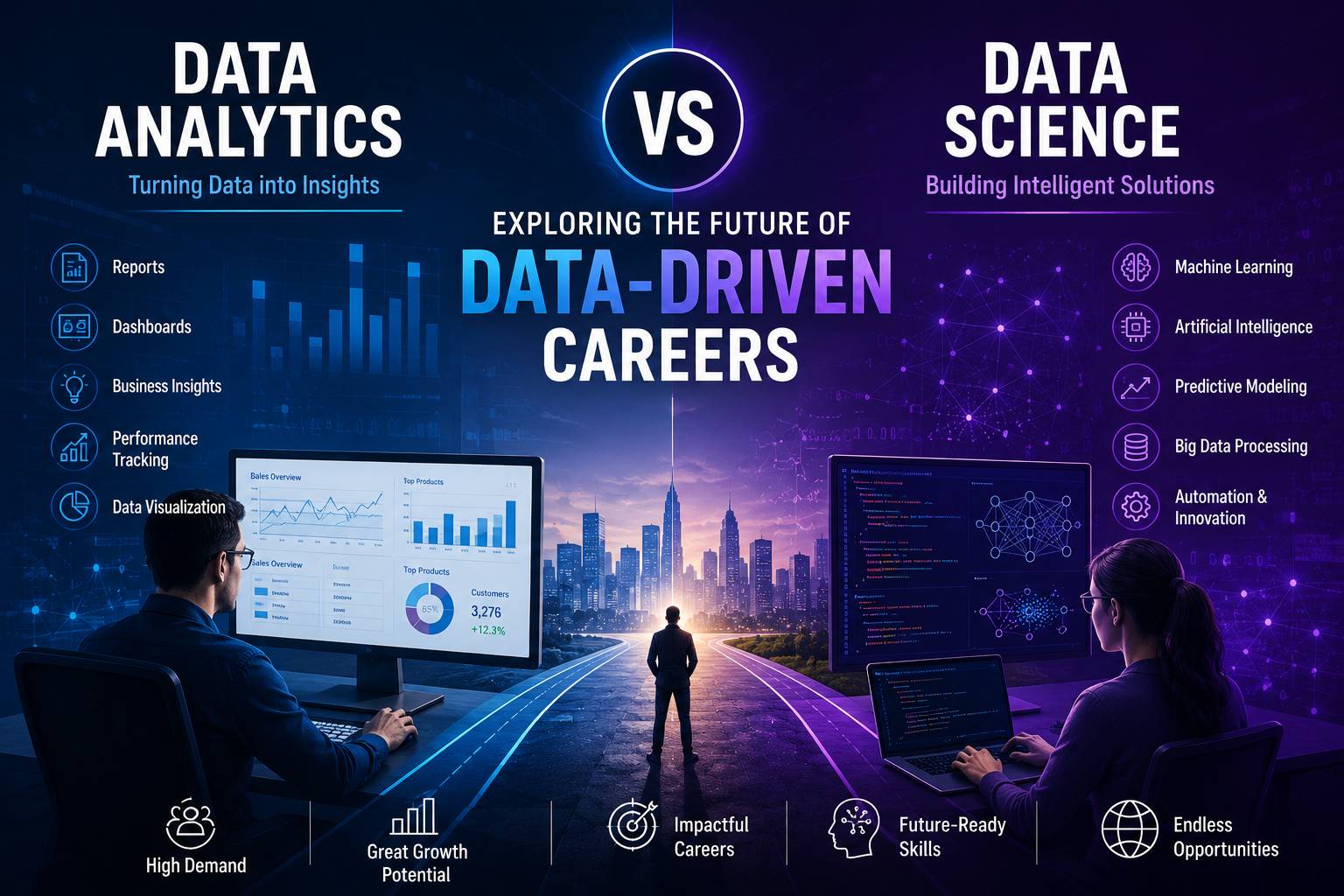
Introduction
Organizations around the world are increasingly relying on data to guide business decisions, improve customer experiences, and gain a competitive advantage. This growing dependence on information has fueled the demand for professionals in Data Analytics and Data Science.
Although both fields involve working with data, they differ in purpose, methodology, and career focus. Understanding these distinctions is important for anyone considering a future in the rapidly expanding data industry.
This article explores the core differences between Data Analytics and Data Science while examining how these professions are shaping the future of business and technology.
The Importance of Data in Modern Organizations
Data has become a strategic asset for businesses of all sizes. Companies use information gathered from customers, operations, websites, and social media platforms to identify opportunities and solve challenges.
However, collecting data alone is not enough. Organizations need skilled professionals who can interpret and leverage this information effectively. This is where Data Analytics and Data Science play critical roles.
Understanding Data Analytics
Data Analytics involves examining data to uncover insights that support business decisions. Analysts focus on understanding historical performance and identifying patterns that can improve organizational outcomes.
For example, an e-commerce company may analyze customer purchasing behavior to determine which products are most popular during certain times of the year.
Core Responsibilities
- Data collection and preparation
- Trend analysis
- Dashboard creation
- Business reporting
- Performance measurement
Data analysts help businesses answer questions related to past and current performance.
Understanding Data Science
Data Science expands beyond traditional analysis by using advanced techniques such as machine learning, artificial intelligence, and predictive modeling.
Data scientists build systems capable of learning from data and generating forecasts that support future decision-making.
For instance, a logistics company may use predictive models to optimize delivery routes and reduce transportation costs.
Core Responsibilities
- Machine learning development
- Predictive analytics
- Statistical modeling
- Artificial intelligence implementation
- Big data management
Data Science enables organizations to make proactive decisions rather than reactive ones.
Key Differences Between Data Analytics and Data Science
Business Objective
Data Analytics focuses on understanding business performance and identifying improvement opportunities.
Data Science focuses on predicting future outcomes and automating decision-making processes.
Technical Complexity
Data Analytics generally requires less programming and mathematical expertise.
Data Science involves advanced coding, machine learning algorithms, and statistical analysis.
Data Handling
Data analysts often work with structured datasets.
Data scientists frequently manage structured, semi-structured, and unstructured data from multiple sources.
Technologies Used
Data Analytics Technologies
- SQL
- Excel
- Power BI
- Tableau
- Looker Studio
These tools help analysts organize, visualize, and interpret business data.
Data Science Technologies
- Python
- R
- TensorFlow
- Hadoop
- Apache Spark
These technologies support advanced analytics and machine learning projects.
Future Trends in Data Careers
The future of both Data Analytics and Data Science is closely tied to emerging technologies.
Artificial Intelligence
AI is transforming industries by automating processes and improving efficiency. Data scientists play a major role in developing these intelligent systems.
Cloud Computing
Cloud-based platforms provide scalable environments for data storage and analysis, benefiting both analysts and data scientists.
Real-Time Analytics
Organizations increasingly require real-time insights, creating new opportunities for professionals skilled in data processing and visualization.
Machine Learning Adoption
Businesses are investing heavily in machine learning solutions to enhance customer experiences, improve operations, and gain competitive advantages.
Career Opportunities in the Future
Data Analytics Roles
- Data Analyst
- Business Intelligence Analyst
- Operations Analyst
- Financial Analyst
Data Science Roles
- Data Scientist
- Machine Learning Engineer
- AI Engineer
- Data Architect
The demand for these professionals is expected to remain strong as organizations continue their digital transformation initiatives.
How to Choose the Right Path
Selecting between Data Analytics and Data Science depends on your interests and career objectives.
If you enjoy interpreting business data and communicating insights, Data Analytics may be the ideal choice.
If you are passionate about programming, mathematics, machine learning, and innovation, Data Science may provide a more fulfilling career path.
Both disciplines offer significant opportunities for growth and advancement.
Conclusion
Data Analytics and Data Science are essential components of today’s data-driven economy. While Data Analytics focuses on extracting actionable insights from historical data, Data Science uses advanced technologies to predict future outcomes and create intelligent solutions. As businesses continue to embrace digital transformation, professionals in both fields will remain highly valuable. Understanding the differences between these careers can help you make informed decisions and prepare for a successful future in the world of data.

 ashlesha more
 james william