Jeena Sikho HiiMS Hospital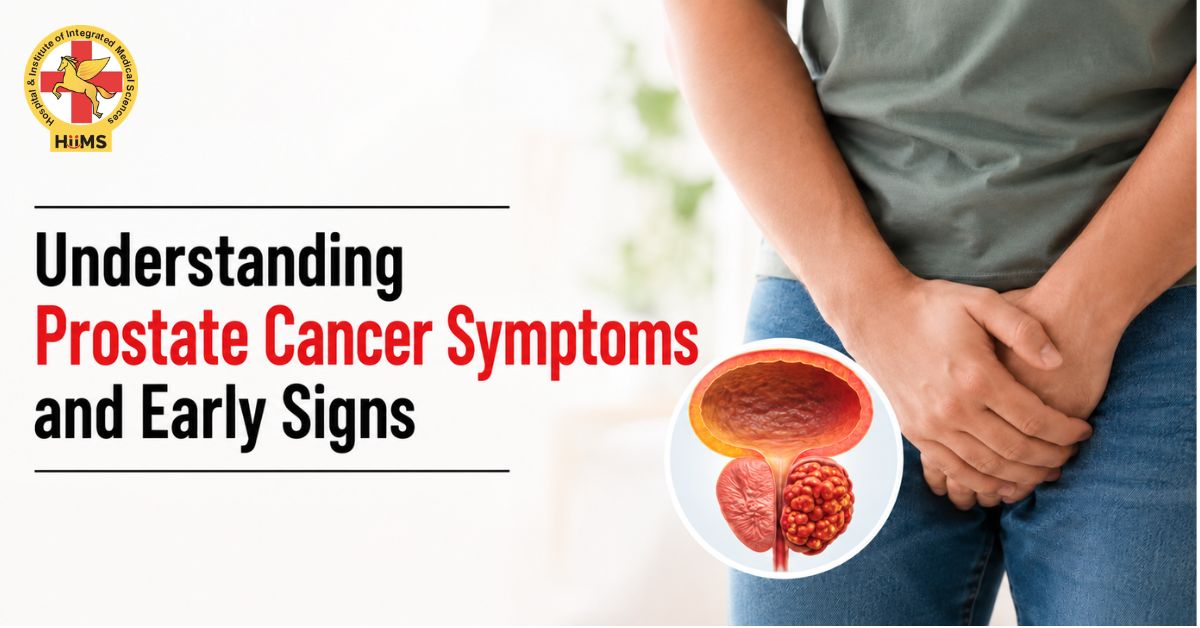
Many men do not think about their prostate health until they notice changes in their daily routine. However, understanding prostate cancer symptoms can help you pay attention to your body and seek medical advice at the right time.
One important fact is that many people with prostate cancer may not have any symptoms in the early stages. When symptoms do appear, they are often similar to other common prostate conditions. That is why it is important not to ignore any unusual changes and to discuss them with a qualified healthcare professional.
What Is the Prostate?
The prostate is a small gland found only in men. It sits just below the bladder and surrounds the tube that carries urine out of the body. Its main role is to produce a fluid that becomes part of semen.
As men grow older, changes in the prostate become more common. Some of these changes are harmless, while others may need medical attention.
Why It Is Important to Know Prostate Cancer Symptoms
Knowing prostate cancer symptoms does not mean you should panic if you notice one of them. Many symptoms can also happen because of an enlarged prostate or other non-cancerous conditions. Still, it is always better to get checked rather than ignore persistent changes.
Common Prostate Cancer Symptoms
Here are some of the most common prostate cancer symptoms that men should be aware of:
Difficulty Passing Urine
You may find it hard to start urinating, or the urine flow may become weak or stop and start.
Frequent Urination
Needing to urinate more often than usual, especially during the night, is one of the commonly reported prostate cancer symptoms. However, this can also happen due to other prostate conditions.
Feeling That the Bladder Is Not Empty
Some men feel they still need to urinate even after finishing.
Pain or Burning While Urinating
Pain or a burning feeling during urination should not be ignored, especially if it continues for several days.
Blood in Urine or Semen
Although it can happen for several reasons, blood in the urine or semen should always be checked by a healthcare professional.
Pain During Ejaculation
Some men may experience discomfort or pain during ejaculation. While this does not always mean prostate cancer, it deserves medical attention.
Ongoing Pain in the Lower Back, Hips, or Pelvis
Persistent pain that does not improve over time can also be one of the prostate cancer symptoms, particularly when it occurs along with urinary changes.
Can Prostate Cancer Have No Symptoms?
Yes. One of the biggest challenges is that early prostate cancer often causes no noticeable symptoms. Many men feel completely healthy until the condition is found during a routine health check or screening. This is why regular health check-ups become more important as men get older.
Who Is More Likely to Be at Risk?
Although anyone can develop prostate cancer, some factors may increase the chance:
- Growing older
- A family history of prostate cancer
- Certain inherited conditions
- Lifestyle factors that affect overall health
Having one or more risk factors does not mean you will develop prostate cancer, but staying aware of prostate cancer symptoms is helpful.
Simple Ways to Support Prostate Health
While no lifestyle habit can completely prevent prostate cancer, healthy daily choices can support overall well-being.
- Eat plenty of fresh fruits and vegetables.
- Choose whole grains and healthy fats.
- Stay physically active.
- Maintain a healthy body weight.
- Drink enough water.
- Avoid smoking and limit alcohol intake.
- Go for regular health check-ups if advised by your healthcare provider.
These habits support general health and may also help keep the prostate healthy.
When Should You See a Doctor?
Do not ignore symptoms that continue for more than a few days or become worse over time. You should seek medical advice if you notice:
- Trouble passing urine
- Blood in urine or semen
- Frequent urination at night
- Ongoing pain in the lower back, hips, or pelvis
- Any other unusual urinary changes
Remember, these symptoms do not always mean prostate cancer, but they should be properly evaluated.
Conclusion
Understanding prostate cancer symptoms is an important step toward protecting your health. Many early symptoms can be mild or may not appear at all, making regular health awareness essential. Paying attention to changes in your body and seeking timely medical guidance can help identify the cause and support better health outcomes.
FAQs
1. What are the first prostate cancer symptoms?
Early prostate cancer symptoms may include difficulty passing urine, weak urine flow, frequent urination at night, or sometimes no symptoms at all.
2. Can prostate cancer develop without symptoms?
Yes. Many men have no noticeable symptoms during the early stages, which is why regular health check-ups are important.
3. Are frequent urination and weak urine flow always signs of prostate cancer?
No. These symptoms can also occur due to other common prostate conditions. A healthcare professional can identify the exact cause.
4. At what age should men pay attention to prostate health?
The chance of prostate problems increases with age, especially after 50 years. Men with a family history may need earlier discussions with their healthcare provider.
5. Can a healthy lifestyle support prostate health?
Yes. Eating a balanced diet, staying active, maintaining a healthy weight, and having regular health check-ups can support overall prostate health.


 Freddy Moolan
 Ahmad hassan