Joe Root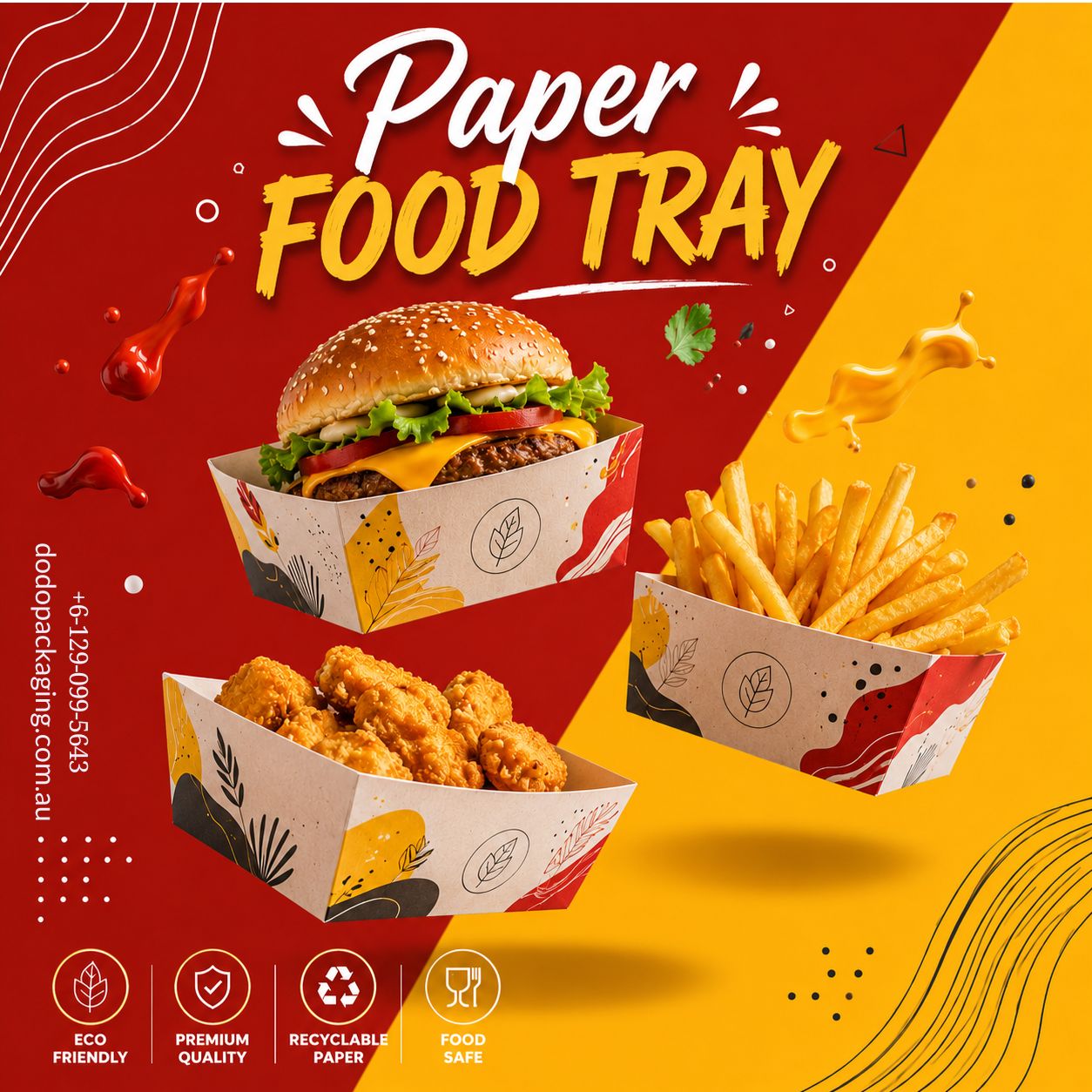
Food businesses are under growing pressure to ditch plastic without compromising on presentation or performance — and that’s exactly why paper food trays have become the go-to solution for cafes, food trucks, bakeries, and takeaway restaurants across Australia. Sturdy, grease-resistant, and fully recyclable, paper food trays let you serve everything from loaded fries to fresh pastries while keeping your brand’s sustainability promise intact.
In this guide, we’ll break down what paper food trays are, the different types available (including white paper food trays), how to choose the right one for your menu, and where custom boxes fit into a complete packaging strategy.
What Are Paper Food Trays?
Paper food trays are molded or die-cut trays made from food-grade paperboard, kraft paper, or recycled pulp, designed to hold hot or cold food items for dine-in, takeaway, or delivery service. They’re typically coated with a food-safe barrier — often PLA (plant-based) or wax — to resist grease and moisture without relying on plastic-lined layers.
Unlike foam or plastic containers, paper trays are compostable or recyclable in most municipal systems, making them a natural fit for businesses trying to reduce their environmental footprint while still delivering a professional presentation at the counter or table.
Why Paper Food Trays Matter for Modern Food Businesses
Sustainability is the obvious driver, but it’s far from the only one. Paper trays offer:
- Cost-efficiency at scale — bulk ordering keeps per-unit costs low compared to rigid alternatives
- Lightweight shipping and storage — trays stack flat or nested, saving valuable back-of-house space
- Grease and moisture resistance — food-safe coatings keep trays from turning soggy under fried foods, curries, or saucy dishes
- Brand visibility — the tray itself becomes a canvas for logos, taglines, and colour schemes
- Compliance — many councils and states are actively phasing out single-use plastics, so paper trays help future-proof your packaging choices
Types of Paper Food Trays
1. Kraft Paper Trays
Made from unbleached, natural kraft paperboard, these trays have an earthy, rustic look that pairs well with artisan bakeries, burger joints, and farmers market stalls. The brown kraft finish also signals “eco-friendly” at a glance, which resonates with sustainability-conscious customers.
2. White Paper Food Trays
White paper food trays are the cleaner, more polished cousin of kraft trays. Made from bleached paperboard, they give food a brighter, more premium presentation — ideal for bakeries, dessert bars, patisseries, and any brand where colour accuracy matters (think pastel macarons or vibrantly iced donuts sitting on a stark white background).
White trays also print more vividly than kraft, since inks and full-colour graphics show truer colours on a white base rather than being muted by brown fibers. For brands running seasonal promotions or colour-coded menu items, white paper food trays are often the better print surface. They carry the same grease-resistant coatings and structural strength as kraft trays, so you’re not trading durability for aesthetics — just choosing the finish that fits your visual identity.
3. Molded Pulp Trays
Made from recycled paper pulp pressed into shape, these trays are fully biodegradable and compostable, commonly used for produce, baked goods, and eco-conscious retail packaging.
4. Divided / Compartment Trays
Popular for combo meals, these trays feature built-in sections to keep sauces, sides, and mains separated — useful for food trucks and quick-service restaurants serving multi-item meals.
Choosing the Right Paper Tray for Your Menu
When selecting trays, consider:
- Food type: greasy or saucy items need a stronger barrier coating; dry items like pastries need less
- Serving temperature: hot foods require heat-resistant board; cold or ambient items have more flexibility
- Print visibility: white trays for bold branding and colour-true prints; kraft trays for a natural, rustic aesthetic
- Volume: high-volume operations benefit from bulk pricing on standard sizes; boutique brands may prefer custom shapes
Custom Boxes: Completing Your Packaging Line-Up
Paper trays solve the “plate replacement” problem, but most food businesses need more than trays alone. That’s where custom boxes come in — think bakery boxes for cakes and pastries, mailer boxes for shipped goods, and rigid boxes for gift-style food items. A cohesive packaging suite (tray + box + inserts) reinforces brand recognition at every touchpoint, from the counter to the customer’s kitchen table.
Custom boxes can be printed with the same colour palette, logo placement, and finish (matte, gloss, or kraft) as your paper trays, so a customer unboxing a delivery or picking up an order sees a consistent, professional brand experience rather than mismatched packaging. For businesses scaling up, ordering trays and custom boxes together often unlocks better bulk pricing and faster turnaround, since both can be produced in the same production run.
Common Mistakes to Avoid
- Choosing tray strength based on price alone — a tray that collapses under a saucy dish costs you more in reputation than it saves in cents per unit.
- Ignoring print contrast — busy logos can get lost on kraft trays; test your artwork on both kraft and white stock before committing to a bulk order.
- Overlooking compostability claims — always confirm your supplier’s trays are certified compostable if that’s part of your sustainability messaging, rather than assuming “paper” automatically means “compostable.”
- Under-ordering custom sizes — running out of a niche tray size mid-service disrupts operations; forecast demand carefully when moving from stock to custom sizing.
Frequently Questions
Are paper food trays microwave-safe?
Most food-grade paper trays are microwave-safe for short reheating durations, but you should always check the specific coating and manufacturer guidance, since some wax-coated trays aren’t rated for microwave use.
What’s the difference between kraft and white paper food trays?
Kraft trays use natural, unbleached paperboard for a rustic look, while white paper food trays use bleached board for a cleaner finish and more vibrant print colours — both offer similar grease resistance and strength.
Can paper food trays be recycled?
Yes, most uncoated or PLA-coated paper trays are recyclable or compostable through standard council or commercial composting streams, though wax-coated trays may need to go to general waste depending on local facilities.
Do custom paper trays cost more than plain ones?
Custom printed trays typically cost slightly more per unit than plain stock trays, but the branding value and bulk order discounts often offset the difference for growing food businesses.
What sizes do paper food trays come in?
Paper food trays are available in a wide range of standard sizes for fries, burgers, and shared platters, with custom sizing available for niche menu items or portion-controlled servings.
Final Thoughts
Paper food trays — especially white paper food trays for brands wanting a premium, colour-accurate print surface — are one of the easiest upgrades a food business can make to reduce plastic use without sacrificing durability or presentation. Pair them with custom boxes for a complete, cohesive packaging system that carries your brand from the kitchen to the customer’s hands.
Why Choose DODO Packaging AU
At DODO Packaging AU, we design and manufacture custom paper food trays, white paper food trays, and custom boxes tailored to your brand — from material selection and coatings to full-colour printing and bulk production. Whether you’re a café rolling out a new dessert line or a growing food delivery brand needing consistent, sustainable packaging at scale, our team helps you source the right tray and box combination for your menu and your values. Get in touch with DODO Packaging AU today for a custom quote on your next packaging order.

 Mirza Ali
 Jimmy Lasalle