Nirwana AI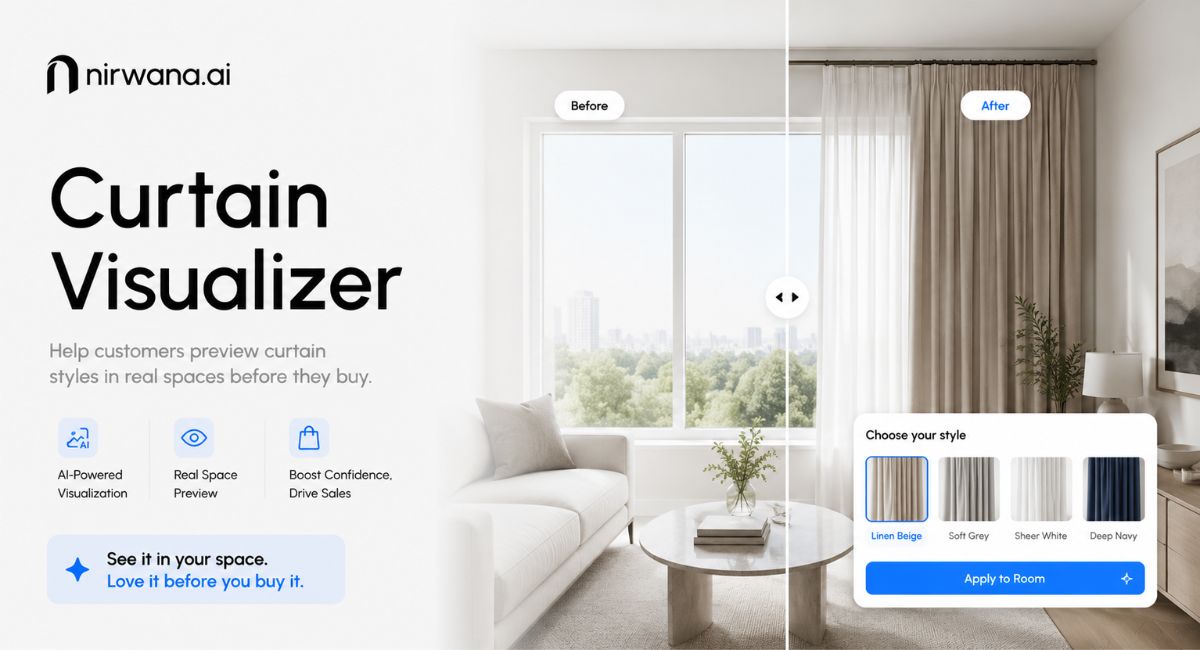
Choosing curtains should be exciting. After all, they can completely change the mood of a room. The right fabric can make a bedroom feel softer, a living room appear more luxurious, or a workspace look clean and professional.
But selecting curtains is often more difficult than it seems.
A fabric sample may look beautiful in a showroom, yet appear completely different when placed beside your furniture, wall colour, flooring, and natural lighting. Even when customers like a particular design, they may hesitate because they cannot clearly imagine the finished result.
A curtain visualizer removes much of this uncertainty. It allows customers to preview different curtain styles, colours, fabrics, and configurations inside their own spaces before making a purchase.
Instead of guessing, customers can see how their preferred curtains may actually look.
Why Choosing Curtains Is More Complicated Than It Looks
Curtains cover a large visual area, especially when installed across wide windows or from ceiling to floor. This means even a small mistake in colour, length, or fabric selection can affect the appearance of the entire room.
A small fabric swatch only shows the material up close. It does not show how the fabric will look across a two-metre-wide window.
Customers may have several practical questions:
- Will the curtain colour work with the sofa?
- Should the curtains end at the windowsill or touch the floor?
- Will a patterned curtain make the room feel too busy?
- Does the room need sheer curtains, main curtains, or both?
- Will a dark fabric reduce too much natural light?
These questions are difficult to answer through catalogues and fabric samples alone.
For example, a customer may select dark green curtains because the colour looks rich in a showroom. However, when used in a small bedroom with limited sunlight, the same curtains may make the space feel darker and more enclosed.
Visualization helps customers understand these effects before installation.
How a Curtain Visualizer Improves the Buying Experience
A curtain visualizer allows users to upload an image of their room and apply different curtain options directly to the windows. They can compare colours, fabrics, patterns, and curtain types without physically installing anything.
This creates a more practical and engaging shopping experience.
Instead of browsing through hundreds of products and trying to imagine the result, customers can narrow their choices based on how each option looks in their actual environment.
Customers Can Compare More Options Confidently
Curtain buyers often choose safe colours such as beige, grey, or white because they are worried that bolder options may not suit their space.
Visualization gives them the confidence to experiment.
A customer can compare neutral curtains with deep blue, olive green, textured brown, or patterned alternatives. Seeing these options in the room makes it easier to select a design that feels personal without taking an unnecessary risk.
The Effect of Curtain Length Becomes Clear
Curtain length can dramatically affect the proportions of a room.
Ceiling-to-floor curtains may make a room appear taller and more luxurious. Shorter curtains may be more suitable for kitchen windows, study areas, or spaces where furniture is positioned below the window.
A realistic preview helps customers understand these differences instead of relying only on measurements.
Main Curtains and Sheers Can Be Visualized Together
Many customers want layered window treatments but are unsure how different combinations will look.
For instance, they may want white sheer curtains for daytime privacy and heavier beige curtains for light control in the evening. A visualizer can show both layers together, helping customers evaluate the balance of colour, opacity, and texture.
The Importance of Realistic Curtain Visualization
Basic product overlays are not enough. Curtains must appear naturally integrated into the room.
A realistic curtain visualizer should consider the size and position of the window, curtain mounting point, fabric fall, room perspective, existing lighting, and surrounding furniture.
Without these details, the preview may look artificial and fail to build confidence.
Platforms such as Nirwana.ai use AI-powered visualization to create more realistic curtain previews. The technology identifies the window area and places the selected curtain in a way that fits the structure and perspective of the room.
The goal is not simply to place a fabric image over a window. It is to help the customer understand the complete visual impact of the curtain.
Key Benefits for Curtain Brands and Retailers
Visualization does more than improve the customer experience. It can also help curtain brands, manufacturers, retailers, and interior furnishing businesses sell more efficiently.
Reduced Customer Hesitation
Curtains are often customized according to window size, which can make returns or replacements difficult. Customers understand this and may delay their decision because they are worried about choosing incorrectly.
When buyers can preview the result, they are more likely to feel confident about approving the fabric, colour, and style.
Fewer Repeated Consultations
Sales teams often spend time answering the same visual questions or arranging several fabric samples for one customer.
With a curtain visualizer, the salesperson can upload the customer’s room image and show multiple options during the same consultation. This makes discussions clearer and helps both the customer and salesperson reach a decision faster.
A More Engaging Online Store
Buying curtains online can feel risky because customers cannot see how the fabric will interact with their existing interiors.
Adding visualization to an online store turns passive product browsing into an interactive experience. Customers can try products, compare combinations, and shortlist designs based on their own room.
This can keep visitors engaged for longer and create a stronger connection between the product and the customer’s needs.
Better Support for Showrooms and Designers
Curtain visualization is equally useful inside physical showrooms.
A salesperson can ask the customer to upload a photo using a phone or QR code. Different fabrics can then be applied to the window immediately.
Interior designers can also use the preview during presentations. Rather than explaining how a certain curtain might look, they can show the client a realistic visual before ordering the material.
A Practical Curtain-Buying Example
Imagine a customer renovating a living room with cream walls, wooden flooring, and a grey sofa. They are considering three curtain options:
- Plain off-white curtains
- Textured charcoal curtains
- Soft blue curtains with white sheers
The off-white option creates a bright and minimal appearance but may feel too similar to the walls. The charcoal option creates contrast, although it may reduce the visual brightness of the room. The blue curtains add colour while the white sheers help maintain natural light.
Without visualization, the customer may choose the safest option. With a curtain visualizer, all three combinations can be compared inside the actual living room.
The final decision is then based on visible results rather than assumptions.
What to Look for in a Curtain Visualization Solution
Not every visualization tool provides the same level of realism. Brands should look for a solution that accurately detects windows and maintains the original room structure.
Important capabilities include:
- Support for main curtains and sheer curtains
- Different curtain and blind styles
- Accurate mounting position and curtain length
- Realistic lighting and shadows
- Proper fabric texture representation
- Mobile-friendly room image uploads
- Easy comparison between multiple products
- Integration with websites or showroom displays
Nirwana.ai helps curtain businesses turn their product collections into interactive previews while keeping the customer’s original space recognizable. This allows the visualization to support the buying decision without distracting from the actual product.
Why Visualization Is Becoming Essential
Modern customers expect more than static product images. They want to know how a product will fit into their home and whether it will work with the elements they already own.
Curtains are particularly suited to visualization because their appearance changes according to window dimensions, room lighting, fabric opacity, and interior colours.
A curtain visualizer bridges the gap between viewing a fabric and understanding its final effect. It supports customers during one of the most uncertain parts of the buying journey: imagining the result before installation.
Conclusion
The right curtains can bring an entire room together, but choosing them from a sample or catalogue is not always easy. Visualization gives customers a clearer, more realistic way to explore colours, fabrics, lengths, and layered combinations.
For curtain brands and retailers, it can reduce hesitation, improve consultations, and make both online and showroom shopping more engaging.
By introducing a curtain visualization experience, businesses can help customers move from “I think this will look good” to “I can clearly see this in my room.”


 ashlesha more
 Flaws Bug Tech