juliaki baker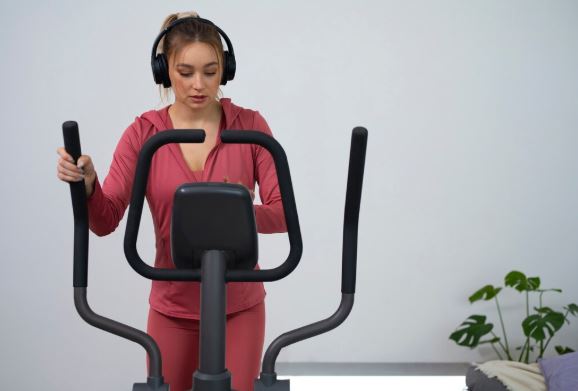
Most home gyms start the same way. A rack, a barbell, some plates, and a bench. That foundation is solid and covers a meaningful range of training. The problem tends to show up a year or two in, when the equipment that filled the gaps starts underperforming. Not because it was used incorrectly, but because it was never built to handle consistent, serious training in the first place.
These five upgrades represent the areas where the gap between residential and commercial quality is most significant.
1. Cardio Equipment
This is where the residential-versus-commercial gap tends to hurt most. Residential cardio machines are built for light daily use by a single person. Under serious training volume, the drivetrain degrades, the frame develops flex, and the console loses calibration. Commercial cardio equipment is engineered for eight or more hours of daily use across multiple users. In a home gym, that means the machine runs well within its design parameters almost all of the time.
Air bikes are a good illustration of how much build quality matters in practice. An assault bike handles repeated high-output interval training without the mechanical noise and frame movement that cheaper alternatives develop quickly. Low-impact machines follow the same logic — a commercial elliptical maintains its stride feel and mechanical precision across years of use in a way that residential units simply do not. Buying commercial once in this category is almost always cheaper over a five-year horizon than cycling through residential machines.
2. Flooring
Gym flooring is the most overlooked upgrade in a home gym build and one of the most impactful. Foam tiles and basic rubber mats work adequately at first, but compress under heavy equipment, shift during dynamic movements, and degrade faster than the equipment sitting on top of them.
Commercial rubber flooring protects the subfloor, reduces noise, stabilizes equipment feet, and provides a consistent, non-slip training surface that holds up under years of heavy use. For anyone doing barbell work or running motorized cardio equipment, the difference between basic flooring and commercial-grade rubber is noticeable immediately and significant over time.
3. Benches
A bench is one of those pieces of equipment that feels adequate at a low price point, right up until it does not. Residential benches wobble under heavy loading, compress into unusable padding within a year or two, and have adjustment mechanisms that loosen mid-set. Commercial-grade benches are built to support serious loads across repeated use without any of those failure points.
The upgrade is straightforward: dense pad material, a locking adjustment mechanism that holds its position reliably, and a weight capacity rating that does not become a concern as training progresses. For a piece of equipment used in almost every upper-body session, the quality gap between residential and commercial is one of the clearest in the entire category.
4. Strength Machines
Plate-loaded and selectorized strength machines represent some of the best value in the used commercial equipment market. Brands like Hammer Strength, Life Fitness, Nautilus, and Cybex build machines to tolerances that far exceed what residential strength equipment delivers. A used commercial cable machine, leg press, or chest press sourced from a gym liquidation is often available at pricing that competes directly with new residential equipment, while offering build quality that residential alternatives cannot approach.
Machines like the Hammer Strength chest press have held their position on commercial gym floors for decades for a straightforward reason — the independent weight arms, heavy-gauge steel frames, and precision pivot points perform consistently under serious training volume in a way that lighter-duty alternatives simply do not sustain over time.
5. Racks
The squat rack is the centerpiece of most home gyms and one of the areas where builders are most likely to underspec. A rack that flexes under heavy loading or uses J-hooks that do not hold their position is a safety issue under serious weight.
Commercial-grade racks are built with heavier steel, tighter tolerances, and more attachment compatibility. They stay square under load over years of use and accommodate accessories that extend training utility over time.
The Common Thread
Across all five categories, the logic is the same. An assault bike running in a home gym operates well below its design ceiling. So does a Hammer Strength chest press, a commercial bench, or a rack built for a professional facility. The upfront investment is higher, but the long-term math almost always favors buying commercial once over replacing cheaper equipment repeatedly.

 candus misheel
 sobiyya Kazmi