Gati Bose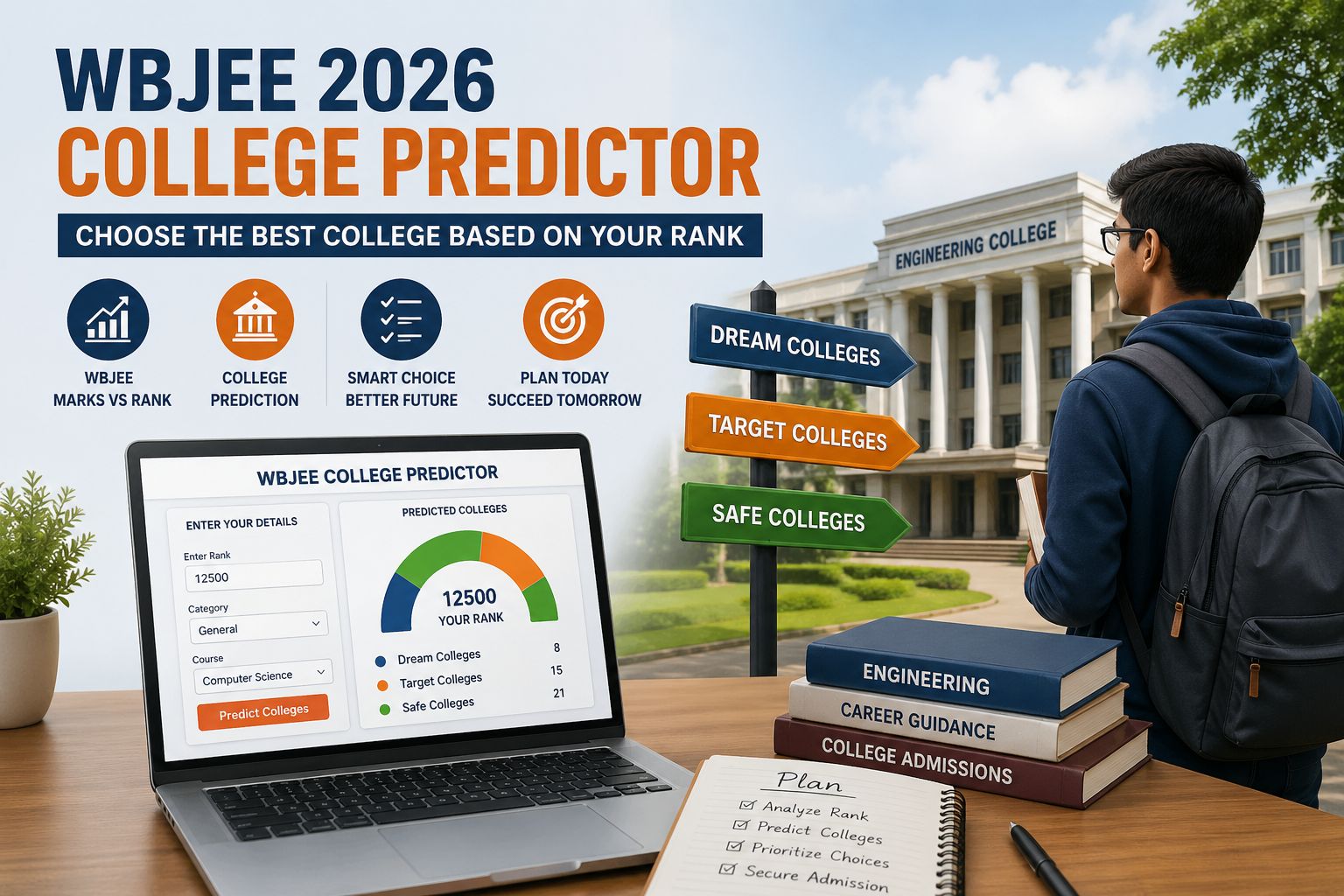
Choosing the right college after the WBJEE exam can feel overwhelming, especially when you’re trying to connect your score with real admission chances. Many students focus only on marks, but what truly matters is how those marks translate into rank—and ultimately, which colleges you can realistically target.
This guide helps you understand how to use a WBJEE 2026 college predictor effectively, interpret your performance, and make smarter admission decisions based on your rank.
TL;DR;
- Your WBJEE marks vs rank determines your admission chances, not just raw scores
- College predictors estimate colleges based on previous cutoff trends
- Focus on rank ranges, category, and preferred branch before finalizing choices
- Always create a balanced list: dream, realistic, and safe colleges
- Use predictors as guidance—not final confirmation
Why WBJEE marks vs rank matters more than marks alone
In the WBJEE exam, thousands of students appear every year, and rankings are calculated based on overall performance. This means your score alone doesn’t define your chances—your rank relative to others does.
For example:
- A slight difference in marks can lead to a significant rank shift
- Cutoffs for top colleges depend on rank, not marks
- Counseling and seat allotment are entirely rank-based
Understanding WBJEE marks vs rank helps you:
- Predict realistic college options
- Avoid overestimating or underestimating your chances
- Make informed decisions during counseling
What is a WBJEE college predictor?
A college predictor is a tool that estimates which colleges you may get based on:
- Your rank
- Category (General, OBC, SC, ST, etc.)
- Preferred branch (CSE, ECE, Mechanical, etc.)
- Previous years’ cutoff trends
It uses historical data to give you a list of probable colleges. While it cannot guarantee admission, it gives a strong directional idea.
How a college predictor works
A typical predictor follows a data-driven approach:
- Analyzes past 3–5 years of cutoff ranks
- Maps your expected or actual rank with closing ranks
- Filters colleges where your rank falls within range
- Segregates results into probable, possible, and less likely options
This helps you build a strategy instead of guessing randomly.
Steps to use WBJEE 2026 college predictor effectively
Using a predictor is simple, but using it smartly is what makes the difference.
1. Enter accurate details
Make sure you input:
- Correct WBJEE rank (or closest estimate)
- Category and domicile details
- Preferred course or branch
Even small errors can change results significantly.
2. Analyze multiple rank scenarios
Instead of relying on one rank, try:
- Best-case rank
- Expected rank
- Worst-case rank
This gives you a wider perspective and helps you prepare for different outcomes.
3. Check branch-wise availability
Sometimes, you may get a top college but not your preferred branch. Decide what matters more:
- College reputation
- Course/branch
Balance both before shortlisting.
4. Understand cutoff trends
Cutoffs change every year due to:
- Number of applicants
- Difficulty level of the WBJEE exam
- Seat availability
So, always consider a margin of variation.
How to choose the best college based on your rank
A predictor gives you options—but choosing wisely is your responsibility.
Create a balanced college list
Divide your choices into three categories:
- Dream colleges: slightly above your rank range
- Target colleges: match your rank closely
- Safe colleges: comfortably within your rank range
This approach increases your chances of securing a seat.
Evaluate colleges beyond rank
Do not choose a college based only on cutoff. Consider:
- Placement records and average salary
- Faculty and infrastructure
- Industry exposure and internships
- Location and campus environment
- Alumni network and reputation
A slightly lower-ranked college with better opportunities can be a smarter choice.
Consider branch flexibility
If you are unsure about your exact career path:
- Choose colleges that allow branch upgrades
- Prefer institutions with strong core departments
This gives you flexibility after admission.
Common mistakes students make
Many students lose out on good opportunities due to avoidable errors.
- Relying only on marks instead of WBJEE marks vs rank
- Ignoring category-specific cutoffs
- Choosing only top colleges without safe options
- Not updating choices during counseling rounds
- Blindly trusting predictors without research
Avoiding these mistakes can significantly improve your admission outcome.
Tips to maximize your chances in WBJEE 2026 counseling
Here are some practical strategies:
- Fill maximum choices during counseling
- Prioritize options carefully (order matters)
- Keep backup colleges ready
- Stay updated with official cutoff releases
- Participate in all counseling rounds
Consistency and awareness play a key role in securing a good seat.
Final thoughts
The journey after the WBJEE exam is just as important as the preparation itself. Understanding WBJEE marks vs rank and using a college predictor wisely can simplify your decision-making process.
Remember, no tool can guarantee admission—but the right strategy can significantly improve your chances. Focus on data, stay flexible, and make informed choices rather than emotional ones.
Platforms like GoFillForm can further simplify your application journey by helping you discover suitable colleges and streamline your form-filling process, making your admission experience smoother and more efficient.