larry paigee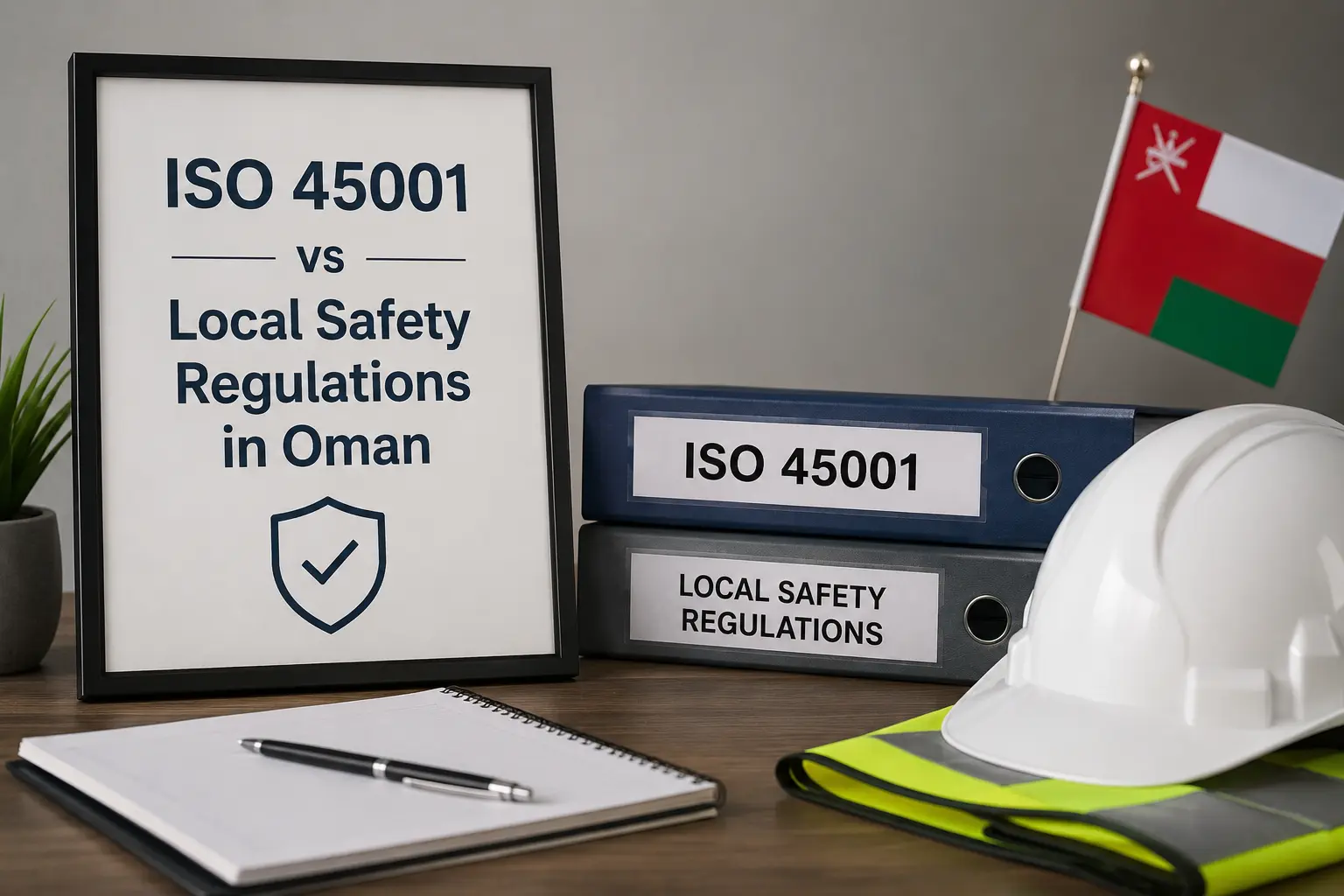
Workplace safety is becoming a serious priority for businesses in Oman. Companies are expected not only to follow local labor laws but also to create a safe and healthy environment for employees. This is where many businesses get confused: should they rely only on local safety regulations, or do they need an international standard like ISO 45001?
To understand this properly, it is important to compare both and see how they work together.
Understanding Local Safety Regulations in Oman
In Oman, workplace safety is mainly governed by labor laws and regulations set by authorities such as the Ministry of Labour. These rules focus on basic employee rights, safe working conditions, and employer responsibilities.
Local safety regulations usually cover:
- Basic workplace safety requirements
- Use of protective equipment
- Working hours and employee welfare
- Reporting of accidents and injuries
- Compliance inspections by authorities
These laws are mandatory, meaning every business must follow them to operate legally. If a company fails to comply, it can face fines, penalties, or even business closure.
However, most local regulations are general in nature. They tell businesses what to do, but not always how to do it effectively.
What is ISO 45001?
ISO 45001 is an international standard for Occupational Health and Safety Management Systems (OHSMS). It provides a structured framework that helps businesses identify risks, reduce workplace hazards, and improve overall safety performance.
Unlike local regulations, ISO 45001 is not mandatory. It is a voluntary certification, but it is widely recognized across the world.
ISO 45001 focuses on:
- Risk identification and prevention
- Employee involvement in safety practices
- Continuous improvement
- Clear safety policies and procedures
- Strong management responsibility
Key Differences Between ISO 45001 and Local Safety Regulations
1. Scope and Approach
Local safety laws in Oman are compliance-based. Businesses follow them to avoid penalties. The focus is mainly on meeting minimum requirements.
ISO 45001, on the other hand, is proactive. It encourages companies to go beyond compliance and actively improve workplace safety.
2. Detail and Structure
Local regulations provide general guidelines. They may not always give a clear system for implementation.
ISO 45001 offers a complete system with:
- Defined processes
- Documentation
- Monitoring and evaluation
- Continuous improvement strategies
This makes it easier for companies to manage safety in a structured way.
3. Risk Management
Local laws often focus on responding to incidents after they happen.
ISO 45001 focuses on preventing risks before they occur. It requires companies to:
- Identify hazards
- Assess risks
- Take preventive actions
This reduces accidents and improves long-term safety.
4. Employee Involvement
In local regulations, employee involvement is limited.
ISO 45001 strongly emphasizes employee participation. Workers are encouraged to:
- Report hazards
- Suggest improvements
- Be part of safety planning
This creates a stronger safety culture within the organization.
5. Continuous Improvement
Local laws remain mostly fixed unless updated by authorities.
ISO 45001 follows a continuous improvement model. Companies regularly review and improve their safety systems, ensuring long-term growth and efficiency.
6. Global Recognition
Local safety compliance is valid only within Oman.
ISO 45001 is internationally recognized. It helps businesses:
- Gain trust from global clients
- Enter international markets
- Improve brand reputation
Do Businesses in Oman Need Both?
Yes — and this is where many companies make mistakes.
Local safety regulations are mandatory. Every business must follow them to operate legally.
ISO 45001 is not required by law, but it adds strong value. It helps businesses go beyond basic compliance and build a proper safety management system.
In simple words:
- Local laws = Minimum requirement
- ISO 45001 = Best practice
How ISO 45001 Supports Compliance with Local Laws
Instead of replacing local regulations, ISO 45001 actually helps companies follow them more effectively.
Here’s how:
- It organizes safety processes in a clear system
- It ensures proper documentation for inspections
- It reduces the chances of violations and penalties
- It improves internal monitoring
So, businesses that implement ISO 45001 often find it easier to stay compliant with Omani laws.
Real Challenges Businesses Face Without ISO 45001
Many companies rely only on local regulations and face issues like:
- Frequent workplace accidents
- Poor safety documentation
- Lack of employee awareness
- Difficulty in passing audits
- Weak safety culture
These problems can slow down business growth and damage reputation.
Benefits of Combining Both Approaches
When businesses follow both local regulations and ISO 45001, they get the best results.
Key benefits include:
- Safer working environment
- Reduced accidents and downtime
- Better employee trust and morale
- Stronger legal compliance
- Improved business reputation
- More opportunities for international projects
Which Industries in Oman Benefit the Most?
Although ISO 45001 is useful for all sectors, it is especially important for:
- Construction companies
- Oil and gas industry
- Manufacturing units
- Logistics and transportation
- Engineering firms
These industries face higher safety risks, so a structured system like ISO 45001 becomes very valuable.
Final Thoughts
Local safety regulations in Oman are essential and cannot be ignored. They provide the legal foundation for workplace safety. However, they are often not enough for businesses that want to grow, improve efficiency, and compete globally.
ISO 45001 fills this gap by offering a complete and proactive safety management system. It helps businesses prevent risks, involve employees, and continuously improve their operations.
Companies that rely only on basic compliance may survive, but those that adopt international standards are more likely to succeed in the long run.
If your goal is not just to follow rules but to build a safer and stronger business, then moving towards ISO 45001 Certification in Oman is a smart step forward.


 John Dave
 Steven Kane