Natraj Machines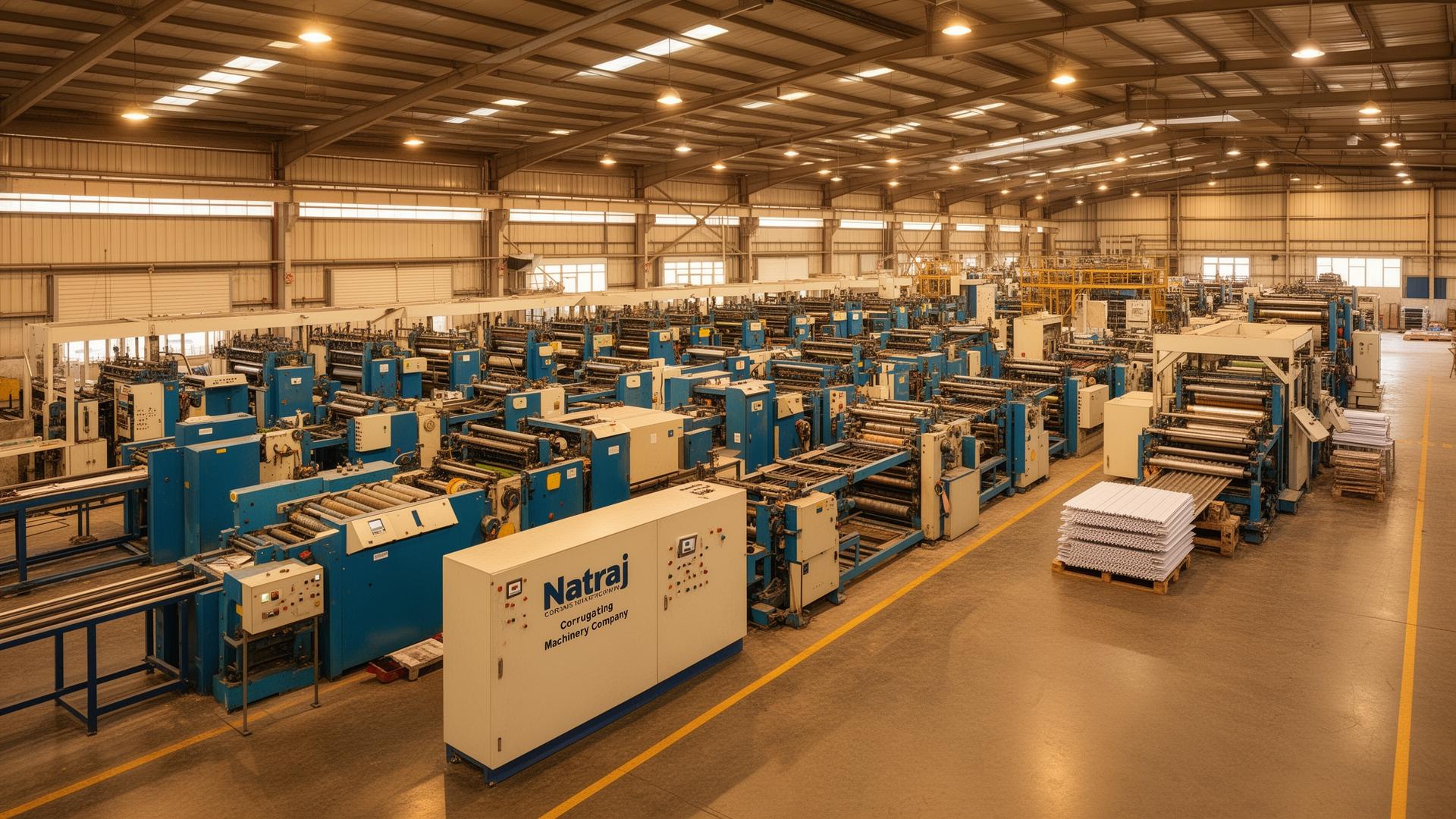
Setting up a corrugated box plant is not a small decision. It is a long-term business commitment that requires careful planning, the right machinery, and a clear understanding of the industry before you invest a single rupee.
Many business owners jump into this sector because the demand is real and the opportunity is visible. Corrugated boxes are used in every industry food, pharma, electronics, e-commerce, agriculture, and more. But wanting to enter a growing market and being prepared to operate in it are two very different things.
Understand the Market Before You Build the Plant
Before you think about machinery, think about your market. Who will buy your boxes? What sizes do they need? How many boxes per month will they order? What quality standard do they expect?
These are not questions you answer after the plant is set up. These are questions that shape every decision you make before the first machine is installed.
The corrugated packaging market in India is growing steadily. The rise of e-commerce alone has created a demand that existing manufacturers are struggling to fully meet. But demand in your region, for your specific box sizes and ply requirements, is what matters for your business. Do local market research. Speak to potential buyers before you commit to a setup.
Knowing your market also helps you decide the scale of your plant whether you need a small semi-automatic setup or a large fully automatic corrugated box plant. Overbuilding for a market that is not ready is as damaging as underbuilding for one that is.
Know the Different Types of Corrugated Box Making Machinery
A corrugated box plant is not one machine. It is a system of machines working together to take raw kraft paper and deliver a finished, ready-to-ship corrugated box. Understanding what each machine does and how they connect is essential before you speak to any corrugated box making machine manufacturer.
The core of any plant is the corrugation machine, also called a Single Facer. This machine creates the fluted layer that gives corrugated boards their strength. From there, the board moves through a Gluing and Pasting Machine, then a Slitter Scorer, and then a Rotary Cutter. These machines cut and score the board into flat sheets ready for the next stage.
The finishing machines then take over. A Flexo Printer Slotter Die Cutter prints your customer’s artwork, slots the box panels, and cuts them to shape in one pass. A Folder Gluer folds and glues the box panels into their final form. A Box Stitching Machine stitches boxes that need wire stitching instead of glue. Each of these machines needs to be matched in speed and capacity to ensure the entire line runs without bottlenecks.
When you visit a corrugated box making machine manufacturer, you need to walk in knowing which machines you need, what speeds you require, and what paper widths you will be working with. This knowledge protects you from buying the wrong configuration and spending money on machines that do not fit your production plan.
Choose Between 3 Ply, 5 Ply, and 7 Ply Based on Your Target Market
One of the first technical decisions you will make is the ply construction your plant will produce. This decision is driven entirely by your end market.
3 Ply corrugated box making machinery produces lighter boards suitable for consumer goods, food packaging, retail boxes, and similar applications. This is the most common starting point for new plants because the raw material cost is lower and the machine investment is more accessible.
5 Ply corrugated box making machinery produces heavier, more durable boards used in industrial packaging, export cartons, electronics, and appliances. The machinery cost is higher but so are the margins, because the boxes command better prices.
7 Ply machinery handles extreme load-bearing applications and is typically used by large-scale manufacturers supplying heavy industry. This is not a starting point for most new businesses.
Your ply selection should be guided by what your buyers actually need. Do not invest in 5 Ply machinery if your local market runs on 3 Ply boxes. Equally, do not limit yourself to 3 Ply if your target clients are in industries that require stronger packaging.
Decide on the Right Level of Automation
The level of automation in your corrugated box plant directly affects your production capacity, manpower requirement, running cost, and output quality. This is one of the most important decisions you will make.
Manual machines require significant labour at every stage of production. Output is low, quality consistency is harder to maintain, and human error is a constant risk. Manual setups are only practical for very small operations with limited capital and limited order volumes.
Semi-automatic corrugated box making machinery reduces the dependence on labour at key production stages while keeping the initial investment more manageable. This is a practical choice for businesses starting out with a clear growth plan you get meaningful output without overcommitting on capital.
Fully automatic corrugated box making machinery is the choice for businesses that are serious about scale. These machines run faster, produce more consistent quality, require fewer operators, and are better equipped to handle large and repeat orders. The upfront cost is higher, but the cost per box produced is significantly lower over time.
Most experienced corrugated box making machine manufacturers will guide you through this decision based on your target output, budget, and market. But walking into that conversation with a clear sense of where you want to be in three to five years will help you make a sharper decision.
Plan Your Factory Infrastructure in Advance
One of the most common and costly mistakes new plant owners make is buying machinery before their factory is ready to receive it. Infrastructure planning must happen in parallel with, or even before, your machinery purchase.
Your factory floor space should be at least 5,000 to 10,000 square feet for a medium-sized corrugated box plant. The layout matters as much as the size machines need to be arranged in a logical production flow so that material moves efficiently from one stage to the next without unnecessary handling.
Roof height is a factor that many overlook. Some corrugating machines are tall, and a low factory ceiling can make installation impossible or require expensive modifications. Confirm machine dimensions with your manufacturer before signing a factory lease.
Power supply is another critical area. Corrugated box making machinery runs on 3-phase power, and your total connected load can be substantial depending on the number of machines in your plant. Ensure your electrical infrastructure is in place, tested, and certified before your machines arrive.
Water supply, raw material storage, finished goods storage, and loading bay access all need to be factored into your factory layout plan. These are not afterthoughts they affect daily operations from the very first day your plant runs.
Understand the True Cost of Setting Up a Corrugated Box Plant
Many first-time investors look only at the machinery price when calculating their setup cost. The actual cost of setting up a corrugated box plant includes several other components that must be budgeted for from the start.
Factory rent or purchase, civil construction or modifications, electrical work, raw material stock for the first few months of production, working capital for staff salaries and overheads, freight and installation charges for machinery, and contingency funds for unexpected expenses all of these need to be part of your financial plan.
As a general reference, a semi-automatic 3 Ply plant can cost between ₹15 Lakh and ₹35 Lakh for machinery alone. A fully automatic 3 Ply plant ranges from ₹50 Lakh to ₹1 Crore or more. A fully automatic 5 Ply plant can go from ₹1 Crore to ₹3 Crore and beyond, depending on specifications. Add infrastructure, working capital, and operational costs to these figures to arrive at a realistic total investment number.
Getting quotes from two or three corrugated box making machine manufacturers before finalising your budget is always a sound approach. The cheapest quote is rarely the most cost-effective choice when you factor in build quality, warranty, and after-sales service.
Choose Your Machinery Manufacturer with the Same Care You Choose Your Business Partner
The corrugated box making machine manufacturer you work with will have a lasting impact on your plant’s performance. This is not a transaction it is a relationship that will shape your daily operations for years.
An experienced manufacturer brings more than just machines to the table. They bring knowledge of what works in real production environments, guidance on plant layout and machine configuration, installation support, operator training, and an after-sales service network that keeps your plant running when issues arise.
Look for manufacturers who have been in the industry long enough to have a proven track record. Ask for client references and speak to plant owners who have been running their machinery for several years. Check whether spare parts are readily available across India. Confirm the warranty terms and what they cover.
Natraj Corrugating Machinery Co. has been one of India’s most dependable names in corrugated box making machinery since 1965. Based in Palwal, Haryana, the company has over 60 years of manufacturing experience and has successfully installed more than 500 corrugated box plants across 22 states in India. Their product range covers everything from 3 Ply and 5 Ply Automatic Corrugated Board Plants to Flexo Printer Slotter Die Cutting Machines, Automatic Folder Gluers, Box Stitching Machines, Flute Laminators, and over 100 other corrugating machinery products. As an ISO 9001-2008 certified manufacturer, Natraj Machines is built on a foundation of engineering reliability and long-term customer support.
If you are planning to set up a corrugated box plant and want to work with a manufacturer who brings genuine experience to the table, visit natrajmachines.com to explore their full range of products and get in touch with their team.
Final Word
Setting up a corrugated box plant is one of the most rewarding business decisions you can make in India’s packaging industry if you go in prepared. Understanding your market, choosing the right machinery configuration, planning your infrastructure, and selecting the right corrugated box making machine manufacturer are the four pillars that every successful plant owner has in place before their first machine is switched on.
Take the time to plan properly. Ask the hard questions. Visit manufacturers in person. And build your plant on a foundation that is strong enough to support your business for decades to come.


 nikita pawar