George H. Seltzer & Co. Co.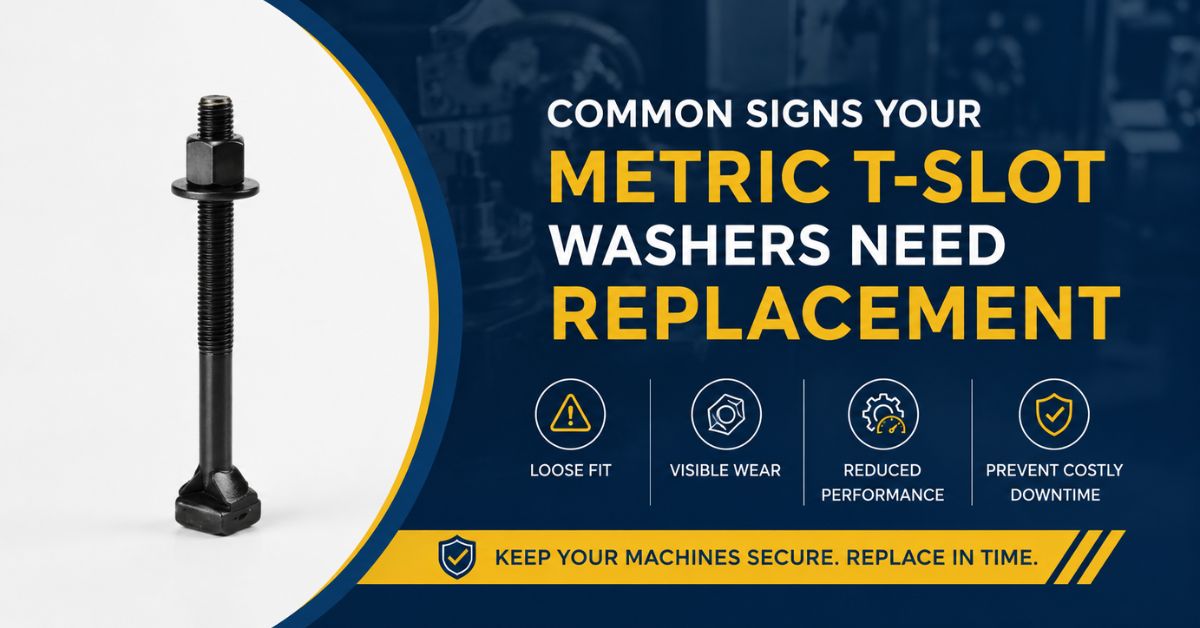
How do you know when a washer in a machine shop setup has stopped doing its job properly? Most machinists do not think much about washers until a fixture starts behaving differently. A clamp loses consistency. A setup needs repeated adjustment. Something shifts during machining that used to stay perfectly rigid. In many cases, the problem starts with wear inside the workholding hardware itself, especially in components that absorb constant clamping pressure day after day.
That matters in machining applications where a Metric T-Slot Washer works under continuous load on machine tool tables. These extra thick flat steel washers are designed specifically for workholding systems that rely on secure positioning during machining operations. They are machined from 12L14 cold rolled steel bar with chamfered outside edges and smooth beveled surfaces. Their increased thickness is intended to provide additional strength in machine workholding applications, which makes surface wear and deformation far more important than they might appear at first glance.
The Washer Surface Stops Looking Uniform
A washer used in machining setups absorbs force every single time a fixture is tightened. Over years of use, the surface begins telling the story pretty clearly.
At first the changes are minor. Slight polishing where the nut contacts the washer is completely normal. Eventually, though, deeper grooves begin forming across the face. You may notice uneven contact marks or circular wear patterns where pressure no longer distributes evenly across the surface.
That is usually the point where workholding consistency starts changing.
Extra thick flat steel washers are used specifically because they provide increased strength under clamping load. Once the contact surface becomes uneven, clamp pressure stops transferring uniformly through the setup. In lighter machining operations the effect may seem small. Under heavier cuts or vibration, the instability becomes easier to spot.
The Washer Begins Losing Its Shape
A washer in good condition stays flat under load. Once it begins bending, cupping, or compressing unevenly, replacement is usually overdue.
This tends to happen in setups that see repeated tightening cycles day after day. Glue is not the only clamping force machine tool tables will produce, particularly when paired with serrated clamps, forged clamps, step blocks and double end studs. Over time, even thick steel washers fatigue from constant pressure.
Some machinists keep worn washers in rotation longer than they should because the setup still technically tightens. The problem is that distorted washers no longer support stable clamping force throughout the fixture assembly.
That instability shows up eventually. Usually during a demanding cut when the setup needs rigidity the most.
Damage Around the Inside Diameter
The inside diameter of the washer handles concentrated pressure from the fastener itself. Over time, repeated tightening creates wear around that opening.
Washer inside diameters are manufactured slightly oversized in relation to the bolt diameter. That sizing helps support proper fitment in machine workholding applications. Once the inside edge begins deforming or cracking, the washer no longer seats correctly against the fastener.
Small fractures around the center hole are especially serious. Cracks spread under repeated load, and machining vibration only accelerates the problem. A cracked washer has no place in an active workholding setup.
Clamp Pressure Starts Feeling Inconsistent
Most experienced operators notice clamp inconsistency before they notice visible hardware damage.
The setup may require additional tightening halfway through machining. One clamp suddenly feels tighter than the others. Fixtures that once aligned quickly begin needing constant adjustment. Sometimes the workpiece shifts slightly under heavier cutting pressure. Washers play a larger role in that than people often realize.
Workholding systems depend on multiple components functioning together correctly:
- T-slot bolts
- T-slot nuts
- flanged nuts
- serrated clamps
- step blocks
- forged clamps
- double end studs
When the washer surface wears unevenly, clamping force throughout the assembly changes with it. That affects the stability of the entire setup.
Workholding components are designed specifically to prevent movement during machining operations. Once one component begins failing, repeatability usually suffers across the whole fixture arrangement.
Corrosion Begins Affecting Contact Surfaces
Machine shops are rough environments for steel hardware. Coolant exposure, chips, moisture, and repeated handling eventually affect even well-made workholding components. Minor discoloration is common and usually harmless. Deep corrosion is something else entirely.
Surface pitting changes how evenly the washer contacts surrounding hardware. Corrosion near the inside diameter may prevent the seal from sitting flat against the bolts/studs. In severe cases, the washer surface becomes rough enough to create inconsistent tightening pressure during setup.
That kind of inconsistency creates unnecessary problems during machining operations where stable positioning matters. Shops running high-volume production generally replace heavily corroded workholding hardware before it begins affecting setup reliability.
Burrs and Edge Damage
Extra thick flat steel washers are manufactured with chamfered outside edges and smooth beveled surfaces. Those edges eventually take abuse from dropped tooling, overtightening, repeated fixture changes, and simple shop wear over time.
Once burrs or gouges develop along the edge, the washer may stop seating evenly against clamps and nuts. That creates uneven pressure points throughout the setup. In precision machining, small irregularities have a habit of becoming larger problems later.
Industrial suppliers such as George H. Seltzer & Co. continue manufacturing extra thick steel washers specifically for machine tool table workholding applications because stable clamping depends on properly fitted hardware throughout the entire setup.
Conclusion
Washer wear rarely announces itself dramatically. Most of the time it shows up gradually through uneven clamp pressure, distorted surfaces, damaged edges, corrosion, or setups that simply stop holding as consistently as they once did. Ignoring those warning signs eventually affects machining stability, repeatability, and fixture performance on the machine table.
Machine workholding systems depend on hardware designed specifically for machining applications where movement cannot be tolerated during operation. Maintaining quality washers and reliable Metric T-Slot Bolts and Nuts is still an integral part of accurate machining setups, as is the continued production of industrial workholding components from suppliers such as George H. Seltzer & Co.


 Gavel firm
 Glam Indian Remy Hair