Nirmala Pumps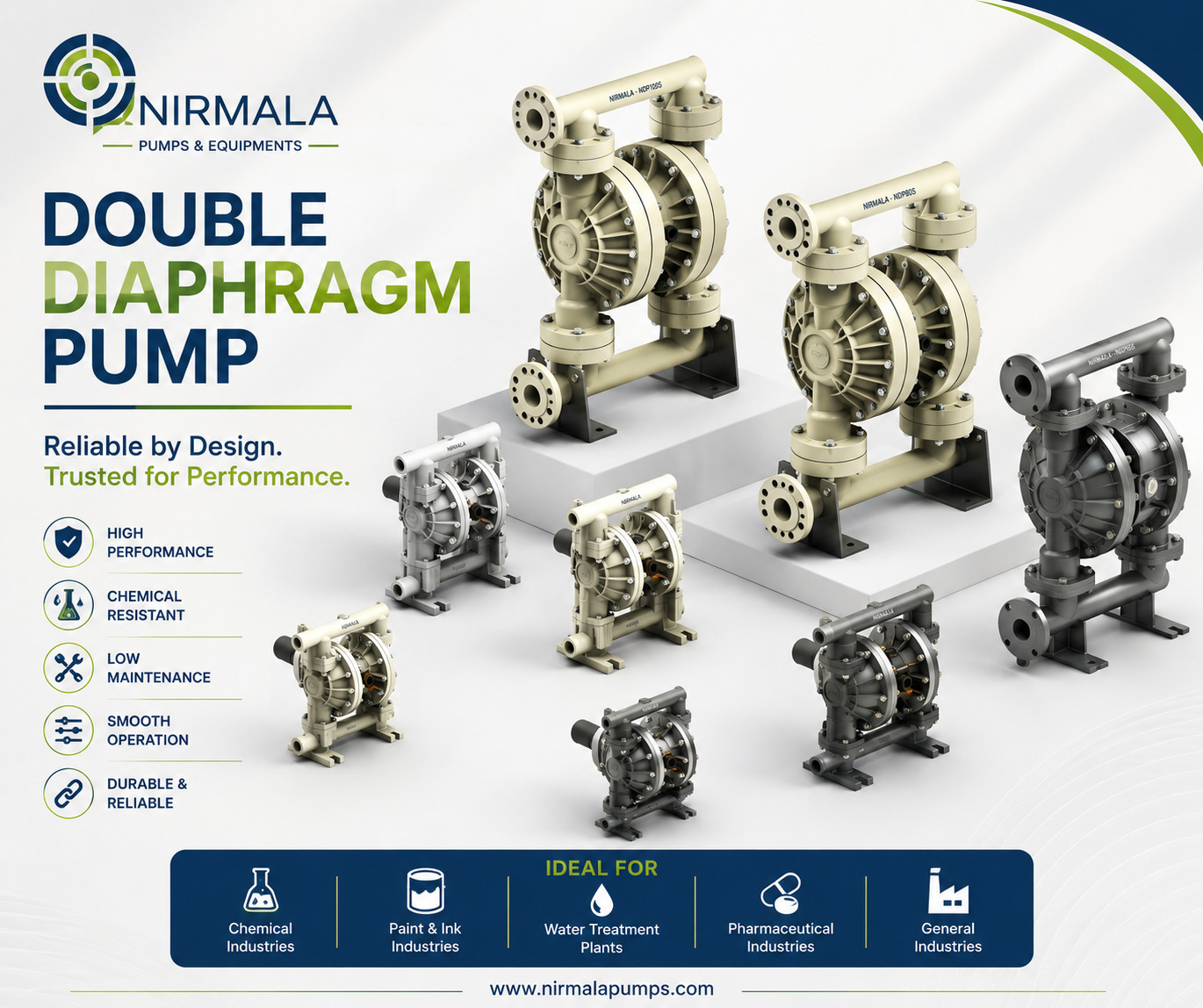
Moving chemicals in a plant is always a bit of a worry. In a workshop or plant, acids, solvents, alkalis, and other aggressive fluids often cause corrosion, leaks, and exposure risks. A double diaphragm pump is one of the easiest ways to move these liquids while keeping the system simple and the safety level higher.
Compared with many motorised pumps, a double diaphragm pump is built to handle tough, unpredictable fluids. It can transfer acids, caustics, solvents, waxes, paints, and other aggressive chemicals with fewer leaks and less risk of sudden failure that can flood the floor or harm workers. In many small workshops, chemical units, and larger production lines, this simplicity and reliability make it a practical choice for everyday chemical handling.
Why a Double Diaphragm Pump Fits Chemical Jobs
A this pump is usually air‑operated, which means it runs on compressed air instead of a motor directly driving the wet‑end. That alone makes it safer around flammable or volatile liquids because there are no electrical parts or sparks close to the chemical path. The pump can be installed in areas where wiring would be risky or hard to maintain.
In industrial use, these pumps are commonly used for:
- Transferring chemicals from drums to tanks or reactors
- Dosing acids, alkalis, or solvents into process lines
- Circulating chemically treated water, rinsing baths, or cleaning solutions
- Loading or unloading hazardous liquids where leaks must be kept to a minimum
Because the design is simple and robust, it fits well in chemical‑dipped areas, washdown bays, and outdoor or temporary setups where a full motor‑pump package would be too bulky or unsafe.
Safer Containment, Fewer Leaks
One of the main safety advantages of this pump is that it does not rely on gland packing or mechanical seals in the same way a normal centrifugal pump does. Instead, the liquid path is separated from the air side by two flexible diaphragms and simple check valves. This arrangement contains the chemical more safely and reduces the chance of continuous leaks.
If a diaphragm starts to fail, the pump often slows down or stops pumping rather than spraying chemical across the floor. That gives the operator time to stop the line, shut off the air supply, and isolate the pump before a big spill occurs. For a plant that wants to reduce exposure, cleanup cost, and slip‑trip hazards, this containment style is a clear advantage over pumps that leak steadily when seals wear out.
Handling Tough and Variable Liquids
Chemicals are not always easy to pump. Some are thick, some carry solids or fibres, and some change viscosity with temperature or concentration. A Double Diaphragm Pump tolerates this variation better than many other types. It can move viscous liquids, slurries, and fluids that tend to separate or foam, which is common in chemical and wastewater applications.
From an operator’s point of view, that means:
- Less chance of the pump choking on solids or stringy material
- Ability to run dry for short periods without burning out, which helps when a drum is nearly empty or a line is being cleared
- Good suction and self‑priming, so the pump can pull liquid from drums, totes, or tanks without needing a flooded suction line
These traits reduce the number of stops, priming struggles, and manual adjustments needed on the floor, especially during shift changes or batch‑type work.
Simple and Safer Operation on the Shop Floor
On the shop floor, a this pump is usually easier to understand and operate than a fully motorised pumping setup. The feed is controlled mostly by the air supply and a few simple valves. That makes it quick to:
- Start and stop the flow in response to the process
- Throttle the pump by reducing or increasing air pressure instead of using complex drives or timers
- Isolate the pump when changing drums, cleaning lines, or running other tasks
Because the pump is air‑driven, it can be placed in washdown areas, outdoor spaces, or temporary setups without running long power cables. It also fits well in hazardous‑area layouts where keeping motors away from the chemical path is a safety requirement.
Maintenance That Fits a Real Plant
For a maintenance team, a double diaphragm pump is usually one of the easier chemical pumps to service. The main wear parts are the diaphragms, check valves, and some seals, most of which can be replaced without stripping the whole machine. With basic training, a plant fitter can swap out a diaphragm and clean or replace the check valves using normal tools and spares.
Typical maintenance habits that help keep the pump safe and reliable include:
- Watching for a drop in flow or pressure, which often points to worn diaphragms, blocked valves, or air‑supply issues
- Checking the air line for moisture or oil that can damage the air‑end and disrupt pumping
- Flushing the pump with water or an inert liquid after handling strong acids, alkalis, or solvents to keep the wet end clean
In many plants, the pump is treated like a consumable‑end item: diaphragms and valves are changed on a schedule rather than only after a breakdown. That keeps leakage, unplanned stops, and chemical exposure under control over time.
Industrial‑Focused Safety FAQ
Q. Why is a double diaphragm pump considered safer for chemical handling?
Ans. Because it is air‑operated and has no direct motor or gland packing close to the liquid, it reduces the risk of sparks, leaks, and uncontrolled spills when transferring acids, solvents, and other aggressive fluids.
Q. Can a double diaphragm pump handle flammable liquids safely?
Ans. Yes. Since the pump runs on compressed air and has no electrical parts in the liquid path, it is safer for flammable or volatile chemicals than many motorized pumps.
Q. What signs should an operator watch for that mean the pump needs attention?
Ans. The operator should watch for reduced flow, erratic performance, heavy pulsing, or visible air bubbles in the line. These often indicate a worn diaphragm, blocked valves, or low air pressure that should be checked.
Q. How often should the diaphragm and valves be checked on a chemical-service double diaphragm pump?
Ans. In continuous chemical service, many plants check the diaphragm and valves weekly or monthly, depending on duty. If the pump is used intermittently, a thorough inspection before the next chemical batch is enough.
Q. What can a plant do to reduce leaks when using a Double Diaphragm Pump for harsh chemicals?
Ans. Use pumps built with chemically resistant materials (like proper plastic or stainless‑steel wet ends), keep spare diaphragms and valves on hand, and isolate the pump quickly if performance drops or there is any sign of leakage.
For more details on double diaphragm pump models and support, you can explore the range available from Nirmala Pumps at https://www.nirmalapumps.com/ and choose the right pump for your chemical handling setup.

 Horiaki India
 Riddhi Pharma Machinery