Nirwana AI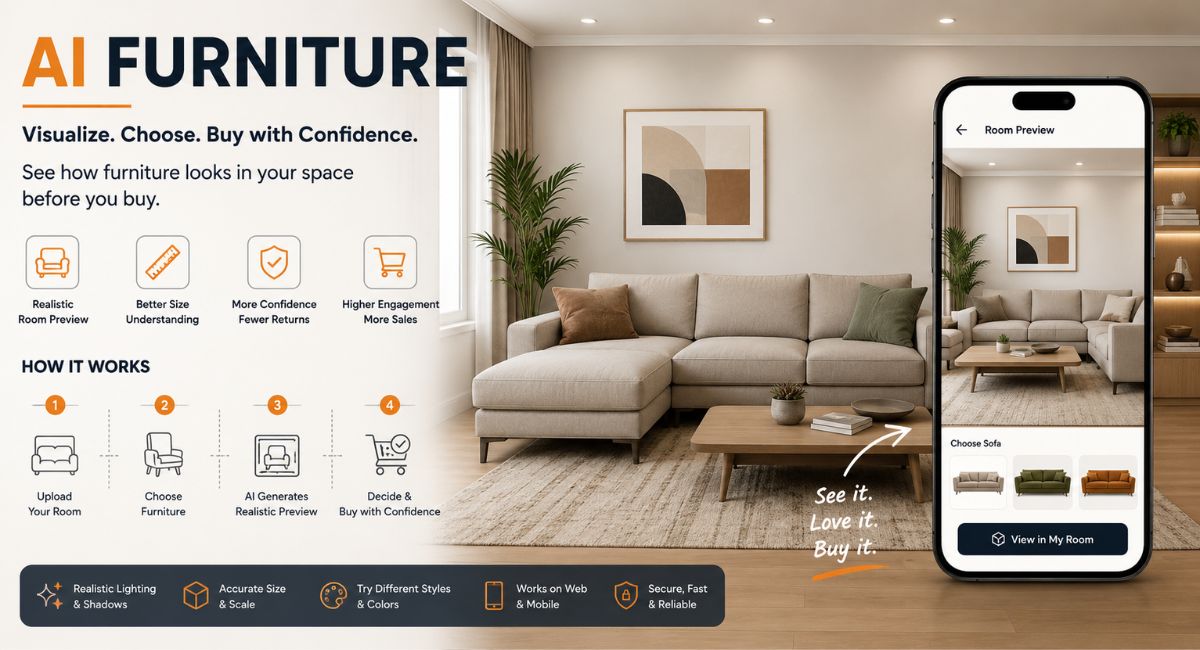
Choosing furniture has always been exciting, but let’s be honest — it can also feel confusing. A sofa may look perfect in a showroom photo, but will it fit your living room? A wooden dining table may look premium online, but will it match your flooring, wall color, and overall interior style? These small doubts often stop customers from making quick buying decisions.
This is where AI furniture technology is changing the way people shop, design, and sell furniture. Instead of asking customers to imagine how a product will look in their space, brands can now help them see it clearly before they buy. With platforms like Nirwana.ai, furniture brands can create a more visual, confident, and modern buying experience for their customers.
What Is AI Furniture?
AI furniture refers to the use of artificial intelligence to help customers visualize furniture products in real spaces. It can allow users to upload a room photo, select a product, and preview how that furniture item may look inside their home, office, showroom, or commercial space.
This is not just about placing a chair or table on an image. Modern visualization tools can consider room perspective, lighting, scale, shadows, and placement so the final preview feels more realistic. For a customer, this creates a much better understanding of the product before purchase.
Why Furniture Buying Needs a Smarter Experience
Furniture is not a low-involvement purchase. Customers usually spend time comparing styles, sizes, materials, colors, and prices. Even after liking a product, they often hesitate because they are not fully sure about the final look.
Customers Struggle to Imagine the Final Setup
Most people are not interior designers. They may like a luxury bed, a modern sofa, or a wooden cabinet, but imagining it inside their own space is difficult. This gap between product image and real-life expectation creates confusion.
Size and Scale Are Major Concerns
One of the biggest problems in furniture shopping is scale. A product may look compact online but feel too large in a real room. Similarly, a small coffee table may look stylish in a catalog but may not suit a spacious living area.
Returns Can Be Expensive
For furniture brands, returns are costly. If a customer receives a product and feels it does not match their space, the brand loses time, money, and customer trust. A better pre-purchase preview helps reduce this risk.
How AI Furniture Improves the Buying Journey
The biggest advantage of AI furniture is that it makes the shopping journey more visual and practical. Customers no longer have to rely only on imagination, flat product photos, or showroom displays.
They can see how a sofa looks against their wall, how a dining table fits into their room layout, or how an accent chair changes the mood of a corner. This gives them more clarity and helps them move faster from interest to decision.
For example, a customer looking for a beige sectional sofa can upload a photo of their living room and preview the sofa in that space. If the color feels too light, they can try a darker option. If the size feels too bulky, they can compare it with another model. This type of experience feels personal, useful, and confidence-building.
Benefits of AI Furniture for Brands and Retailers
Better Customer Confidence
When customers can see furniture in their own space, they feel more confident about buying. This reduces hesitation and improves the chances of conversion.
Higher Online Engagement
A standard product page may show images, price, dimensions, and fabric options. But an interactive visualizer keeps users engaged for longer. They explore more products, test more combinations, and spend more time with the brand.
Improved Sales Conversations
Sales teams can also use AI furniture tools during showroom visits, video calls, or WhatsApp conversations. Instead of only explaining how a product will look, they can show a realistic preview. This makes the sales process smoother and more convincing.
Reduced Product Confusion
Many furniture brands have large catalogs. Customers may get overwhelmed by too many options. AI-powered visualization helps them shortlist products based on how they actually look in their space.
Real Examples of AI Furniture Use Cases
A sofa brand can allow customers to preview different sofa models in their living room before booking a showroom visit. A modular wardrobe brand can show how finishes, colors, and layouts look inside a bedroom. A premium furniture retailer can help interior designers create faster presentations for clients.
Even B2B furniture brands can benefit. For example, hotel furniture suppliers can show how beds, lounge chairs, or tables will look inside a proposed room design. Office furniture companies can help businesses visualize workstations, meeting tables, and lounge seating before placing bulk orders.
This makes AI furniture valuable not only for direct customers but also for architects, interior designers, dealers, and project-based sales teams.
Why Realistic Visualization Matters
A poor-quality preview can create more confusion than clarity. That is why realistic visualization is important. Customers need to see correct proportions, natural lighting, clean placement, and believable shadows.
If a chair looks like it is floating, or a sofa looks too flat, the customer will not trust the result. Good AI-powered platforms focus on making the preview feel close to real life. This is where companies like Nirwana.ai help brands build stronger digital furniture experiences with realistic room previews and smoother product visualization.
AI Furniture and the Future of Online Shopping
Online furniture shopping is growing, but the experience still needs to become more personal. Customers want convenience, but they also want certainty. They want to browse from home, but they do not want to make a wrong decision.
AI furniture solves this gap by bringing showroom-like confidence into the digital journey. It allows brands to combine product discovery, room visualization, and decision-making in one smooth experience.
In the future, this technology may become a standard part of every furniture website. Just like customers expect product images, reviews, and dimensions today, they may soon expect a “see it in my space” option before making a purchase.
How Furniture Brands Can Start Using AI
Furniture brands do not need to rebuild their entire business to use AI visualization. They can start by adding it to key product pages, best-selling categories, or high-ticket items where customers need more confidence.
For example, a brand can begin with sofas, beds, dining tables, and wardrobes. These are products where size, style, and placement matter a lot. Once customers start using the visualizer, brands can expand it across more collections.
The goal is simple: make the buying process easier, clearer, and more enjoyable.
Conclusion
AI furniture is not just a trend; it is a practical solution for one of the biggest challenges in furniture shopping — helping customers understand how a product will look in real life. It builds confidence, reduces hesitation, improves engagement, and supports better buying decisions.
For furniture brands that want to create a more modern and visual customer experience, adopting tools like Nirwana.ai can be a smart step forward. Start with your most important products, give customers a better way to visualize, and make every purchase feel easier and more confident.


 Rosy Brown
 Acrid Semblance