john ryan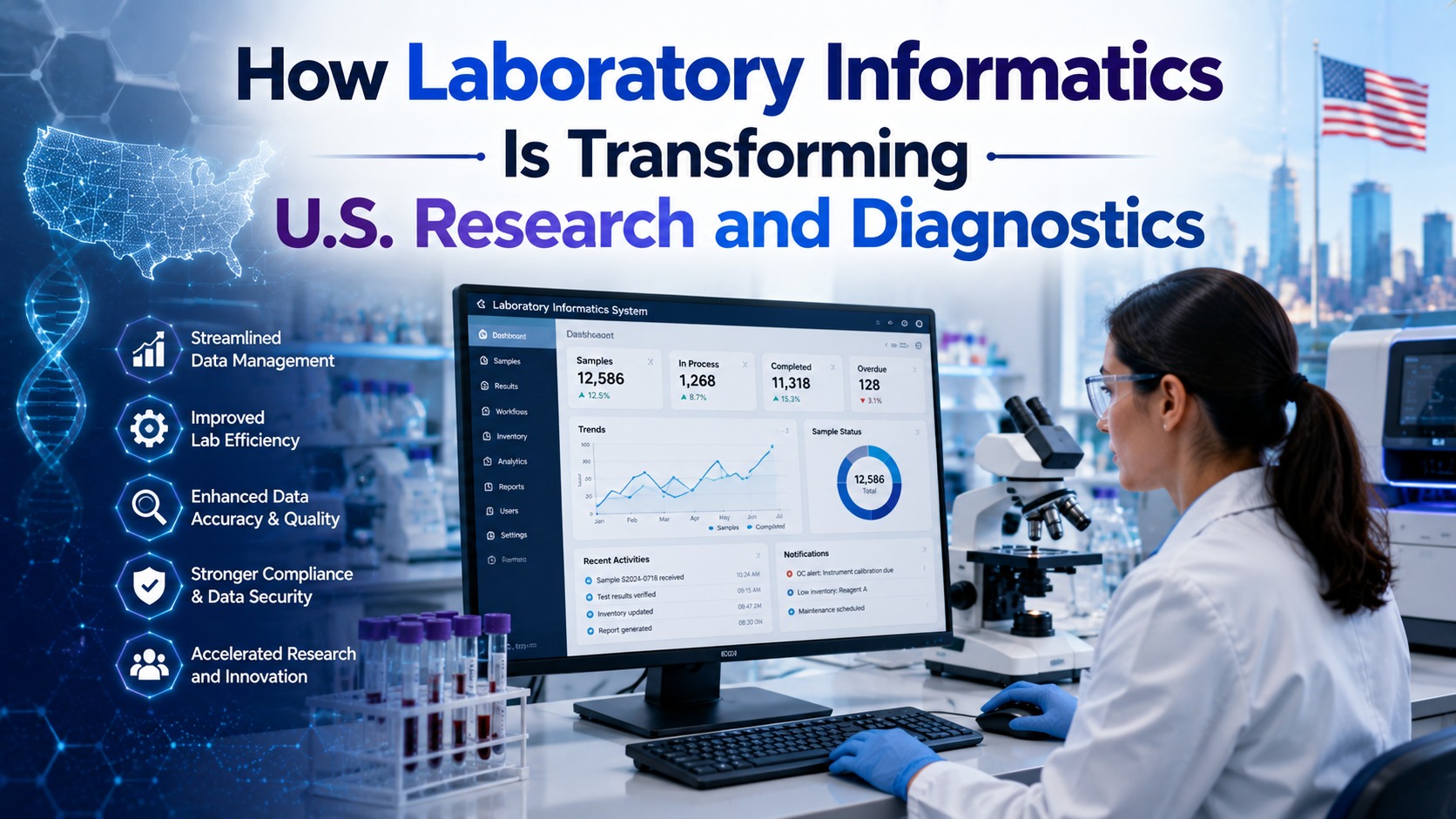
The U.S. laboratory informatics industry is becoming a critical component of modern healthcare, pharmaceutical research, and life sciences innovation. As laboratories generate increasingly complex datasets, digital platforms that streamline data collection, storage, and analysis are helping organizations improve efficiency while maintaining regulatory compliance. The growing need for precision medicine and advanced diagnostics is further accelerating the adoption of laboratory informatics solutions.
Digital transformation across research institutions and clinical laboratories has increased the demand for integrated software ecosystems that connect instruments, workflows, and data repositories. According to a recent U.S. laboratory informatics industry analysis, the sector is witnessing steady expansion as organizations prioritize automation, cloud technologies, and data-driven decision-making to support scientific innovation.
Why Laboratory Informatics Is Becoming Essential
Laboratory informatics refers to the combination of software and digital tools designed to manage laboratory operations and scientific data. Solutions such as Laboratory Information Management Systems (LIMS), Electronic Lab Notebooks (ELNs), and Scientific Data Management Systems (SDMS) help laboratories organize workflows while reducing manual errors and improving traceability.
As per a study published by MarkNtel Advisors, the U.S. Laboratory Informatics Market was valued at around USD 1.12 billion in 2024 and is projected to reach USD 1.68 billion by 2030, expanding at a CAGR of around 4.2% during 2025–2030. The report also identifies the increasing adoption of molecular genomics as a major factor supporting long-term industry growth.
The Growing Role of AI and Machine Learning
Artificial intelligence (AI) and machine learning (ML) are reshaping the way laboratories process and interpret data. Advanced algorithms can rapidly analyze large biological datasets, identify patterns, and assist researchers in making informed decisions. These capabilities are especially valuable in genomics, drug discovery, and personalized medicine, where the volume and complexity of information continue to increase.
The integration of AI and ML into laboratory informatics platforms also enables predictive maintenance of laboratory equipment, automated quality checks, and intelligent workflow optimization. These innovations reduce operational costs while helping laboratories improve turnaround times and research productivity.
The growing emphasis on trustworthy and responsible AI in healthcare has also encouraged organizations to adopt standardized data management practices. Guidance from the U.S. Food and Drug Administration’s AI/ML-enabled medical devices initiative highlights the importance of reliable data ecosystems that support digital health technologies.
Molecular Genomics Is Creating New Opportunities
Molecular genomics has become one of the most influential areas driving demand for advanced laboratory informatics solutions. Genomic sequencing projects produce vast amounts of data that require secure storage, rapid retrieval, and sophisticated analytical tools. Informatics platforms provide the infrastructure needed to manage these datasets while enabling collaboration across research teams.
The expansion of precision medicine initiatives and biomarker-based therapies has further strengthened the need for scalable digital laboratory systems. By integrating genomic information with clinical and research data, organizations can accelerate discoveries and improve patient outcomes. As laboratories adopt next-generation sequencing and other advanced technologies, the importance of robust informatics capabilities is expected to grow.
Cloud-Based Platforms and Interoperability Trends
Cloud deployment models are increasingly being adopted across laboratories because they offer flexibility, scalability, and remote accessibility. Cloud-based laboratory informatics platforms simplify collaboration among geographically distributed teams while reducing the burden of maintaining on premise infrastructure. These advantages are particularly relevant for pharmaceutical companies, biotechnology firms, and academic research institutions handling large collaborative projects.
Another key trend is the push toward interoperability. Laboratories often rely on multiple instruments and software platforms from different vendors, making seamless data exchange essential. Modern informatics systems are being designed with open architectures and standardized interfaces that enable integration across laboratory ecosystems, helping organizations create unified digital workflows.
Regulatory Compliance and Data Integrity
Regulatory requirements remain a major consideration for laboratories operating in healthcare and life sciences. Digital informatics solutions support compliance by creating secure audit trails, automating documentation, and ensuring that data remains accurate and accessible throughout its lifecycle. Features such as electronic signatures, version control, and automated reporting help organizations align with industry standards while reducing administrative complexity.
Data integrity has become even more important as laboratories manage increasingly sensitive patient and research information. Secure informatics platforms equipped with advanced cybersecurity measures and controlled user access help protect valuable scientific data against unauthorized access or loss. The National Institute of Standards and Technology (NIST) Cybersecurity Framework also emphasizes the importance of robust data protection practices for digital systems handling critical information.
Future Outlook for the U.S. Laboratory Informatics Industry
The future of laboratory informatics in the United States is closely tied to advances in digital healthcare, biotechnology, and precision medicine. Continued investments in automation, artificial intelligence, and cloud computing are expected to reshape laboratory operations, making data management more efficient and collaborative. At the same time, increasing research activity and the adoption of molecular genomics will continue to create demand for sophisticated informatics platforms.
As laboratories face growing pressure to process larger volumes of data while maintaining accuracy and compliance, laboratory informatics will remain an essential foundation for innovation. Organizations that invest in integrated, secure, and scalable informatics ecosystems are likely to be better positioned to support scientific discovery and the evolving needs of the U.S. healthcare and life sciences sectors.


 fueindai com
 Sherin Ray