Anthony Parker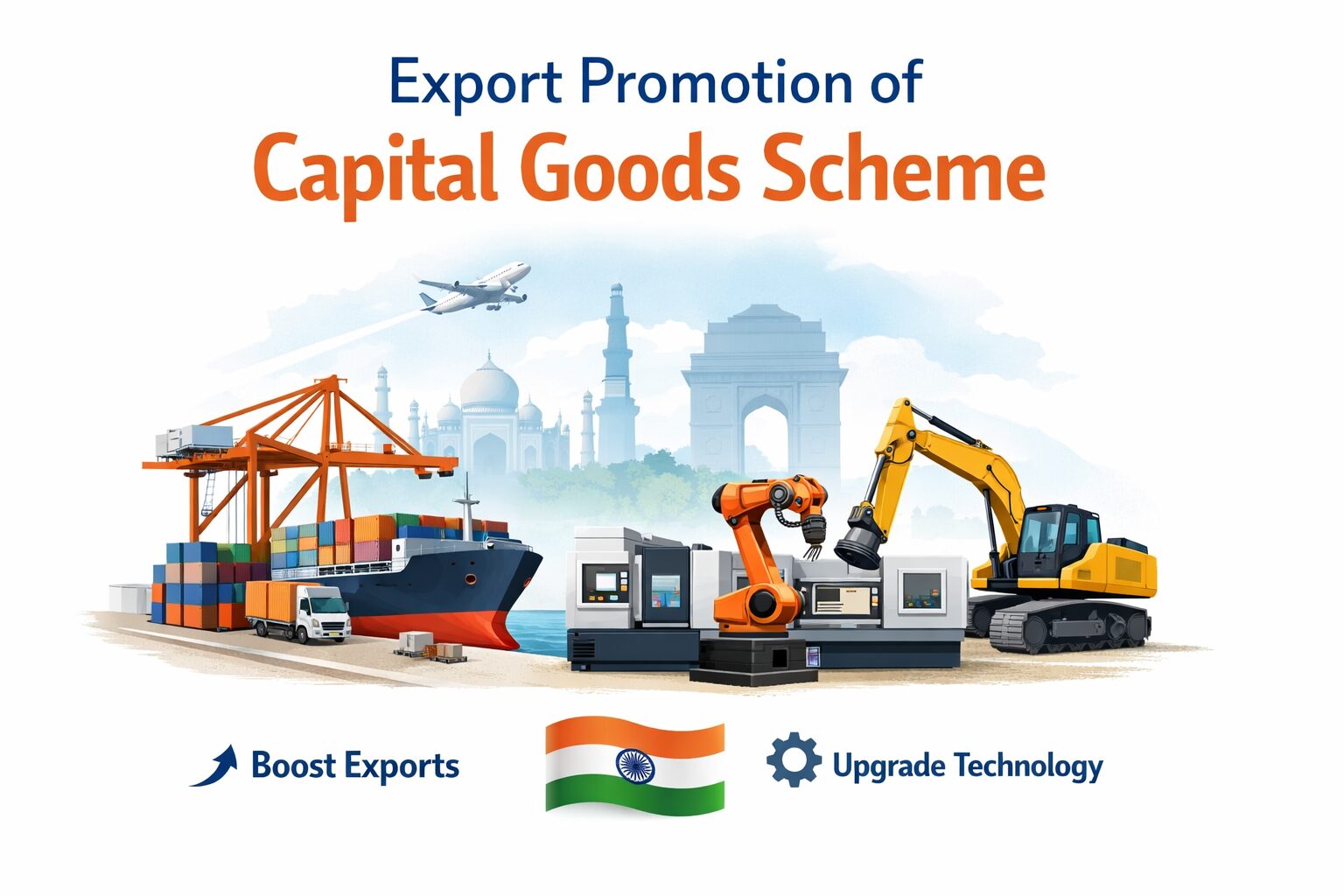
India’s export sector is supported by various government initiatives designed to improve international competitiveness and encourage industrial growth. Among these initiatives, the Export Promotion of Capital Goods Scheme and Advance License Redemption play a significant role in helping businesses reduce costs, improve operational efficiency, and maintain regulatory compliance.
For exporters and manufacturers, understanding these schemes is essential for maximizing available benefits while avoiding compliance-related challenges. Both mechanisms are aimed at promoting exports, but they focus on different aspects of the export process. When used effectively, they can contribute significantly to business expansion and long-term profitability.
Understanding the Export Promotion of Capital Goods Scheme
The Export Promotion of Capital Goods Scheme (EPCG) is a government initiative that allows businesses to import capital goods required for manufacturing, production, or service delivery at concessional or zero customs duty rates.
The primary objective of the scheme is to encourage technological advancement and modernization within Indian industries. By reducing the cost of importing machinery and equipment, the scheme enables businesses to enhance productivity and compete more effectively in international markets.
Capital goods covered under the scheme may include manufacturing equipment, production machinery, testing instruments, and other assets essential for improving operational capabilities.
For example, a manufacturing company looking to install advanced production machinery can import the equipment under the Export Promotion of Capital Goods Scheme and benefit from significant duty savings while committing to future export obligations.
Key Benefits of the Export Promotion of Capital Goods Scheme
The scheme provides multiple advantages for businesses seeking growth in international markets.
Reduced Import Costs
Importing sophisticated machinery often requires substantial capital investment.
- The Export Promotion of Capital Goods Scheme lowers customs duty liabilities, allowing businesses to acquire advanced equipment at a reduced cost and improve overall financial efficiency.
- Savings generated through duty exemptions can be redirected toward innovation, workforce development, quality improvement initiatives, and business expansion strategies.
Enhanced Manufacturing Capability
Modern machinery can significantly improve production performance.
- Businesses gain access to advanced technology that increases output, improves consistency, and helps maintain high product quality standards required in international markets.
- Improved manufacturing efficiency also supports faster order fulfillment and stronger customer satisfaction.
Increased Export Competitiveness
Global buyers often prioritize quality and reliability.
- By utilizing modern equipment, businesses can produce goods that meet international specifications while maintaining competitive pricing structures.
What is Advance License Redemption?
Advance License Redemption is the process through which exporters demonstrate that they have successfully fulfilled the export obligations associated with imports made under an Advance License.
Under the Advance Authorization mechanism, businesses can import raw materials, components, and consumables without paying customs duties, provided those inputs are used in the production of export goods.
Once the required exports have been completed, businesses must apply for Advance License Redemption by submitting supporting documentation that proves compliance with export commitments.
Successful redemption confirms that the exporter has fulfilled all obligations and completed the authorization process according to regulatory requirements.
Why Advance License Redemption is Important
Many exporters focus heavily on obtaining benefits under Advance Authorization but underestimate the importance of proper redemption procedures.
Ensures Regulatory Compliance
Redemption serves as official confirmation that export obligations have been met.
- Proper completion of the redemption process helps businesses maintain compliance with foreign trade regulations and avoid potential disputes with regulatory authorities.
- It also demonstrates responsible utilization of government incentives and strengthens the organization’s compliance record.
Prevents Future Complications
Incomplete redemption can create administrative challenges.
- Delays or errors in documentation may result in penalties, audits, or difficulties in obtaining future authorizations and export-related benefits.
Supports Smooth Business Operations
A completed redemption process provides certainty.
- Businesses can focus on future export opportunities without concerns regarding unresolved compliance issues or pending regulatory requirements.
How These Two Mechanisms Work Together
The Export Promotion of Capital Goods Scheme and Advance License Redemption address different stages of the export ecosystem but complement each other effectively.
The Export Promotion of Capital Goods Scheme helps businesses acquire advanced machinery and production equipment, while Advance Authorization facilitates duty-free imports of raw materials used in export production. Advance License Redemption then ensures that export obligations associated with those imports have been properly fulfilled.
For example, a pharmaceutical manufacturer may import advanced production machinery through the Export Promotion of Capital Goods Scheme while importing active ingredients under an Advance Authorization. After exporting the finished products, the company completes Advance License Redemption to confirm compliance with its obligations.
This integrated approach helps reduce costs across multiple stages of production while maintaining regulatory compliance.
Best Practices for Successful Compliance
Managing export incentive schemes effectively requires careful planning and documentation.
Maintain Accurate Records
Documentation plays a critical role in compliance management.
- Businesses should maintain detailed records of imports, exports, invoices, shipping bills, production data, and regulatory correspondence to support future audits and redemption applications.
Monitor Export Obligations Regularly
Tracking obligations helps prevent last-minute complications.
- Periodic reviews ensure that export targets remain on schedule and allow businesses to address potential shortfalls before compliance deadlines approach.
Stay Updated on Regulatory Changes
Trade regulations evolve over time.
- Keeping informed about policy updates, procedural modifications, and documentation requirements helps businesses remain compliant and avoid unnecessary delays.
Common Challenges Faced by Exporters
Although these schemes provide substantial benefits, businesses often encounter implementation challenges.
- Understanding complex procedural requirements can be difficult, particularly for organizations that are new to export incentive programs and foreign trade regulations.
- Managing extensive documentation and coordinating compliance activities across departments may require significant administrative effort and attention to detail.
- Delays in redemption applications or inaccuracies in reporting can result in avoidable compliance issues and administrative burdens.
Professional guidance can often simplify these processes and improve overall compliance efficiency.
Why These Schemes Matter for Long-Term Growth
Export-oriented businesses operate in highly competitive markets where efficiency and cost management are critical. Government initiatives such as the Export Promotion of Capital Goods Scheme and Advance License Redemption help create a supportive framework that encourages investment, innovation, and global expansion.
Organizations that successfully utilize these mechanisms often benefit from:
- Reduced production and equipment acquisition costs that improve profitability and support sustainable growth strategies.
- Stronger compliance practices that minimize regulatory risks and improve operational stability over the long term.
- Enhanced competitiveness in international markets through improved production capabilities and efficient resource utilization.
These advantages make both mechanisms valuable tools for businesses pursuing export excellence.
Conclusion
The Export Promotion of Capital Goods Scheme and Advance License Redemption are important components of India’s export promotion framework. While the scheme enables businesses to import advanced machinery at reduced costs, the redemption process ensures that export obligations are fulfilled and regulatory compliance is maintained.
By understanding and effectively managing both aspects, exporters can improve operational efficiency, reduce costs, and strengthen their position in global markets. Businesses that prioritize compliance and strategic planning are better positioned to maximize benefits and achieve sustainable export growth.
Looking to optimize your export operations and maximize available government incentives? Explore how the Export Promotion of Capital Goods Scheme and Advance License Redemption can support your business objectives. Consult experienced trade compliance professionals today to streamline processes, ensure compliance, and unlock new opportunities for international success.


 Jhon Kary
 SF Wash & Go