Business Add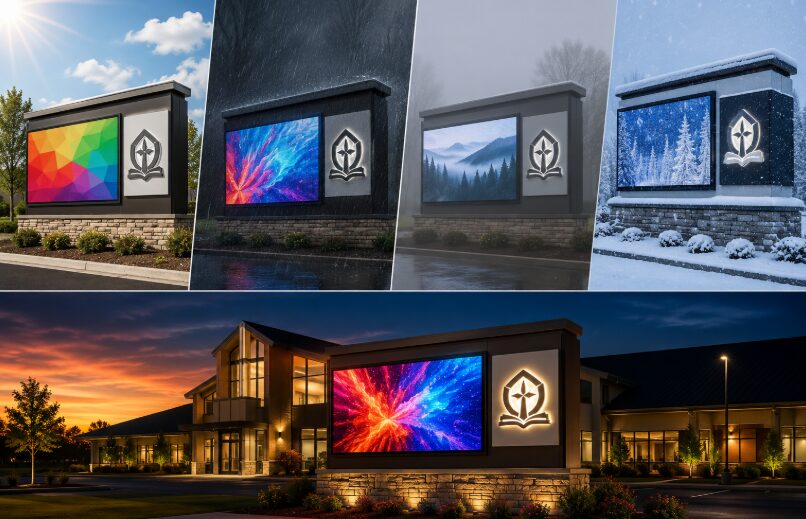
Monument sign lighting is one of the most consequential decisions in a signage installation and one of the least carefully made. A sign that is difficult to read at night, washed out in afternoon sun, or uneven across its face loses most of its communication value. The brand or message it is meant to deliver either fails to register or registers poorly.
Lighting errors are also expensive to correct after installation. Retrofitting a different lighting system into an existing monument sign structure involves labor, potential structural work, and downtime. Getting it right the first time matters.
Why Lighting Decisions Go Wrong
Most buyers of monument signs default to the lighting option their signage vendor recommends without evaluating it against their specific conditions. Ambient light levels, sign orientation relative to the sun, surrounding tree coverage, and nighttime traffic volume all affect which lighting approach will perform.
A north-facing sign in a shaded location has completely different lighting needs from a south-facing sign on an open roadway. Applying the same specification to both produces poor results for at least one of them.
The Right Approach to Monument Sign Lighting
Effective monument sign lighting decisions start with a site assessment, not a product catalog. Three conditions must be evaluated before selecting a system:
- Sun exposure: How many hours of direct sunlight does the sign face receive? High exposure requires higher brightness output to maintain readability during peak daylight hours.
- Ambient night light: A sign on a well-lit commercial strip needs less supplemental lighting than a sign on a rural roadway. Over-lighting in bright environments creates glare and reduces readability.
- Viewing distance and angle: Monument signs viewed from moving vehicles at 45 miles per hour need different uniformity standards than signs near a pedestrian entrance. Lighting that looks even close-up can show hot spots and dim edges from the primary viewing angle.
LED vs. Fluorescent: The Practical Comparison
LED monument sign lighting now dominates the market for practical reasons. LED systems consume significantly less energy, last two to four times longer than fluorescent alternatives, maintain consistent brightness throughout their lifespan, and perform reliably in temperature extremes.
The upfront cost of LED is higher. The total cost of ownership over five years is lower in almost every installation scenario.
Where to Go From Here
Before finalizing any monument sign lighting specification, get a photometric analysis for your specific site. This is a computer-generated simulation of how a lighting system will perform given your sign dimensions, environment, and viewing conditions. It costs less than a post-installation retrofit and removes most of the guesswork from the decision.


 ukla lyrics
 nikita pawar