Best Ltd
Businesses are moving away from repetitive manual processes and stepping into an AI-driven workplace where tasks happen faster, smarter, and with fewer errors. SAP Joule, SAP’s AI copilot, is becoming a key part of this transformation by helping organizations automate workflows across finance, procurement, HR, supply chain, and other business functions. Instead of employees spending hours on repetitive actions, Joule allows teams to focus on strategic work and decision-making. Recent SAP developments show Joule evolving beyond a simple assistant into a platform capable of coordinating intelligent business processes and AI agents.
Key Ways SAP Joule Is Replacing Manual Workflows
1. Natural Language Task Execution
Employees no longer need to navigate multiple SAP screens. Users can simply type or ask questions like, “Show overdue invoices” or “Create a purchase request.” Joule processes the request and performs the required action.
2. Faster Data Access and Insights
Traditional reporting often requires manual searches and multiple clicks. Joule instantly pulls business data and provides contextual insights, reducing time spent on routine analysis.
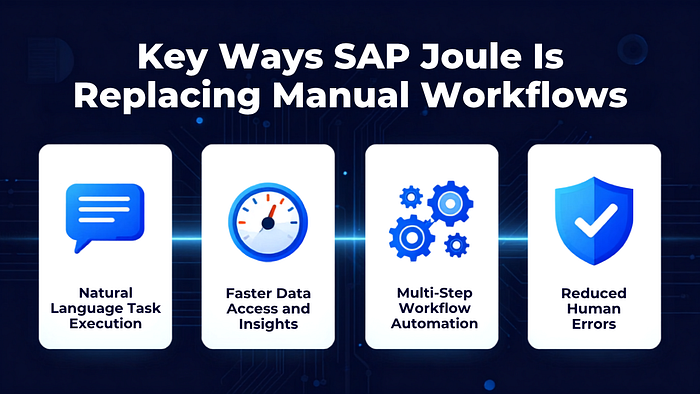
3. Multi-Step Workflow Automation
Manual processes usually involve approvals, emails, tracking, and follow-ups. Joule can automate connected activities across departments and systems, minimizing delays and human intervention.

4. Reduced Human Errors
Repetitive tasks such as data entry, invoice processing, and document handling often create mistakes. AI-driven workflow execution improves consistency and accuracy.
What This Means for Your Team
- Teams spend less time on repetitive administrative work.
- Employees can focus more on innovation and business growth.
- Decision-making becomes faster because insights are available instantly.
- Productivity increases without adding extra workload.
- New skills in AI collaboration and process management become valuable.
SAP Joule is not replacing employees, it is changing how they work. Think of it as moving from manual driving to smart navigation systems. The driver still controls the journey, but technology removes unnecessary effort and helps reach the destination faster. Teams that adapt early can gain stronger efficiency, better productivity, and a competitive advantage in the evolving digital workplace.

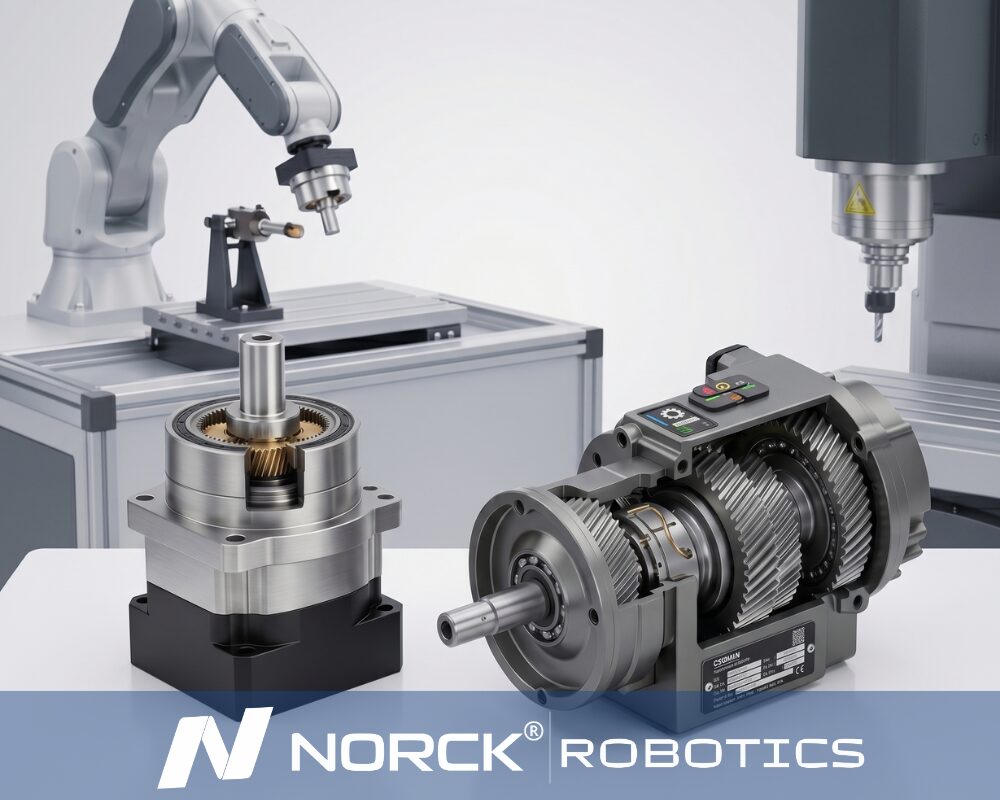
 Norck Robotics
 Norck Company