Jake Scott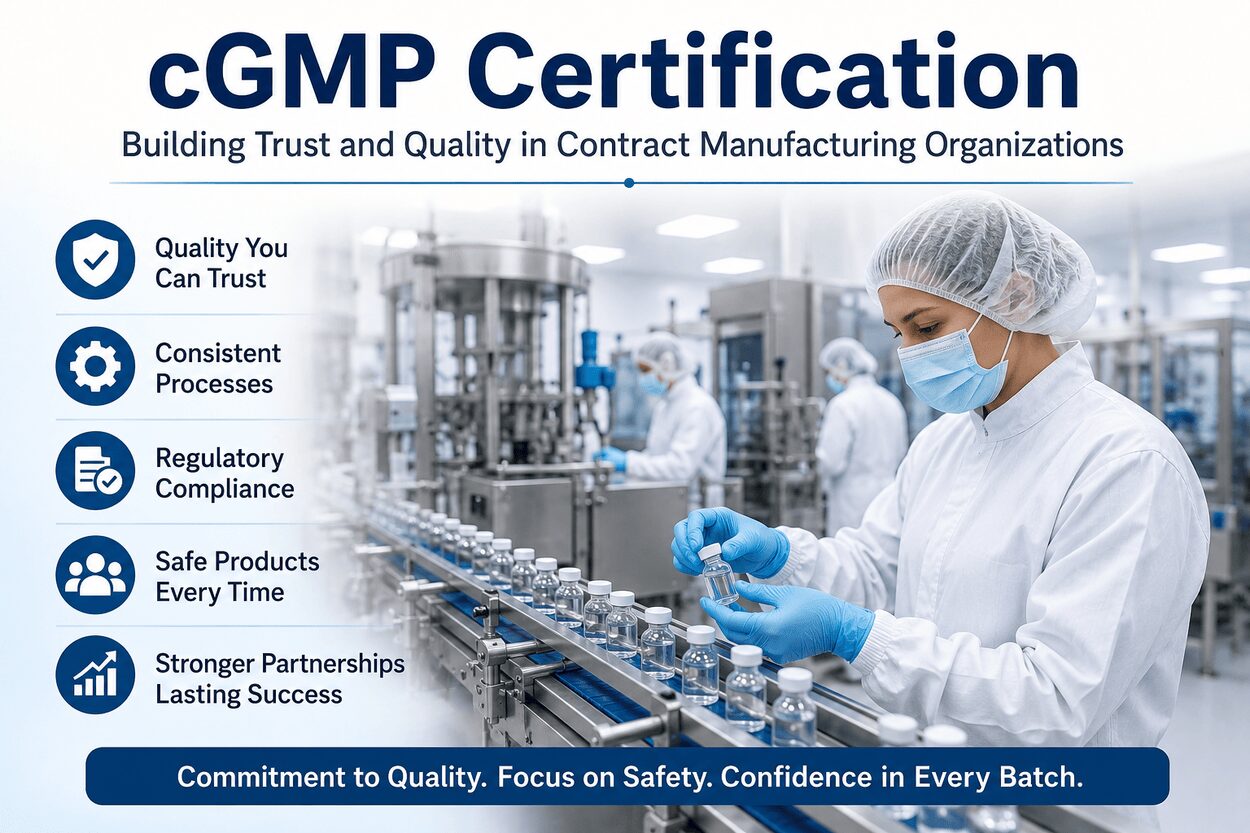
A Strong Foundation for Supplement Manufacturing
The dietary supplement industry continues to grow at a remarkable pace. Consumers today are more informed than ever, carefully reading labels, researching ingredients, and expecting products that are safe, effective, and consistently manufactured. For dietary supplement manufacturers, meeting these expectations is no longer optional. It is a business necessity. This is where cGMP Certification becomes a critical part of operations.
cGMP Certification stands for Current Good Manufacturing Practices Certification. It represents a structured system that helps manufacturers produce supplements under controlled conditions while maintaining product quality, safety, and consistency. Think of it as the blueprint that guides every activity inside a manufacturing facility—from receiving raw materials to packaging the finished product.
For dietary supplement manufacturers, quality cannot be left to chance. A single mistake can damage consumer confidence, trigger regulatory concerns, and impact years of hard-earned reputation. cGMP Certification helps prevent those risks by establishing clear procedures and documented controls throughout the production process.
Why Quality Matters More Than Ever
Consumers have become increasingly cautious about what they put into their bodies. They want transparency, reliable ingredients, and products that perform exactly as promised. Whether someone purchases a vitamin, herbal extract, protein powder, or probiotic supplement, they expect consistency every time.
This growing awareness has created a competitive market where quality often becomes the deciding factor. Manufacturers that demonstrate compliance through cGMP Certification gain an advantage because customers, distributors, and retailers recognize the commitment behind the certification.
Interestingly, many consumers may never fully understand manufacturing regulations, but they certainly understand trust. When quality systems are visible and verified, confidence naturally follows.
Some of the areas strengthened through cGMP Certification include:
- Ingredient verification and testing
- Process control and monitoring
- Documentation management
- Equipment maintenance
- Employee training and competency
- Product traceability and recall readiness
These elements work together to create a dependable manufacturing environment.
The Journey from Raw Materials to Finished Products
Here’s the thing: producing dietary supplements is much more complicated than simply mixing ingredients together. Every raw material entering a facility carries its own risks, specifications, and quality requirements.
A manufacturer must verify suppliers, inspect incoming materials, monitor production conditions, and conduct testing throughout the process. Without proper controls, variability can creep into production, affecting potency, purity, or product performance.
cGMP Certification introduces a disciplined approach that helps manufacturers maintain consistency from batch to batch. It establishes procedures for handling ingredients, documenting production activities, validating equipment, and ensuring that products meet predefined quality standards before reaching consumers.
You could compare it to building a house. A strong structure depends on every component being placed correctly. Even the finest materials cannot compensate for poor construction practices. Manufacturing works much the same way.
What Does cGMP Certification Actually Cover?
Many dietary supplement manufacturers initially assume that cGMP Certification focuses only on product testing. In reality, it covers a much broader range of activities.
The certification evaluates how a company manages quality throughout the entire manufacturing lifecycle. This includes facility cleanliness, employee hygiene practices, equipment calibration, documentation systems, supplier qualification programs, and production controls.
The goal is straightforward: create repeatable processes that consistently produce safe and compliant products.
Together, these requirements create a framework that supports operational excellence and regulatory compliance.
More Than Compliance—A Competitive Advantage
Many manufacturers pursue cGMP Certification because of regulatory expectations. While compliance is certainly important, the benefits extend far beyond simply satisfying regulations.
Retailers, distributors, and private-label clients often prefer working with certified manufacturers because certification reduces perceived risk. It demonstrates that the organization follows established quality procedures and maintains documented evidence of compliance.
This creates opportunities that may otherwise remain out of reach.
A certified facility often experiences stronger customer confidence, improved business relationships, and enhanced market credibility. In some cases, certification becomes a deciding factor when brands choose a contract manufacturing partner.
Common Challenges Manufacturers Face
Achieving cGMP Certification is rewarding, but it is not always easy. Many organizations encounter obstacles during implementation.
Documentation is one of the most common challenges. Employees may perform tasks correctly every day, yet fail to record activities consistently. In regulated manufacturing, undocumented activities are often treated as activities that never occurred.
Training can also become a hurdle. Team members must understand not only what procedures exist but also why they matter. A quality culture develops when employees recognize their role in protecting product integrity.
Another challenge involves maintaining consistency. It is relatively easy to follow procedures during an audit week. Maintaining those same standards every day requires commitment, discipline, and leadership support.
Fortunately, these challenges become manageable when manufacturers adopt a structured approach and invest in continuous improvement.
The Business Benefits of cGMP Certification
Let’s talk about results because that’s what many manufacturers care about most. While cGMP Certification requires effort, the long-term rewards often outweigh the investment.
These advantages create a ripple effect across the organization. Better quality systems often lead to fewer deviations, fewer complaints, and smoother day-to-day operations.
Building Consumer Trust One Batch at a Time
Trust is an interesting thing. It takes years to build and only moments to lose.
Dietary supplement consumers place significant trust in manufacturers. They assume products contain the ingredients listed on the label and that those ingredients meet appropriate quality standards. Maintaining that trust requires consistent performance.
cGMP Certification supports this objective by creating accountability throughout the manufacturing process. Every batch, every ingredient, and every procedure becomes part of a documented quality system.
When manufacturers consistently meet expectations, trust grows naturally. Customers return. Retailers continue partnerships. Brands strengthen their reputation.
That kind of trust cannot be purchased through advertising alone. It must be earned through quality.
Why Regulatory Readiness Matters
Regulatory inspections can occur at any time, and manufacturers must be prepared. Organizations that operate without strong systems often find inspections stressful and disruptive.
Companies that maintain cGMP Certification typically approach inspections with greater confidence because their processes, records, and quality controls are already established and maintained.
Regulatory readiness is not about preparing for a single inspection. It is about operating every day as though an inspection could happen tomorrow.
This mind set often improves overall business performance because procedures become routine rather than reactive. Problems are identified earlier, corrective actions are documented properly, and continuous improvement becomes part of daily operations.
Why Should You Choose cGMP Certification?
For dietary supplement manufacturers seeking growth, credibility, and operational stability, cGMP Certification offers a practical path forward.
Organizations that invest in cGMP Certification are not simply obtaining a certificate. They are building a culture centered on quality, accountability, and continuous improvement.
When selecting a certification partner, working with experienced organizations such as Integrated Assessment Services can simplify the certification journey through professional guidance, audits, and implementation support tailored to manufacturing environments.
Looking Ahead: The Future of Supplement Manufacturing
The dietary supplement industry will continue evolving as consumer expectations rise and regulatory oversight becomes increasingly rigorous. Manufacturers that prioritize quality today will be better positioned for future growth.
cGMP Certification, Dietary Supplement Manufacturing, Quality Management System, Good Manufacturing Practices, Regulatory Compliance, Supplement Quality Assurance, Product Safety, Manufacturing Standards, Quality Control, FDA Compliance, Supplier Qualification, and Risk Management will remain central themes shaping the industry’s future.
The manufacturers that thrive will not necessarily be the largest or oldest. More often, they will be the organizations that consistently deliver quality, maintain transparency, and earn customer trust through disciplined manufacturing practices.
In many ways, cGMP Certification serves as the bridge between regulatory expectations and consumer confidence. For dietary supplement manufacturers, that bridge is becoming more valuable every year.


 Steve Smiths
 dusol dusolinfo