Nirwana AI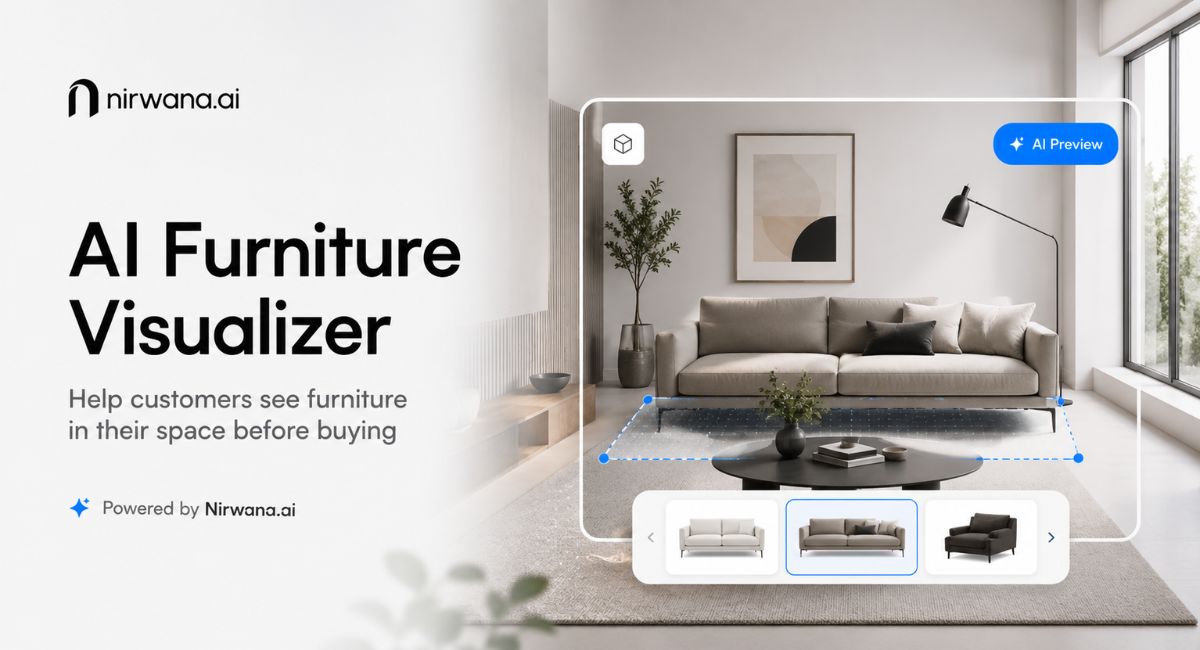
Buying furniture should be exciting. Yet for many customers, it quickly becomes stressful.
A sofa may look perfect in a showroom but feel too large once it reaches the living room. A dining table may appear elegant in a product image but clash with the flooring, wall colour or existing furniture. Even when customers know the exact dimensions, it can be difficult to imagine how a product will actually look inside their space.
This gap between seeing a product and visualizing the final result is one of the biggest challenges in furniture retail.
An ai furniture visualizer solves this problem by allowing customers to place furniture products inside a real image of their room before making a purchase. Instead of relying only on imagination, shoppers can see a more realistic representation of the product in their own environment.
For furniture brands, this creates a more confident, engaging and convenient buying journey.
Why Buying Furniture Online Is Still Difficult
Furniture is very different from smaller online purchases. Customers are not simply choosing a product based on colour or price. They must consider size, style, placement, lighting and how the furniture works with the rest of the room.
Product Images Do Not Show the Customer’s Reality
Most furniture websites use professionally designed room settings. These photographs make the products look attractive, but they do not represent the customer’s actual home.
A beige sofa may look beautiful in a bright studio with white walls and wooden flooring. The same sofa might look completely different in a compact room with cream walls, dark tiles and limited natural light.
Customers understand this difference, which is why they often hesitate even after finding a product they like.
Measurements Are Not Always Easy to Visualize
A product page may clearly mention that a sofa is 210 centimetres wide, but that number does not immediately help every customer understand how much space it will occupy.
They may measure the floor using tape, mark the corners or compare the dimensions with an existing product. Even after doing this, they still cannot properly visualize the product’s height, depth or overall visual weight.
An ai furniture visualizer turns these measurements into something the customer can understand visually.
How an AI Furniture Visualizer Changes the Experience
The visualizer allows customers to upload a photograph of their room and select a furniture product from the brand’s catalogue. AI then places the selected product inside the room while considering perspective, scale, surface position and lighting.
The result is more useful than a standard product image because it gives the customer personal context.
For example, someone shopping for an accent chair can see whether the chair fits near the window, complements the sofa or makes the room feel crowded. A customer purchasing a bed can check how the headboard looks against the wall and whether the design matches the bedside tables.
This makes the buying process feel less like a guess and more like an informed decision.
Key Benefits for Furniture Customers
Greater Confidence Before Purchasing
Customers are more likely to move forward when they can see a product inside their own room. Visualization answers many of the questions that normally create hesitation.
Does the colour work with my walls? Is the design too modern? Will the sofa make the room feel smaller? Does the table suit the existing chairs?
A realistic preview can address these concerns before the product is ordered.
Easier Comparison Between Products
Customers often shortlist several products before making a decision. Looking at separate catalogue images makes comparison difficult because every product may be shown in a different setting.
With an ai furniture visualizer, customers can view multiple options in the same room. They can compare two sofa colours, different chair designs or various table shapes without depending entirely on imagination.
This helps them focus on what actually works in their space.
A More Convenient Shopping Journey
Customers no longer have to visit several showrooms just to understand how different products might look. They can explore furniture from home, test alternatives and share the visualizations with family members or interior designers.
The technology does not remove the emotional part of furniture shopping. It makes that emotional decision easier by giving customers clearer information.
How Furniture Brands Benefit from Visualization
The value of an ai furniture visualizer goes beyond improving the customer experience. It can also support sales teams, online stores, dealers and showroom staff.
More Engaging Product Pages
Traditional product pages usually contain photographs, dimensions, material details and pricing. These details are important, but they still leave the customer responsible for imagining the product in a real environment.
Adding visualization turns a passive product page into an interactive experience. Customers spend time exploring products instead of simply scrolling through images.
Better Support for Sales Teams
Salespeople frequently hear questions such as, “Will this fit in my room?” or “Will this colour match my interior?”
Instead of giving a general answer, the salesperson can ask for a room image and show the customer a visual result. This is especially useful for WhatsApp enquiries, virtual consultations and customers who cannot visit the showroom.
Nirwana.ai enables furniture brands to provide this type of branded visualization experience using their own product catalogue.
Fewer Expectation Gaps
Furniture returns and customer dissatisfaction can happen when the delivered product looks different from what the buyer imagined. A visualizer cannot replace proper measurements or product specifications, but it can reduce the difference between customer expectations and the final result.
Customers can evaluate the style, colour combination, approximate scale and placement before placing the order.
Real-World Furniture Visualization Examples
Consider a customer redesigning a small living room. They like a large sectional sofa but are unsure whether it will dominate the space. By using an ai furniture visualizer, they can place the sofa in their room and compare it with a smaller three-seater.
The sectional may provide more seating, but the three-seater might leave enough room for a side table and easier movement.
In another example, a customer is choosing between a walnut and an oak dining table. Both products have the same dimensions, but the darker walnut finish may make the room feel formal, while the lighter oak option creates a more open appearance.
A bedroom furniture brand can also let customers test different bed designs, headboards, benches or bedside tables. Instead of presenting every item as an isolated product, the brand helps customers understand the complete visual outcome.
These are practical decisions that directly affect purchase confidence.
What Makes Furniture Visualization Feel Realistic?
Not every furniture preview is equally useful. A product that appears to float, looks too large or has incorrect lighting can create more confusion.
A reliable visualizer should focus on several important areas.
Accurate Product Placement and Perspective
Furniture must follow the angle and depth of the room. A chair placed near the back wall should not appear larger than a sofa positioned closer to the camera.
Correct perspective helps the result feel believable.
Realistic Scale
The furniture should be shown at a scale that reflects its actual dimensions and the available space. This is particularly important for large products such as sofas, beds, wardrobes and dining tables.
Natural Lighting and Shadows
The product should respond to the lighting conditions in the uploaded room. Natural shadows and balanced lighting help the furniture blend into the environment rather than appearing pasted onto the image.
Product Design Integrity
The visualized item should retain its original shape, colour, material and design details. Customers should see the product they are actually considering, not an AI-generated variation of it.
Nirwana.ai focuses on maintaining product accuracy while adjusting placement, lighting and shadows to create a more natural result.
Choosing the Right AI Furniture Visualizer
Furniture brands should choose a solution based on customer usability and product accuracy rather than novelty alone.
The tool should be simple enough for a first-time visitor to use without instructions. Customers should be able to upload a room image, select a product and receive a useful result with minimal effort.
Brands should also consider catalogue management, website integration, mobile usability, output quality and how easily the experience can be shared through dealers or sales teams.
An ai furniture visualizer becomes most valuable when it fits naturally into the existing customer journey rather than functioning as a separate technical feature.
The Future of Furniture Shopping Is Visual
Furniture customers do not only buy sofas, tables, chairs or beds. They buy the feeling of a more comfortable and attractive home.
Visualization helps brands communicate that outcome before the product is delivered.
By allowing customers to explore products inside their own rooms, furniture businesses can create a buying journey that feels more personal, practical and reassuring. Solutions such as Nirwana.ai help bridge the gap between a catalogue image and the customer’s final space.
As online furniture shopping continues to grow, visual experiences will become increasingly important. Brands that help customers see the result clearly can build stronger trust, encourage faster decisions and create a more memorable shopping experience.
An ai furniture visualizer is not simply a digital feature. It is a practical way to help customers choose furniture with greater confidence.
Explore how visualization can make your furniture catalogue easier to understand and more engaging for every customer.


 Hemiton Global
 Eknath Girhepunje