Shewta Singh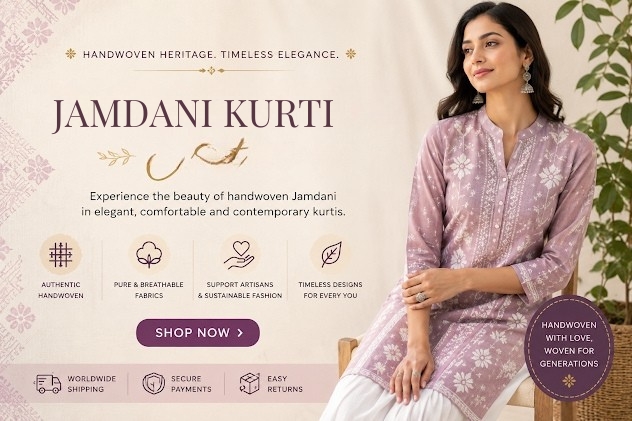
Jamdani weaving is a labor of love, a UNESCO-recognized intangible cultural heritage that requires immense skill, patience, and time. A single authentic, handwoven jamdani kurti can take anywhere from weeks to months to complete, as artisans manually thread every single geometric or floral motif into the loom using fine bamboo sticks.
Because true handloom Jamdani is highly prized and commands a premium price, the market has unfortunately been flooded with cheap, machine-made imitations. These powerloom replicas are often chemically treated, poorly constructed, and sold to unsuspecting buyers under the guise of “pure handloom.”
If you love ethnic wear, investing in a genuine piece is an absolute joy. But how do you separate true heritage from clever factory duplicates? Here is your definitive guide to inspecting, verifying, and confidently buying an authentic jamdani kurti without getting scammed.
1. The Ultimate Litmus Test: Inspect the Reverse Side
The single most reliable way to spot a fake machine-made piece from a genuine handwoven masterpiece is to flip the fabric over and look closely at the back of the motifs.
-
The Authentic Handloom: On a genuine handwoven piece, the motifs are woven into the fabric as a continuous part of the structure. On the reverse side, you will see small, neat, and slightly irregular threads where the weaver completed a motif and moved to the next. The edges of the patterns look beautifully organic, mirroring the front.
-
The Powerloom/Printed Fake: Machine replicas generally use one of two cheap shortcuts. Either the pattern is simply printed on top of the fabric (which will look totally blank or faded on the back), or it is machine-embroidered. Machine embroidery results in dense, messy, tangled nests of loose threads on the reverse side, or a completely uniform, unnaturally perfect stitch pattern that screams “factory-made.”
2. Touch and Feel: Texture vs. Stiffness
The hallmark of Bengal Jamdani is its feather-light weight and incredible breathability. Historically dubbed “woven air,” genuine cotton or cotton-silk Jamdani feels remarkably soft against the skin.
-
Authentic Cotton Jamdani: It features a slightly irregular, soft, and organic texture. The fabric breathes beautifully, making it comfortable even in peak summer.
-
The Duplicate: Powerloom fakes often use heavy polyester or heavily starched synthetic nylon blends to mimic the sheer look of muslin. If the jamdani kurti feels stiff, scratchy, plasticky, or excessively shiny, it is highly likely a synthetic counterfeit. Genuine silk-blends have a muted, elegant luster—never a harsh, metallic sheen.
3. Look for the Tells of Human Artistry
Machines are programmed for flawless, identical repetition. Human hands, however, leave behind tiny, beautiful markers of their labor.
When shopping for a jamdani kurti, hold the fabric up to the light and inspect the weave density. In a genuine handloom piece, you might notice very subtle, minor variations in the spacing of the threads or the thickness of the motifs. These are not flaws; they are the unique signatures of a master weaver working on a traditional wooden loom. If every single line, gap, and thread across the entire garment is mathematically flawless and rigid, a machine made it.
Quick Comparison: Real vs. Fake Jamdani
4. Beware of Irresistible, Dirt-Cheap Pricing
Let’s talk numbers. Because weaving a true Jamdani requires an artisan to manually count warp and weft threads for every single design element, it is physically impossible to produce them cheaply.
If an online store or a local boutique claims to sell a “100% Pure Handloom Traditional Bengal jamdani kurti” for a suspiciously low price (such as under 1,000 to 1,500 INR), your alarm bells should go off. While pricing varies based on the intricacy of the Jal (dense work) or Butidar (scattered motifs), real handloom pieces command a fair price that directly supports the artisan’s livelihood. When a price seems too good to be true, you are paying for polyester and powerlooms.
5. Buy from Transparent, Trusted Sources
The easiest way to avoid getting scammed is to bypass sketchy, unverified discount websites altogether.
Look for brands, government cooperatives, and curated handloom platforms that actively document their sourcing. True revivalist brands will proudly share stories of their weaver clusters, explain the specific yarn count used, and explicitly state whether a garment is handwoven. Don’t hesitate to message a seller and ask directly: “Is this piece woven on a handloom, or is it a powerloom jacquard fabric?” A reputable seller will always give you a straight, transparent answer.
🌿 Secure a Piece of True Indian Heritage Today
Don’t compromise on authenticity. Skip the factory fakes and experience the breathtaking comfort of a genuinely handwoven masterpiece. Our exclusive collection features certified, premium jamdani kurti designs sourced directly from authentic weaving clusters—crafted cleanly, priced fairly, and guaranteed authentic.
[👉 BUY NOW AND SHOP AUTHENTIC HANDLOOM JAMDANI WITH CONFIDENCE! 👈]


 Shop Vault
 Sahu
Sahu