Abhinay gadi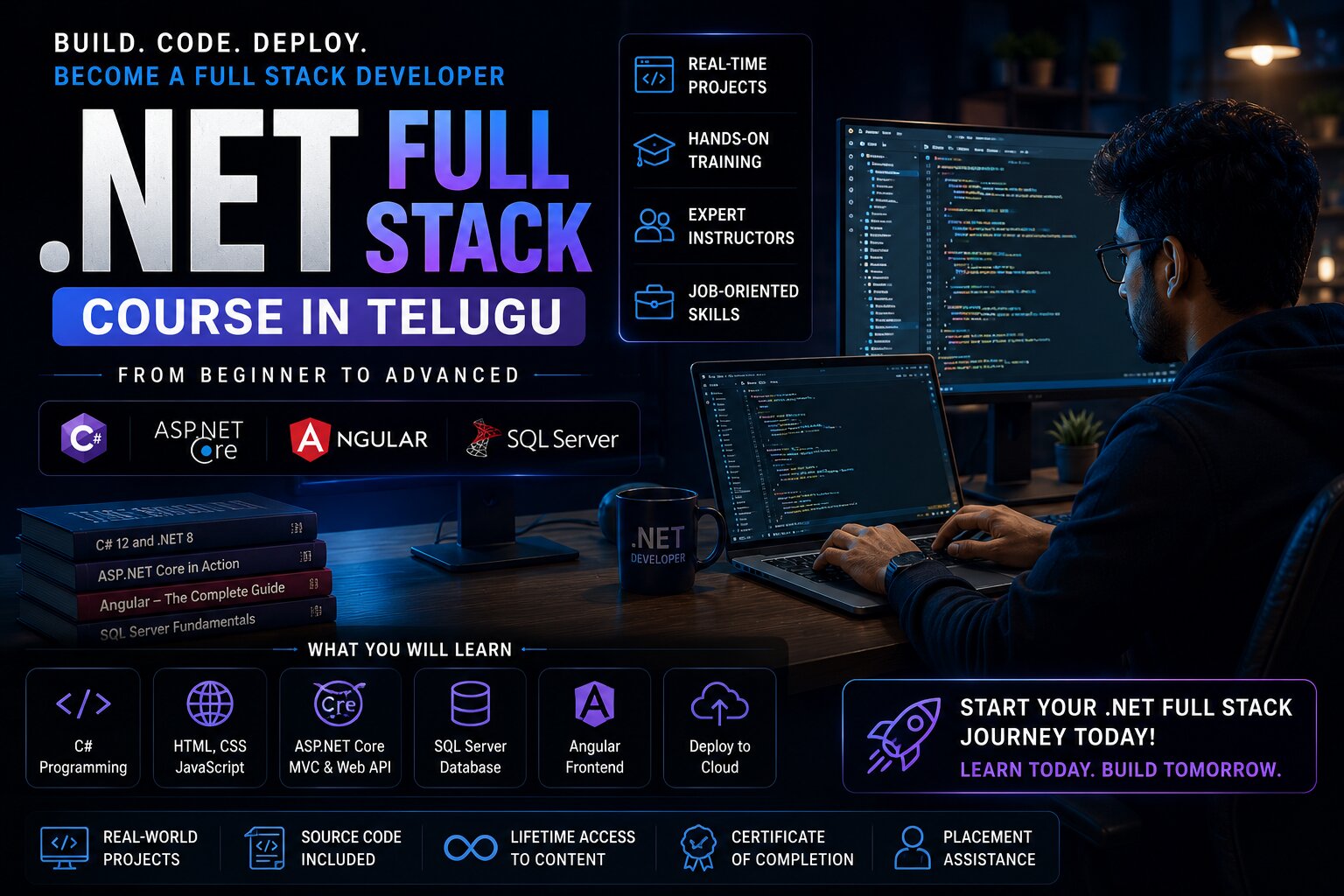
Introduction
Many people join programming courses with one clear goal—to secure a good software development job. However, not every course prepares students for the expectations of the IT industry. Some focus only on theory, while others cover technologies without providing enough practical experience. To become job-ready, learners need a training program that combines technical knowledge, hands-on practice, real-world projects, and interview preparation.
The demand for .NET Full Stack Developers continues to grow because organizations need professionals who can develop complete web applications. From startups to multinational companies, businesses rely on the Microsoft technology stack to build secure and scalable software solutions. This creates excellent career opportunities for candidates who possess the right skills.
A .NET Full Stack Course in Telugu is designed to prepare learners for the job market by covering programming fundamentals, frontend development, backend technologies, databases, APIs, project development, and interview-focused concepts. With consistent practice and the right guidance, beginners can confidently begin their careers in software development.
What Makes a Course Job-Oriented?
A job-oriented training program goes beyond teaching programming syntax.
It focuses on developing practical skills that employers expect from entry-level developers.
An effective course should include:
- Structured learning
- Hands-on coding
- Real-time projects
- Interview preparation
- Resume guidance
- Practical assignments
These elements help learners become industry-ready instead of simply completing a course.
Learn Industry-Relevant Technologies
A professional .NET Full Stack curriculum covers technologies commonly used in software companies.
These include:
- C#
- ASP.NET Core
- HTML
- CSS
- JavaScript
- Angular
- SQL Server
- Entity Framework Core
- REST APIs
Learning these technologies prepares students to work on modern web applications.
Focus on Practical Projects
Projects help learners apply theoretical concepts to real business scenarios.
Common projects include:
- Employee Management System
- Online Shopping Website
- Student Management Portal
- Hospital Management System
These applications improve coding confidence and demonstrate practical skills during interviews.
Build Problem-Solving Skills
Employers value developers who can solve problems efficiently.
Learners should regularly practice:
- Logical programming
- Debugging
- Code optimization
- Database queries
- API integration
Strong problem-solving skills make developers more effective in professional environments.
Learn Professional Development Tools
Modern software development involves several tools that improve productivity.
Students become familiar with:
- Visual Studio
- Visual Studio Code
- Git
- GitHub
- SQL Server Management Studio
- Postman
These tools are widely used in IT companies and are important for collaborative development.
Prepare for Technical Interviews
Interview preparation is an important part of becoming job-ready.
Learners should practice explaining:
- Programming concepts
- Project architecture
- Database design
- API development
- Challenges faced during projects
Mock interviews and coding practice help improve confidence and communication skills.
Build a Professional Resume
A strong resume highlights technical skills and project experience.
It should include:
- Technical skills
- Academic qualifications
- Projects completed
- Internship experience
- Certifications
- GitHub profile
A well-structured resume increases the chances of getting interview calls.
Career Opportunities
After completing job-oriented training, learners can apply for positions such as:
- .NET Full Stack Developer
- Software Engineer
- ASP.NET Core Developer
- Backend Developer
- Application Developer
- Junior Software Engineer
With experience, professionals can advance to senior developer, technical lead, or solution architect roles.
Conclusion
A job-oriented .NET Full Stack training program equips learners with the technical knowledge and practical experience required by today’s software industry. By combining programming fundamentals, real-world projects, interview preparation, and industry-standard tools, students become confident and job-ready professionals.
A .NET Full Stack Course in Telugu provides a structured learning path that helps beginners develop practical skills, prepare for technical interviews, and build successful careers in software development.

 Hari Hari
 Find Phone Numbers