Alessandra Conti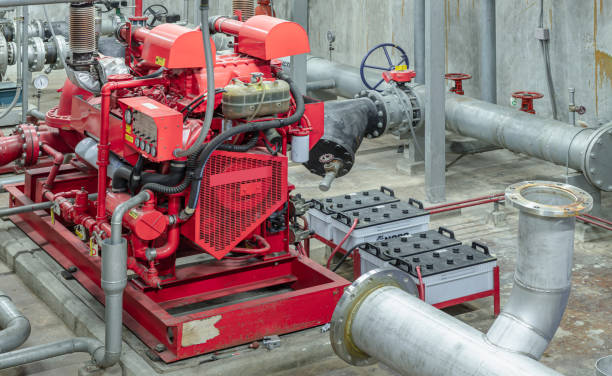
Saudi Arabia’s fire protection ecosystem is expanding as industrial zones, giga-projects, commercial buildings, airports, logistics hubs, data centers, and energy facilities continue to develop. Fire pumps are a critical part of this safety infrastructure because they provide the pressure and water flow required for sprinklers, hydrants, standpipes, and other water-based fire suppression systems during emergencies.
According to MarkNtel Advisors, the Saudi Arabia Fire Pump Market was valued at USD 39.63 million in 2025 and is projected to grow from USD 42.8 million in 2026 to USD 74.9 million by 2032, registering a CAGR of around 9.78% during 2026–2032. The CAGR of around 9.78% reflects mega-project urbanization, mandatory Civil Defense compliance, industrial expansion, and demand for certified fire protection systems.
Vision 2030 Is Reshaping Fire Safety Demand
Saudi Arabia’s construction and infrastructure pipeline is one of the strongest drivers for fire pump adoption. Projects linked with urban development, tourism, logistics, manufacturing, and energy require reliable fire suppression systems from the planning stage. Saudi Vision 2030 continues to support large-scale development across cities, industrial zones, and public infrastructure, increasing the need for modern safety systems.
Fire pumps are especially important in large facilities where normal water pressure cannot support emergency flow requirements. Hotels, malls, residential towers, airports, hospitals, industrial plants, and mixed-use developments often require primary pumps, standby pumps, jockey pumps, controllers, diesel backup, and dedicated water storage to meet safety expectations.
Industrial End Users Lead Adoption
The industrial segment held around 59.67% share in 2026, according to the MarkNtel study. This leadership reflects heavy investment in oil and gas, petrochemicals, mining, logistics, manufacturing, power infrastructure, and data centers. These facilities require high-capacity fire protection because they often involve flammable materials, electrical systems, hazardous processing units, fuel storage, and large operational footprints.
Worker and asset safety are central to industrial planning. The International Labour Organization’s occupational safety and health resources emphasize prevention, safer workplaces, and risk control. In Saudi Arabia’s industrial environment, fire pumps support this wider safety framework by ensuring that suppression systems can operate reliably during critical events.
Horizontal Split Case Pumps Hold the Leading Position
Horizontal split case pumps are projected to lead Saudi Arabia’s fire pump landscape in 2026. Their strength lies in high flow capacity, hydraulic efficiency, operational reliability, and easier maintenance access. These pumps are commonly selected for oil and gas facilities, petrochemical plants, airports, industrial parks, and large commercial complexes where fire suppression networks require stable pressure and high water volume.
Their design also supports lifecycle maintenance. Since fire pumps may remain inactive for long periods but must perform instantly during emergencies, serviceability matters. A horizontally split casing allows inspection and maintenance without complete pump removal, reducing downtime for mission-critical facilities.
Civil Defense Compliance Strengthens Installation Requirements
Fire pump demand in Saudi Arabia is closely tied to regulatory compliance. New facilities must often include approved fire protection systems before project completion and occupancy. This creates structured demand for certified pumps, controllers, hydraulic calculations, performance documentation, and properly tested systems.
The Saudi Civil Defense plays a key role in fire prevention, emergency response, and safety enforcement. As inspection and approval requirements remain strict, developers and facility owners are more likely to prioritize compliant fire pump systems rather than treating them as optional safety equipment.
Giga-Projects and Data Centers Add New Momentum
Large-scale developments such as tourism destinations, urban districts, airport expansions, and industrial clusters are creating new fire pump requirements. These projects often include hotels, utilities, transport terminals, warehouses, energy systems, and public spaces that require integrated fire suppression networks. The size and complexity of these projects increase demand for engineered pump packages rather than basic standalone systems.
Data centers are another emerging source of demand. Saudi Arabia’s digital transformation and AI infrastructure plans require facilities with strong uptime protection. Fire pumps help protect buildings, cooling infrastructure, electrical rooms, and backup systems. In such environments, fire safety must balance suppression performance with asset protection and operational continuity.
Localization and Prefabricated Systems Are Gaining Attention
A key trend in Saudi Arabia is the localization of manufacturing and assembly for fire protection systems. Local assembly, technical partnerships, and prefabricated fire pump skids can reduce lead times, improve service availability, and support compliance with domestic approval processes. This is important for large projects operating under strict construction schedules.
The Saudi Authority for Industrial Cities and Technology Zones supports industrial development and localized manufacturing ecosystems. As fire pump suppliers expand local capabilities, the sector may benefit from faster delivery, better aftermarket support, spare-part availability, and stronger project responsiveness.
Standards and Maintenance Will Shape Reliability
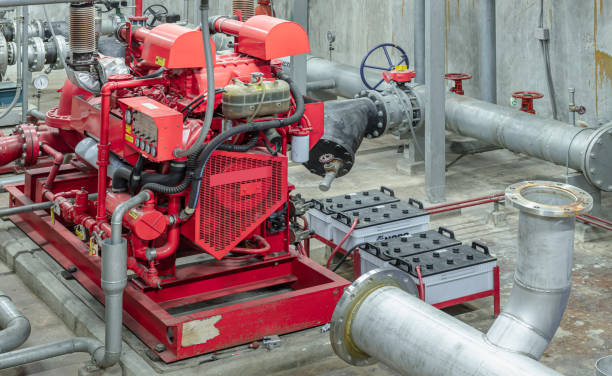
Fire pumps are safety-critical assets, so long-term reliability depends on correct installation, regular testing, and disciplined maintenance. Controllers, valves, diesel engines, electric motors, batteries, suction lines, and water tanks must be inspected to ensure the system can operate during an emergency.
The NFPA 20 standard for stationary fire pumps is widely referenced in fire protection engineering. While Saudi Arabia follows local codes and Civil Defense requirements, international standards influence pump selection, installation practices, testing procedures, and maintenance expectations.
Outlook for Saudi Arabia’s Fire Pump Landscape
Saudi Arabia’s fire pump sector is expected to grow steadily as industrial investment, giga-project development, commercial construction, and safety compliance expand together. Demand will come from both new installations and upgrades across high-risk facilities.
The long-term direction points toward certified, high-capacity, locally supported, and prefabricated fire pump systems. As Saudi Arabia builds larger and more complex infrastructure, fire pumps will remain essential for protecting people, assets, and business continuity.


 Vivek Chaudhary
 Harry dgsquares