Prativa Collections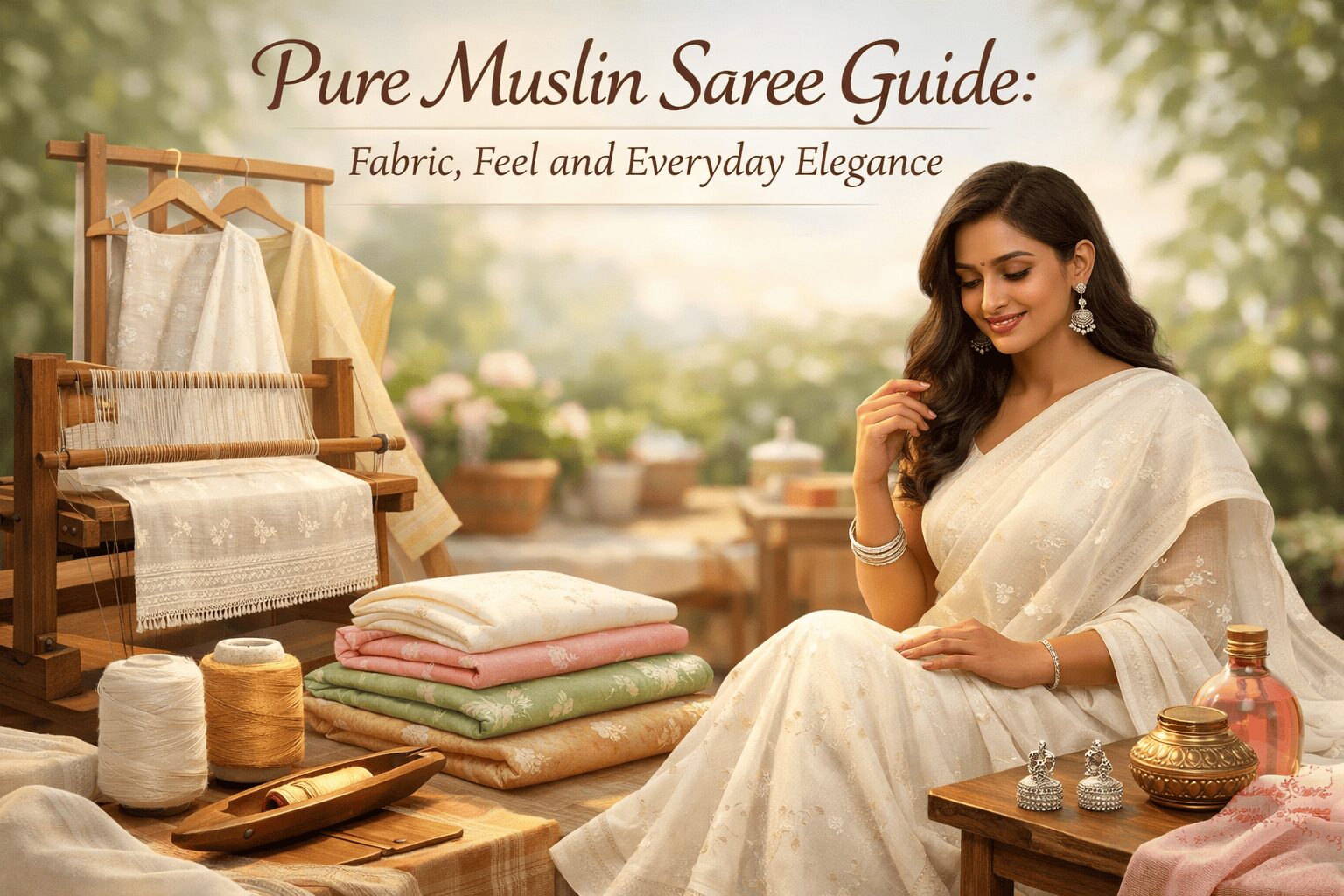
A number of Indian women, irrespective of their age, are becoming increasingly interested in wearing lightweight and breathable sarees that look elegant while being easy to wear. One of the finest examples of this is the pure muslin saree which has become popularised. Previously, muslin was associated with heritage fabrics and museums; today, however, it is used to create beautiful, comfortable, fashionable clothing that can be worn on a daily basis. Women wear Muslin Sarees for work, to attend smaller social events, at the theatre, and during large relaxed celebrations.
This article provides you with all the information you require regarding Pure Muslin Sarees, including a history of the fabrics and how it feels to wear one. Additionally, you will learn more about Pure Muslin Sarees, their association with weaving techniques from yesteryear, and how they were originally designed. Furthermore, you will be exposed to other variations of Pure Muslin Sarees such as Muslin Jamdani Sarees and Muslin Silk Sarees, as well as guidance on making the best purchase decisions possible with respect to this type of product.
What Is a Pure Muslin Saree? Understanding the Fabric?
Muslin is one of the oldest textiles produced in India, dating back thousands of years. Muslins were originally created from cotton, with very fine threads creating a very lightweight fabric and having a very airy feel to them.
The characteristics of a muslin saree are:
- Extremely fine threads creating a soft, cloud-like feel
- Plain weave with a large open area for air circulation
- Subtly transparent, giving it a delicate look to the fabric.
Pure muslin does not use synthetic or blended products that you may find at retail locations today. Pure muslin uses only natural fibres and traditional weaving techniques. This is why pure muslin has its unique softness and fluid drape.
Various Indian contemporary fashion labels, such as Prativa Collections, are part of the revival of pure muslin weaves, adding a contemporary twist. Yet, the fabric remains deeply rooted in tradition.
The Feel of a Pure Muslin Saree: Lightness, Softness and Comfort
One of the prime elements of attraction for women to wear muslin is the texture. The sensory feel of a muslin saree is entirely different from that of heavier or stiffer sarees.
What does that mean?
The benefits of a feather-light fabric on the body when worn for extended time periods that allows movement without the constraint of weight; the fact that muslin is breathable in India, especially during the sweltering summertime months, and the fact that muslin does not irritate the skin, making it especially well-suited for those with sensitive skin conditions.
Muslin is an excellent option for working women, homemakers, students, and older women alike, providing both a sense of elegance and a practical solution. Women often describe their experience of wearing a muslin saree as being extremely comfortable, due to how it flows with their natural movements.
Muslin Jamdani Sarees: Artistry Woven into Everyday Elegance
Muslin jamdani sarees are perhaps the finest of all types of muslin because they are created using a supplementary weft technique called “jamdani” in which yarn is added at various stages during weaving to create designs or patterns.
What sets muslin jamdani sarees apart from other muslins?
– They feature handwoven motifs like flowers, paisley patterns, and geometric designs,
– They have rich cultural connections to India’s textile heritage,
– They provide an understated elegance and a subtle visual effect by making the design seem very lightly placed on the fabric,
Muslin jamdani sarees typically attract women who show appreciation for craftsmanship and desire the understated elegance of muslin over heavy decoration. Because muslin jamdani sarees are made from muslin, and because of the intricate weaving techniques used in their creation, they are both very light and very comfortable to wear, maintaining the spirit of muslin.
Because of their unique ability to retain the spirit of muslin while providing a beautiful and elegant appearance, muslin jamdani sarees are popular choices for wearing during daytime formal events, cultural functions, or to add an ethnic flair to business attire.
Muslin Silk Sarees: When Soft Muslin Meets a Gentle Sheen
Another increasingly popular option is muslin silk sarees. These sarees combine muslin cotton with silk yarns, resulting in a fabric that offers comfort along with a refined appearance.
Key features of muslin silk sarees:
- A slightly richer texture compared to pure cotton muslin
- A soft natural sheen without heaviness
- A graceful drape suitable for casual and semi-formal occasions
Women often choose muslin silk sarees for family functions, small celebrations, or events where they want an elegant look without wearing heavy silk sarees. The silk content adds depth, while the muslin base ensures the saree remains comfortable throughout the day.
Pure Muslin Saree vs Other Lightweight Sarees:
When shopping for everyday sarees, women often compare muslin with other popular fabrics. Understanding these differences can help buyers make confident choices.
Compared to cotton sarees:
Muslin is softer, lighter, and drapes more fluidly. It also feels cooler in humid conditions.
Compared to linen sarees:
Muslin is less stiff and offers a more delicate appearance, although it requires gentler handling.
Compared to chiffon or georgette:
Muslin is a natural fabric that breathes well. It is easier to manage while draping and more suitable for prolonged wear.
This balance of comfort, natural fibres, and elegance is why muslin remains a preferred choice for Indian women seeking simplicity with sophistication.
Styling a Pure Muslin Saree for Everyday Indian Wear:
Styling plays a major role in making muslin sarees wearable for daily life. Thanks to their fluid drape, pure muslin sarees adapt easily to different looks.
Draping tips:
- Keep pleats simple to highlight the natural fall of the fabric
- Avoid heavy underskirts that add unnecessary weight
- A neatly arranged pallu enhances muslin’s softness
Blouse ideas:
- Cotton or muslin blouses for daily wear
- Elbow-length or short sleeves for comfort
- Textured or handwoven blouses for muslin jamdani sarees
Accessories that complement muslin:
- Minimal silver or oxidised jewellery
- Small stud earrings or fine chains
- Flat sandals, kolhapuris, or juttis
Many women styling muslin today take cues from contemporary interpretations seen in collections by labels like Prativa, where simplicity and tradition come together naturally.
Colour Choices and Design Preferences Among Indian Women:
Colour plays a key role in the appeal of muslin sarees. Because the fabric is delicate, colours tend to appear softer and more muted.
Popular colour choices:
- White, ivory, and off-white shades
- Pastels such as blush pink, mint green, and powder blue
- Earthy tones like beige, grey, and rust
Design preferences:
- Minimal prints rather than bold patterns
- Jamdani motifs woven in tonal or contrast threads
- Narrow borders that keep the look understated
Indian women increasingly gravitate towards muslin sarees that feel calming and versatile, suitable for both everyday wear and special moments.
How to Identify a Good Quality Pure Muslin Saree?
As muslin gains popularity, mixed and imitation versions are also common. Knowing how to identify a genuine pure muslin saree helps buyers make informed decisions.
Key indicators of quality:
- Texture that feels soft and smooth to the touch
- Extremely light weight when held
- Even weave with fine threads
- Natural translucence without stiffness
Handwoven muslin may show slight irregularities, which are signs of authenticity rather than defects.
Caring for a Pure Muslin Saree to Maintain Its Elegance:
Because muslin is delicate, proper care is essential to preserve its beauty.
Washing guidelines
- Hand wash gently in cold water
- Use mild detergent only
- Avoid twisting or wringing
Drying and storage tips
- Dry in shade to prevent fading
- Store folded with soft cotton cloth
- Avoid hanging for extended periods
With mindful care, muslin jamdani sarees and muslin silk sarees can remain elegant and wearable for many years.
Why the Pure Muslin Saree Fits Modern Indian Lifestyles?
The renewed interest in muslin reflects a larger shift in how Indian women approach fashion. Comfort, sustainability, and timeless design now matter more than excess.
A pure muslin saree fits seamlessly into modern life because it:
- Adapts easily to daily routines
- Reflects cultural heritage
- Works across age groups and occasions
Thoughtfully curated collections, such as those associated with Prativa Collections, show how traditional fabrics continue to stay relevant without losing their identity.
Conclusion: Pure Muslin Saree as a Thoughtful Everyday Choice
The pure muslin saree is more than just clothing. It represents ease, grace, and a deep connection to Indian textile heritage. Whether one is drawn to the craftsmanship of muslin jamdani sarees or the refined finish of muslin silk sarees, muslin offers something timeless.
For Indian women seeking elegance without effort, the pure muslin saree remains a fabric that understands their needs. Light on the body, gentle on the skin, and rich in tradition, it continues to be a natural choice for everyday elegance.

 Gulbhahar241 Gulbhahar241
 BMW Traders