Kevin Hill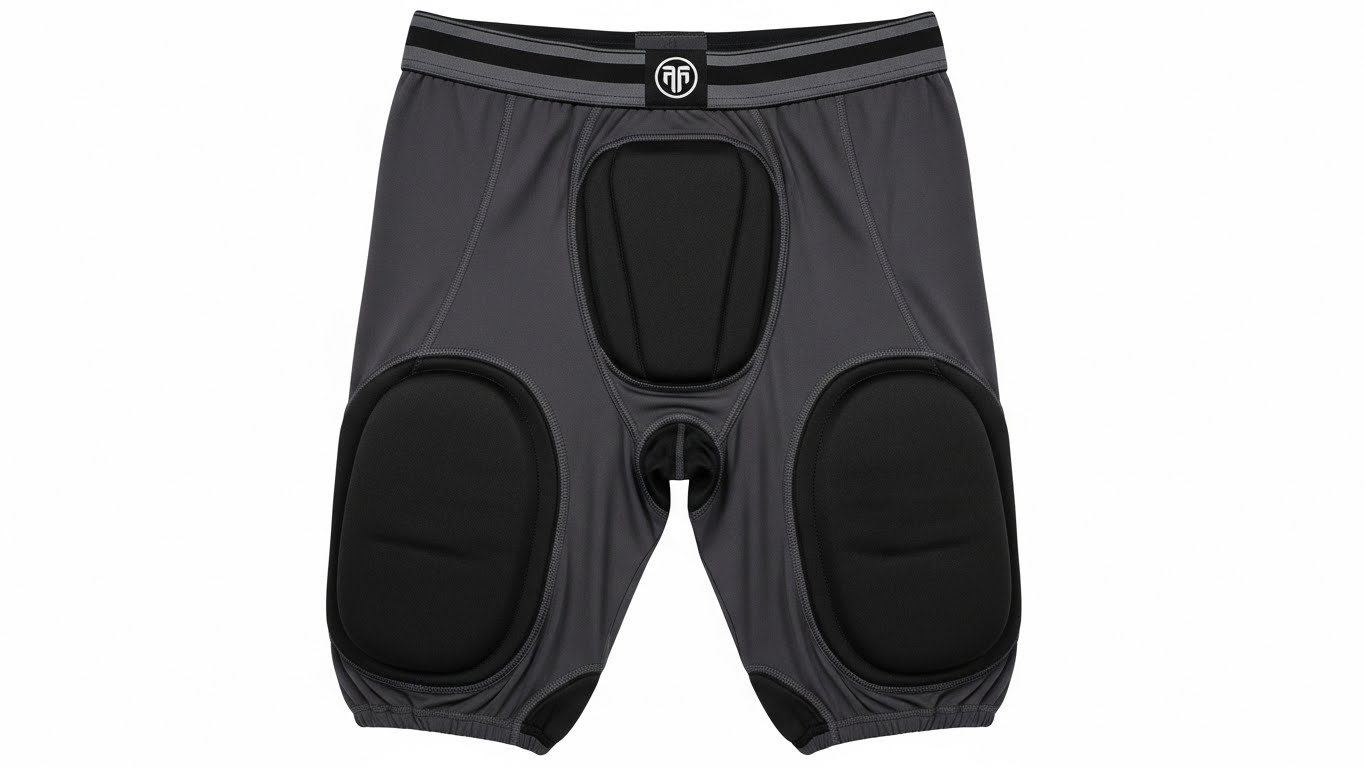
Football demands equipment that protects athletes from violent collisions while enabling explosive athletic movements. The engineering challenge facing equipment designers centers on a fundamental contradiction: padding materials that absorb impacts effectively tend to restrict movement, while materials allowing free movement typically provide insufficient protection. Nowhere does this tension manifest more acutely than in lower-body protection, where hips, thighs, tailbone, and knees face repeated high-energy impacts throughout every game. Modern integrated football girdle systems represent the culmination of decades of materials science research, biomechanical analysis, and athletic performance testing, delivering comprehensive protection without compromising the speed and agility that define competitive football.
Traditional lower-body padding required players to insert separate pads into pants pockets before each use. This system created numerous problems: pads shifted during play, exposing vulnerable areas; players frequently lost individual pads, creating incomplete protection; different pad types required separate purchases and management; and the insertion process consumed valuable time during equipment preparation. An integrated football girdle eliminates these inefficiencies by permanently incorporating padding into a compression garment that functions as a complete protection system. The integration transforms protective equipment from a collection of separate components into an engineered system optimized for both safety and performance.
Biomechanical Analysis of Lower-Body Impact Zones
Understanding injury patterns drives protective equipment design. Research analyzing football injuries reveals that lower-body impacts concentrate in predictable anatomical zones corresponding to common contact scenarios. Hip pointers—painful bone bruises on the iliac crest—result from direct impacts to the hip bone, frequently occurring when players collide laterally or land on hard ground following tackles. These injuries can sideline players for weeks, as the shallow tissue coverage over hip bones provides minimal natural cushioning against impacts.
Thigh contusions represent another high-frequency injury pattern. The quadriceps muscles absorb tremendous force during helmet-to-thigh collisions, creating deep tissue bruising that impairs mobility and strength. Studies examining injury rates in different positions reveal that running backs and linebackers experience the highest thigh contusion rates, reflecting their roles in high-impact collisions. Tailbone injuries occur when players fall backward or land awkwardly on their gluteal region. The coccyx, positioned at the spine’s base, has limited soft tissue protection and can suffer contusions or fractures from direct impacts.
Knee injuries span a spectrum from minor contusions to severe ligament damage requiring surgical intervention. While an integrated football girdle cannot prevent all knee injuries—particularly those involving rotational forces that damage internal structures—external padding significantly reduces contusion injuries from direct impacts to the kneecap and surrounding soft tissue. Analysis of injury mechanisms shows that approximately 35% of knee injuries in football result from direct contact rather than non-contact mechanisms like cutting or landing. This substantial proportion justifies knee pad inclusion in comprehensive protection systems.
The engineering response to these injury patterns involves strategic pad placement matching anatomical vulnerability zones. Seven-pad configurations include coverage for both hips, both thighs, tailbone, and both knees, providing comprehensive protection across all high-risk areas. Five-pad systems omit knee protection, offering a lighter alternative for positions where knee impact risk remains lower or where players prefer separate knee pad systems allowing positional customization. This configuration flexibility enables position-specific optimization within the integrated girdle framework.
Materials Science: EVA Foam and Compression Fabric Technology
Ethylene-vinyl acetate copolymer foam serves as the primary impact-absorbing material in quality integrated girdles. EVA foam exhibits several properties making it ideal for athletic protective equipment. Its closed-cell structure—featuring millions of independent gas-filled cells—provides consistent cushioning that doesn’t degrade when exposed to moisture, unlike open-cell foams that absorb water and lose protective effectiveness. The material’s elastic memory allows it to compress under impact, absorbing kinetic energy, then rapidly return to original shape, ready to protect against subsequent impacts.
Density specifications critically influence foam performance. High-density EVA, typically ranging from 60-100 kg/m³, provides firm support maintaining protective integrity through thousands of impact cycles. This density range offers optimal balance between cushioning comfort during normal wear and impact resistance during collisions. Lower-density foams feel softer initially but compress permanently under repeated stress, losing protective effectiveness over time. Premium integrated football girdle systems utilize multi-density foam configurations, placing firmer foam at impact centers where maximum protection is needed and transitioning to softer foam at edges to prevent restriction and pressure points.
The compression garment itself represents sophisticated textile engineering. Quality girdles utilize fabric blends typically consisting of 85% polyester or nylon with 15% spandex, creating four-way stretch materials that extend equally in longitudinal and lateral directions. This omnidirectional elasticity ensures the garment moves naturally through complex athletic movements involving flexion, extension, rotation, and lateral bending. The high synthetic content provides moisture-wicking properties that transport sweat away from skin through capillary action, maintaining thermal comfort during intense physical activity.
Flat-lock stitching technology reinforces seam strength while minimizing bulk and potential chafing. Unlike traditional seams that overlap fabric layers, creating raised ridges, flat-lock stitching interlocks thread patterns at fabric edges, producing strong, thin seams that lie flush against skin. Six-thread flat-lock construction—utilizing six separate thread lines—provides exceptional durability withstanding the mechanical stresses of repeated stretching, washing, and athletic use. This stitching quality ensures girdles maintain structural integrity throughout entire seasons without seam separation that would compromise both compression fit and padding positioning.
Strategic Padding Placement and Anatomical Contouring
Effective protection requires positioning padding precisely where impacts occur while avoiding areas requiring unrestricted movement. Hip pads in integrated girdle systems extend laterally across the iliac crest, the prominent bone forming the hip’s upper edge. This coverage must balance protection area against movement restriction—excessively large hip pads interfere with hip flexion required during running and cutting movements. Advanced designs incorporate anatomically graduated padding, featuring maximum thickness directly over the iliac crest bone and tapering toward edges to eliminate bulk without creating sharp thickness transitions that could concentrate force at pad boundaries.
Thigh padding protects the quadriceps muscles on the front of the upper leg. Quality thigh pads incorporate plastic cores or shells that distribute impact forces across larger surface areas rather than allowing force concentration at small impact points. The TAG 7-Piece Integrated Girdle features extended-wrap thigh pads with integrated plastic cores enhancing durability and impact resistance. This plastic reinforcement provides additional protection against direct helmet impacts while maintaining flexibility through segmented designs allowing individual sections to articulate independently during leg movement.
Tailbone padding addresses the vulnerable coccyx region at the spine’s base. This padding faces unique design challenges: it must provide substantial cushioning against impacts from backward falls while remaining thin enough to avoid creating uncomfortable bulk when sitting on benches or during normal standing. High-quality tailbone pads utilize higher-density foam than hip or thigh pads, accepting slightly firmer feel in exchange for superior impact protection in this critical area. The contoured shape matches natural gluteal anatomy, ensuring the pad remains centered over the coccyx rather than shifting during athletic movements.
Knee padding in seven-pad integrated football girdle configurations requires particularly sophisticated engineering. Knee joints demand extensive range of motion—full flexion during squatting or kneeling, complete extension during running and jumping, and rotation during cutting movements. Padding that restricts any of these motion patterns impairs athletic performance and risks creating compensatory movement patterns that could increase injury risk elsewhere. Extended-length knee pads with Velcro adjustment systems, featured in advanced designs, provide customizable coverage allowing athletes to position pads precisely for optimal protection without movement restriction. The Velcro adjustability accommodates individual anatomical variations ensuring proper fit across diverse body types.
Compression Benefits Beyond Impact Protection
The compression aspect of integrated girdles provides performance advantages extending beyond simple padding retention. Graduated compression—pressure that’s highest at distal extremities and gradually decreases proximally—enhances venous blood return from legs back to the heart. This improved circulation delivers multiple benefits: increased oxygen delivery to working muscles, accelerated metabolic waste removal reducing fatigue accumulation, reduced muscle vibration during impact and movement, and faster post-exercise recovery through enhanced nutrient delivery and waste product clearance.
Research examining compression garment effects on athletic performance shows measurable improvements in several metrics. Studies using vertical jump tests demonstrate that athletes wearing compression garments maintain higher jump heights after fatiguing exercise compared to control conditions, suggesting reduced neuromuscular fatigue. Sprint performance tests reveal that compression reduces ground contact time during running, potentially improving stride efficiency. These performance enhancements, while individually modest, accumulate over the course of games where small advantages compound into significant competitive edges.
The proprioceptive benefits of compression deserve equal attention. Proprioception—the body’s sense of limb position and movement—relies partially on sensory feedback from skin and muscle stretch receptors. Compression garments enhance this sensory input by applying consistent pressure that heightens awareness of body position and movement patterns. Athletes wearing compression equipment often report feeling more “locked in” or “dialed in” to their movements, describing improved body control and coordination. While difficult to quantify objectively, these subjective reports suggest genuine neurological effects worthy of consideration.
Temperature regulation represents another compression benefit. The tight fit eliminates air gaps between garment and skin that would trap heat and create uncomfortable hot spots. Combined with moisture-wicking fabric properties, compression girdles maintain relatively stable skin temperatures despite high metabolic heat production during athletic activity. Some advanced designs incorporate mesh ventilation panels at strategic locations—areas experiencing high heat production with lower impact risk—further enhancing thermal management without compromising protection.
Position-Specific Engineering Considerations
Different football positions face distinct physical demands requiring tailored protective equipment approaches. Offensive and defensive linemen engage in continuous contact, spending significant time in crouched stances and generating tremendous force through lower-body drive. These athletes benefit from maximum protection, particularly in hip and thigh regions absorbing repeated impacts from blocking and tackling. Seven-pad configurations with extended knee coverage provide optimal protection for these high-contact positions. The slight mobility trade-off proves acceptable given that linemen prioritize power over speed in their movement patterns.
Running backs and linebackers occupy middle ground in the contact-mobility spectrum. These positions involve explosive starts, rapid direction changes, and violent collisions—requiring both substantial protection and maintained agility. An integrated football girdle for these positions must optimize the protection-mobility balance carefully. Extended hip and thigh padding provides necessary impact protection, while streamlined knee pad designs or five-pad configurations eliminating integrated knee pads preserve the mobility essential for their roles. Many running backs and linebackers prefer five-pad girdles with separate knee pads, allowing them to position knee protection optimally for their individual movement patterns.
Skill position players—wide receivers, defensive backs, quarterbacks—prioritize speed and agility, accepting slightly reduced protection in exchange for unrestricted movement. These athletes typically favor five-pad girdle configurations with minimal bulk and maximum flexibility. Their injury patterns differ from power positions, with contact occurring less frequently but often at higher relative velocities. The protection strategy shifts from continuous impact absorption to occasional high-energy collision management. Lightweight, low-profile integrated girdles with strategic padding at essential locations provide appropriate protection without compromising the explosive athleticism defining these positions.
Special teams players face unique challenges. Kickers and punters require lower-body support and protection during single-leg balance phases of their kicking motions, but excessive padding interferes with precise leg control necessary for accurate kicks. Minimal padding configurations focusing on hip and tailbone protection while omitting thigh and knee pads often suit these specialists. Long snappers and holders benefit from tailbone padding protecting against impacts during their vulnerable crouched positions. This position-specific customization capability demonstrates the versatility of integrated girdle systems accommodating diverse athletic requirements within a single equipment category.
Integration with Complete Uniform Systems
Protective equipment functions within complete uniform systems where individual components must work synergistically. An integrated football girdle interfaces with several other equipment pieces, and compatibility considerations influence design decisions. The girdle must fit comfortably under uniform pants without creating visible bulk or uncomfortable bunching. Low-profile designs utilizing thin but effective padding materials achieve this goal, providing protection while maintaining uniform appearance and comfort.
Interaction with football pants varies across equipment manufacturers. Some pants feature mesh linings designed to work with compression girdles, while others include built-in padding pockets intended for separate pad insertion. Players using integrated girdles with pants designed for separate pads may experience redundant bulk or awkward fit. Equipment managers and players should verify compatibility when assembling complete uniform systems, ensuring all components work together effectively rather than creating interference or gaps in protection.
Athletic cup accommodation represents another integration consideration. Most integrated girdles include sewn-in pockets designed to securely hold protective cups, essential equipment for players in high-contact positions. The pocket design must hold the cup firmly in position during violent athletic movements while remaining comfortable during normal activity. Cup compatibility varies among manufacturers, so players should verify their preferred cup design fits properly within the girdle’s retention system. This seemingly minor detail significantly impacts comfort and consequently, equipment compliance—athletes uncomfortable with their protection tend to remove it, defeating its purpose entirely.
Layering considerations affect thermal management. Players in cold weather conditions might wear base layers beneath girdles for warmth, while hot weather might suggest minimal layering. The girdle design must accommodate these variations without compromising fit or protection effectiveness. Four-way stretch fabrics and compression properties help integrated girdles adapt to different layering configurations while maintaining appropriate padding positioning. This adaptability proves particularly valuable for teams playing in diverse climates throughout seasons spanning from late summer through winter.
Manufacturing Quality and Durability Engineering
Protective equipment must withstand harsh use conditions: repeated high-energy impacts, continuous stretching during athletic movements, exposure to sweat and dirt, and frequent washing. Manufacturing quality directly determines whether girdles provide reliable season-long protection or degrade prematurely, exposing athletes to injury risk. Reinforced stitching at high-stress locations—particularly where padding attaches to compression fabric—prevents seam separation that would allow pads to shift out of position. Double or triple stitching at critical seams provides redundancy ensuring single thread failures don’t compromise structural integrity.
Padding bonding methods influence longevity. Lower-quality girdles may use simple adhesive attachment of foam to fabric, creating failure points where repeated stretching breaks adhesive bonds. Premium integrated football girdles employ sewn-in padding, mechanically attaching foam to fabric through stitching that penetrates both materials. This construction method distributes attachment stresses across many individual stitch points rather than concentrating stress at adhesive boundaries, providing superior durability through thousands of use cycles. The sewn construction also enables ventilation perforation through padding, allowing air circulation without compromising attachment security.
Fabric durability depends on both material selection and knitting technology. Higher-quality polyester and nylon fibers resist pilling, tearing, and permanent deformation better than lower-grade alternatives. The knitting density—how tightly yarns are interlocked—affects both durability and stretch properties. Optimal knitting creates fabrics that stretch adequately for athletic movement while maintaining sufficient density to resist snags and tears from contact with equipment, field surfaces, or opponent gear. This balance requires sophisticated manufacturing equipment and quality control systems ensuring consistent production.
Washing durability proves critical for equipment requiring frequent cleaning. An integrated football girdle might undergo 50-100 wash cycles over a season, each potentially degrading materials and construction. Machine washability with cold water and tumble drying on low heat settings should maintain girdle integrity indefinitely when properly executed. Fabrics must resist shrinkage, color fading, and elastic degradation through these cleaning cycles. EVA foam must maintain cushioning properties despite repeated exposure to water, detergents, and mechanical agitation. Quality manufacturers test products through accelerated wear protocols simulating entire seasons of use, identifying and correcting potential failure modes before products reach athletes.
Future Innovations in Integrated Protection Systems
Protective equipment continues evolving as new materials and technologies emerge. Smart textile integration represents one frontier. Fabrics incorporating conductive threads could monitor impact forces, tracking cumulative trauma exposure and alerting coaches when athletes exceed safe thresholds. This technology, already appearing in experimental football helmets, could extend to body protection, providing objective data supporting player safety decisions. The integration challenges involve creating durable, washable electronics surviving the harsh conditions athletic equipment endures.
Advanced foam materials including auxetic foams—materials that become denser when compressed rather than bulging laterally like conventional foams—offer improved energy absorption in thinner profiles. These materials, currently expensive and difficult to manufacture, may eventually replace conventional EVA foams, enabling thinner padding providing equivalent or superior protection. The thickness reduction would further minimize mobility restrictions while maintaining comprehensive impact protection. Phase-change materials that absorb heat as they transition between states could enhance thermal management, actively cooling athletes during intense activity.
Customization technology may enable personalized girdle systems tailored to individual athlete anatomy and position requirements. 3D body scanning could generate precise measurements driving automated cutting and sewing systems producing perfectly fitted girdles. Selective padding placement based on position-specific injury data could optimize protection for individual roles without unnecessary bulk in lower-risk areas. While currently economically impractical for most programs, advancing automation may eventually make custom fabrication cost-effective even for youth and high school levels.
Conclusion
Engineering comprehensive lower-body protection into integrated football girdles requires balancing competing demands: maximum impact absorption versus unrestricted movement, complete anatomical coverage versus minimal bulk, sufficient durability versus acceptable weight, and position-specific optimization versus equipment standardization. Modern integrated girdle systems successfully navigate these challenges through sophisticated materials science, anatomical design, and manufacturing quality. EVA foam technology provides impact protection maintaining effectiveness through entire seasons. Compression fabrics deliver four-way stretch enabling natural movement while providing graduated pressure enhancing circulation and reducing fatigue.
The strategic integration of padding into compression garments transforms protective equipment from collections of separate components into engineered systems optimized for both safety and performance. Players benefit from protection that stays positioned correctly without requiring constant adjustment, equipment managers appreciate simplified gear management eliminating lost pads and insertion processes, and coaches gain confidence that their athletes compete with comprehensive safeguarding. The widespread adoption of integrated girdle systems across all competitive levels—from youth leagues through professional football—reflects the genuine advantages these designs deliver.
Investment in quality protective equipment represents investment in athlete safety and performance. An integrated football girdle costing $40-80 provides season-long protection potentially preventing injuries that would cost thousands in medical treatment while sidelining athletes from competition and training. The financial analysis strongly favors proper equipment, but the calculation extends beyond economics to encompass athlete welfare, development continuity, and competitive success. Programs prioritizing player safety through quality protective equipment demonstrate values-driven leadership that attracts athletes and families seeking organizations committed to holistic athlete development.
As football continues evolving—with athletes becoming faster and stronger while maintaining the sport’s inherent physicality—protective equipment must advance proportionally. The engineering sophistication present in modern integrated football girdle systems provides the foundation that enables safe competition. Materials science advances, biomechanical research, and athlete feedback drive continuous improvement cycles refining designs and enhancing protection. The future promises even more effective equipment as emerging technologies mature and manufacturing costs decline, making cutting-edge protection accessible across all levels of play. For now, today’s integrated girdles represent the most advanced lower-body protection systems available, enabling athletes to compete with confidence that their equipment provides the comprehensive safeguarding their bodies require.


 2hfbz0n7zu 2hfbz0n7zu
 Smith John