NAMTECH Institute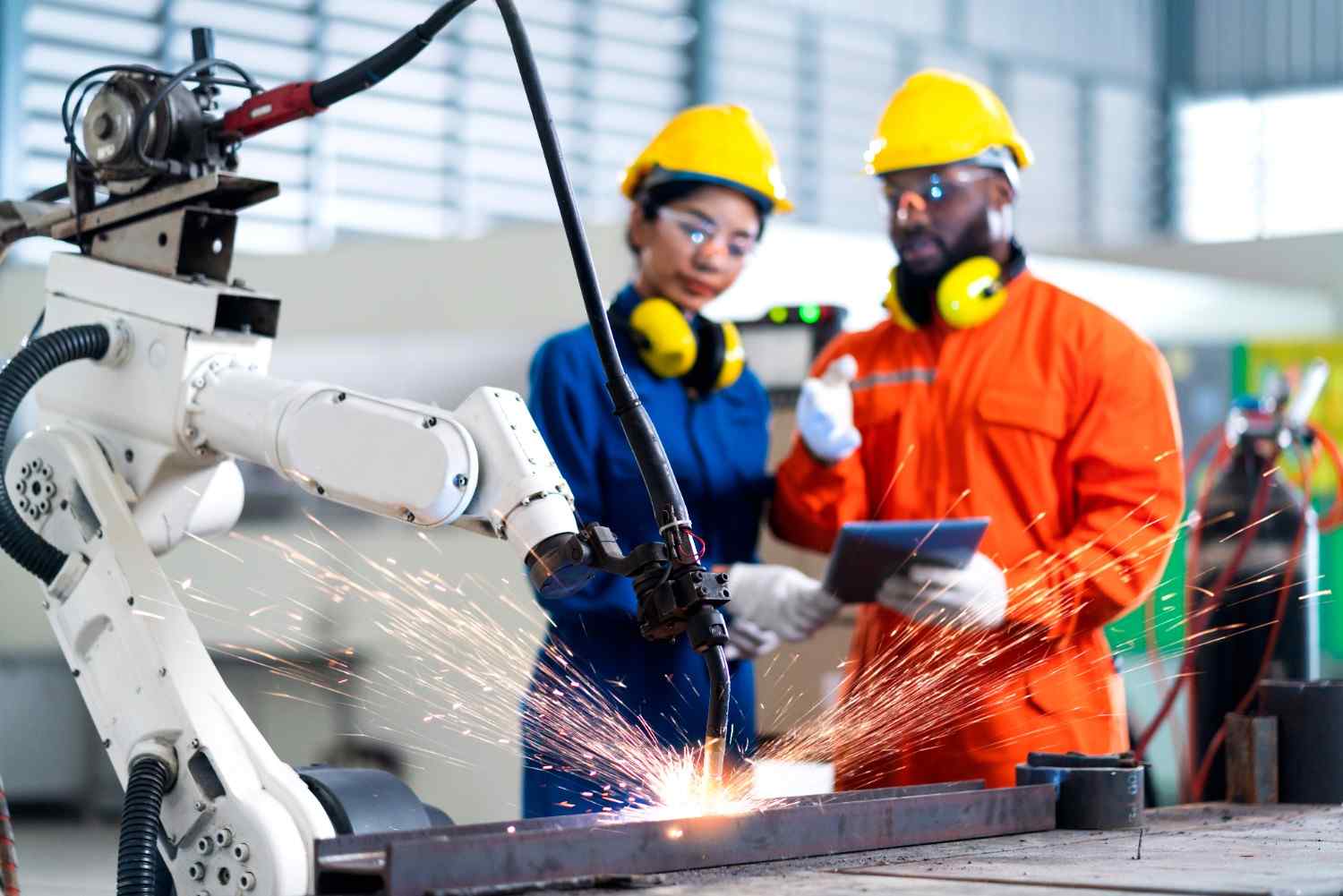
Manufacturers worldwide are seeking ways to innovate, resulting in a significant transformation of the manufacturing ecosystem. Industries are switching to digitized, smart, and automated processes driven by sensors, robotics, data analytics, and interconnected systems. Industrial automation is the use of computers, control systems, and information technologies to replace the human workforce for carrying out diverse processes and machinery in an industry. Industries globally are replacing the human workforce with automated systems to increase productivity, improve quality, and create flexibility in the processes. With industries embracing automation, the demand for professionals skilled in automation technologies has escalated. Thus, individuals and professionals looking to foray or work in this sector can join an industrial automation course to get prepared for the automation industry.
Understanding Industrial Automation Courses in Modern Manufacturing
The industrial automation course is a specifically designed course to upgrade learners with the latest technical skills and prepare participants to redefine production efficiency and improve quality in the modern manufacturing system. This course equips learners with knowledge and skills in industrial automation for efficient management of automated processes. Participants of the automation course gain insight into key technologies such as Programmable Logic Controllers, Supervisory Control and Data Acquisition, Industrial Robotics, Human–Machine Interfaces, Internet of Things, Pneumatic and hydraulic controls, Machine vision and inspection systems, and Internet of Things. Professionals trained in these tools and technologies will not only aptly manage the automated processes, but they will also lead to improve productivity, maximum accuracy, reduce errors, and boost operational efficiency. Pursuing an industrial automation course has become a gateway to a competitive and technology-led industrial future, as this course helps learners master advanced automation tools and effectively deploy them on the factory floor.
Why Industrial Automation Skills Are Essential Today
With automation making industries more efficient and competitive, these industries are in need of skilled automated professionals. There is an increase in demand for skilled professionals efficient in designing, implementing, and maintaining automated system. Industrial automation skills hold great significance in this quickly evolving industrial landscape. Industrial automation brings multiple benefits that extend across industrial operations and employee well-being. These skills hold great significance due to the following reasons:
Rapid Adoption of Industry 4.0 – To manage smart and intelligent systems, industries require engineers, technicians, and automation specialists adept in automation skills. These skills have become vital for Industry 4.0, where machines make decisions, collect data, and optimize outcomes. Specialists trained in advanced technologies and comfortable working at the intersection of data, hardware, and software are essential for Industry 4.0.
Growing Investment in Smart Manufacturing – Investments are heavily flowing into industrial automation, especially in automotive, electronics, pharmaceutical, and food processing sectors. Thus, these sectors are in need of employees who are trained in advanced sensors, robotics, and machine vision. This further creates the need for professionals to up skill them through industrial automation courses.
Shortage of Skilled Technicians – Automation industry is facing a shortage of skilled workforce, as this industry is in need of trained professionals who are efficient in handling and maintaining automated systems, which are in high demand. Industrial automation courses are becoming popular among individuals and professionals to gain hand-on skills to deploy in the workplace.
How Industrial Automation Courses Shape Production Future
Industrial automation courses are designed to shape future production and manufacturing system by providing learners a comprehensive understanding on foundational concepts to practical applications. Participants of this course gain insight into the automation effect on cost reduction, resource utilization, error reduction, and creating safe and sustainable work environments. The course is shaping the manufacturing future in the following ways:
Streamline Manufacturing Processes – Automation streamline manufacturing processes, as right from the feeding of raw material to assembly and from packaging to dispatch, all these processes are fully automated. Besides, Programmable Logic Controllers and robotic arms carry out repetitive tasks to speed up production and make it error-free.
Allow Real-Time Monitoring and Control – In the automated manufacturing environment, operators make use of SCADA and IoT to monitor machine performance, temperature, and quality of the product in real time. An industrial automation course prepares professionals to manage automated systems to ensure smooth workflow and better decision-making.
Boost Productivity Through Robotics – Robotic arms in the automated system carry out assembly, painting, welding, palletizing, and material handling with great speed and accuracy. Thus, this course train learners in robotics programming, which allow industries achieve higher output with lower labor costs.
Reducing Operational Errors – Human error is a major cause of downtime in the industry, but an automated system guarantees precision, repeatability, and stability. Professionals with automation skills are able to standardize production cycles, minimize variability, and implement automated controls.
Enhancing Worker Safety – Automation has prevented humans from performing risky and hazardous tasks. Automation courses equip learners with the skills to integrate safety systems like sensors and emergency stops to protect and guard workers and reduce accidents from occurring on sites.
Shaping the Future of Quality Control through Automation Skills
The industrial automation course trains participants in implementing technologies that improve quality during every stage of production. With quality control being essential for achieving manufacturing excellence, the course equips learners with the following skills.
Automated Inspection and Testing Systems – Participants of the automation course learn to configure AI-driven inspection tools and sensor-based verification systems in the production processes to reliably detect defects compared to human inspection. This further helps industries improve accuracy in finding defects, flaws, and inconsistencies.
Data-Driven Quality Assurance – Quality control systems collect data from sensors, machines, and production lines. Participants of the automation course learn data analytics skills to detect defects, identify root causes, improve process stability, and predict failures. The participants also get exposed to data logging, control charts, and statistical process control.
Reduced Waste and Rework – Industrial automation helps in reducing wastage by following a precise production process and detecting early defects. Participants of the automation course learn about lean manufacturing concepts that allow them boost quality and optimize resource utilization.
Integration of Smart Sensors and IoT for Quality Tracking – Industrial automation courses equip learners with the skill to manage sensors embedded along production lines for tracking the quality of the product. The learners are efficient in managing these sensor networks and interpreting the quality-related data generated by sensor.
Production and Quality Control Future Is Intelligent and Automated
Industrial automation is slowly and steadily becoming the backbone of advanced and high-performance manufacturing systems. To become a valuable asset for the automation industry, individuals and professionals are looking forward to industrial automation courses that equip them with the technical expertise required to work with smart machines, optimize production, and ensure advanced quality control standards. With industries embracing automation, the demand for skilled professionals is escalating, and hence, more and more candidates are enrolling in this automation course to future-proof their careers and play a significant role in the coming industrial transformation.


 Jhon Kary
 nick mikaelson