harry brook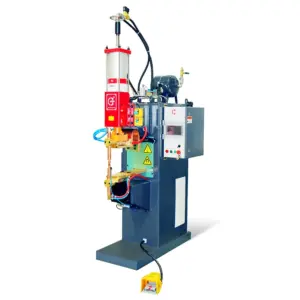
Projection welding is a cornerstone process in modern manufacturing, delivering repeatable, high-quality joints for complex assemblies. For manufacturing engineers, OEMs, automation integrators, and production planners, understanding projection welding’s technical principles, advantages, and best practices is essential to optimize throughput and part quality. In this guide, we’ll explore how projection welding works, where it shines, how it compares to other resistance welding methods, and how Heron Welder, a global leader in advanced welding and metal-joining systems, supports your production goals with tailored solutions.
What Is Projection Welding?
Projection welding is a resistance welding process that joins metal components by focusing electrical and mechanical energy at predefined “projection” points on the workpiece surface. These projections raised features, embossments, or machined bosses act as controlled contact points that concentrate current and force, enabling precise, localized heating and solid joint formation without disturbing surrounding material.
Unlike conventional spot welding, where electrodes deliver current directly to flat sheet surfaces, projection welding uses part geometry to dictate where the weld forms, making it ideal for complex assemblies with multiple joints in a single cycle.
How Projection Welding Works: Principles & Mechanics
The Physics of Projection Welding
At a fundamental level, projection welding combines electrical resistance and mechanical pressure:
-
Resistance Heating — When current flows through the projections, the electrical resistance at those small contact areas causes rapid heat generation.
-
Mechanical Force — Pneumatic, hydraulic, or servo-driven electrodes apply controlled force, collapsing the projections and forging molten metal into a solid joint.
-
Heat Localization — The geometry of the projections ensures that heat is confined to the desired weld sites, preventing thermal distortion in adjacent areas.
This synergy of current, resistance, and force produces strong metallurgical bonds with minimal flash or deformation.
Typical Projection geometries
Projection features can include:
-
Dots or bosses machined into parts
-
Embossed or stamped protrusions
-
Threaded studs or formed lugs
The precise design of these features influences current density and weld quality, making part design optimization a key success factor.
Common Applications of Projection Welding
Projection welding excels in high-volume and precision applications where multiple joints must be made consistently and efficiently.
Automotive & EV Manufacturing
-
Battery Packs — Reliable joining of tabs, bus bars, and connectors with minimal resistance variation.
-
Structural Assemblies — Welding brackets, reinforcements, and stamped components where consistency and throughput are critical.
Electrical & Electronics
-
Terminal Connections — Solid, low-impedance joints for electrical conductivity in motor stators, transformers, and bus assemblies.
-
Connectors and Contacts — Fine geometry projection welding supports micro-joins in dense assemblies.
Appliance & HVAC Systems
-
Chassis and Frame Assemblies — Durable welds for robust enclosures and ductwork frames.
-
Component Integration — Joining complex sheet metal components without warping or distortion.
Industrial Hardware
-
Fasteners and Studs — Secure projection welding of studs, nuts, or threaded features to base metals.
Projection Welding vs. Other Resistance Welding Methods
Understanding how projection welding compares to other resistance welding processes helps you select the right technology for your production needs.
| Feature | Projection Welding | Spot Welding | Seam Welding |
|---|---|---|---|
| Joint Localization | High (via designed projections) | Medium | Continuous |
| Multiple Joints per Cycle | Yes | Typically no | Yes |
| Part Geometry Complexity | High tolerance | Moderate | Typically flat or simple curves |
| Heat Input Control | Excellent | Good | Good |
| Ideal for Complex Assemblies | ✔️ | ❌ | ❌ |
When to Choose Projection vs. Spot Welding
-
Projection Welding: Use when you need repeatable welds at predefined locations—especially where multiple welds can be completed simultaneously within a cycle.
-
Spot Welding: Best for simple sheet stacks where projections aren’t feasible and single joints per cycle are acceptable.
Seam Welding in Context
Seam welding produces continuous welds along a joint and is well suited for leak-proof assemblies (e.g., fuel tanks). Projection welding, by contrast, is ideal when discrete, high-strength joints are needed at specific locations.
Engineering Best Practices for Projection Welding
Achieving robust projection welds requires careful attention to setup, tooling, and process control.
Design for Welding
-
Optimize Projection Features: Consistent height, shape, and spacing ensures uniform current density across weld sites.
-
Select Compatible Materials: Material conductivity and thickness variations impact heat generation and weld quality.
-
Simulation & Prototyping: Early CAE simulation of heat flow and part distortions can prevent issues during ramp-up.
Process Parameters
Projection welding success hinges on mastering key variables:
-
Current Profile: Peak current and weld time must align with material properties and projection geometry.
-
Force Control: Consistent and accurate electrode force prevents expulsion and ensures solid connections.
-
Electrode Wear: Regular inspection and maintenance preserve contact integrity and process repeatability.
Automation Integration
-
PLC and Servo Control: Fine-tuned control over force, time, and current improves quality and reduces cycle variation.
-
Vision & Force Sensors: Real-time feedback detects part misalignment and ensures correct weld engagement.
-
Robotic Welding Cells: For high throughput, robots deliver precision and consistency while reducing operator variability.
Quality Assurance and Inspection
Projection welding quality can be validated through:
-
Destructive Tests: Macro sections, tensile shear tests.
-
Non-Destructive Testing (NDT): Ultrasonic or electrical resistance checks to confirm joint integrity.
-
Statistical Process Control (SPC): Monitoring process data (current, force, time) for trend analysis and preventive maintenance.
Why Choose Heron Welder for Your Projection Welding Needs
At Heron Welder, we understand that modern manufacturing demands precision, uptime, and flexibility. As a global manufacturer of industrial welding and metal-joining equipment including resistance welding machines (spot, projection, seam, MFDC, capacitor discharge), clinching systems, self-pierce riveting (FSPR), welding guns, controllers, and automated production lines we deliver solutions engineered for performance and scalability.
Tailored Solutions for Your Production
-
Custom Projection Welding Systems: Designed and optimized for your part geometry and cycle requirements.
-
Integration with Automation: From PLC control to robotic cells, Heron systems mesh seamlessly with Industry 4.0 environments.
-
Global Support & Service: Expert commissioning, training, and aftermarket support to keep your line running.
Whether you’re upgrading existing processes or implementing a new production line, Heron provides the process expertise and technology leadership you need.
FAQs About Projection Welding
1. What materials can be projection welded?
Projection welding works with a wide range of conductive metals, including low-carbon steels, stainless steels, aluminum alloys, and copper alloys, provided appropriate parameter tuning and electrode design are applied.
2. Can multiple welds be made at once?
Yes ,one of projection welding’s key advantages is the ability to make several welds simultaneously in a single press cycle, increasing throughput and uniformity.
3. How is electrode wear managed?
Routine inspection and scheduled maintenance reduce wear. Using high-quality electrode materials and proper cooling extends electrode life.
4. Is projection welding suitable for thin materials?
Yes, but careful control of current, time, and force is essential to prevent burn-through or distortion in thin gauge applications.
5. Can projection welding be automated?
Absolutely projection welding is commonly integrated with robotic arms, conveyors, and PLC systems for fully automated high-volume production.
Take the Next Step: Optimize Your Welding Production
Ready to elevate your welding operations with reliable, high-throughput projection welding? Contact Heron Welder today to request a quote or consult with our applications engineering team. From custom system design to seamless automation integration, we’re your partner for advanced metal-joining solutions that drive quality and efficiency.
🔧 Request a Quote | Consult with Heron Experts – Let’s build your next generation welding solution.

 orcan machine
 webrise seo