Sophie Lane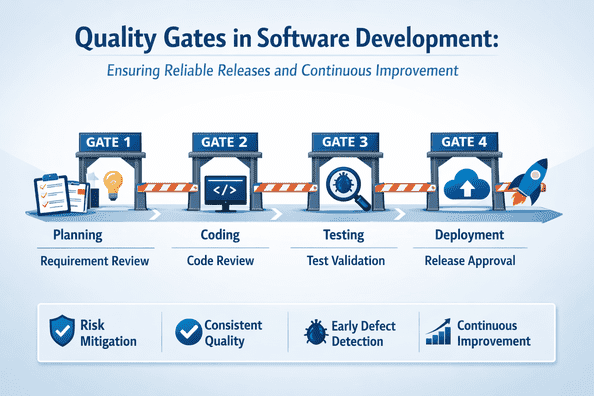
In modern software development, delivering reliable and high-quality software consistently is essential. Teams face the challenge of balancing speed and quality, especially in fast-moving CI/CD pipelines. This is where quality gates become a critical tool. They help ensure that code meets predefined standards before it moves to the next stage of development or production deployment.
What Are Quality Gates?
Quality gates are automated checkpoints within a software development process that enforce quality standards on code and tests. They serve as thresholds that must be met before code can progress further in the CI/CD pipeline. If the criteria are not met, the build or deployment is blocked, preventing potentially faulty code from reaching production.
Quality gates typically evaluate metrics such as:
-
Code coverage from automated tests
-
Number of critical bugs or code smells
-
Static analysis results for maintainability and complexity
-
Security vulnerabilities
-
Compliance with coding standards
By enforcing these criteria, quality gates ensure that only code meeting the minimum quality requirements is released.
Key Metrics and Criteria for Quality Gates
The effectiveness of quality gates depends on selecting the right metrics. Common metrics include:
-
Code Coverage
Ensures that automated tests cover a sufficient portion of the codebase. A high coverage percentage reduces the likelihood of undetected defects. -
Bug and Defect Thresholds
Limits the number of critical or high-severity defects allowed before code can proceed. -
Code Complexity
Measures cyclomatic complexity to ensure the code remains maintainable and understandable. -
Security and Vulnerability Checks
Evaluates potential security issues such as SQL injections, cross-site scripting, and sensitive data exposure. -
Compliance with Coding Standards
Checks adherence to agreed-upon coding conventions, ensuring consistency across the team.
Setting these criteria allows teams to maintain consistent quality while supporting fast development cycles.
Integrating Quality Gates in CI/CD Pipelines
Quality gates work best when integrated into automated CI/CD pipelines. This integration provides immediate feedback to developers and prevents low-quality code from progressing through the release process. Key steps include:
-
Automated Build and Test: Code is compiled, tested, and analyzed automatically.
-
Evaluation Against Thresholds: The quality gate checks metrics such as code coverage, bug counts, and complexity.
-
Blocking or Approving Progress: If the code fails the gate, the pipeline stops, and developers are notified. If it passes, the build continues to deployment stages.
This process ensures that quality is enforced consistently and continuously, reducing the risk of post-release defects.
Benefits of Implementing Quality Gates
Using quality gates offers several advantages:
-
Improved Release Confidence: Teams can deploy with the assurance that code meets minimum quality standards.
-
Early Defect Detection: Issues are caught early in the development process, reducing the cost and effort of fixing them later.
-
Consistent Code Quality: Enforces standardized coding practices and reduces technical debt over time.
-
Faster Feedback Loops: Developers receive immediate notifications when code fails a quality threshold, enabling rapid corrections.
-
Support for Continuous Improvement: Quality metrics collected over time help teams refine development practices and improve processes.
Common Pitfalls to Avoid
While quality gates are powerful, they must be implemented carefully to avoid inefficiencies:
-
Overly Strict Thresholds: Setting unrealistically high standards can block progress and frustrate developers.
-
Ignoring Context: Not all code changes carry the same risk; gates should focus on high-impact areas.
-
Neglecting Updates: As the codebase evolves, quality gate criteria should be reviewed and adjusted.
-
Relying Solely on Automation: Human oversight is still necessary for exploratory testing and subjective evaluations.
Balancing strictness and flexibility ensures that quality gates enhance development rather than hinder it.
Real-World Example
Consider a SaaS platform deploying new features weekly. A quality gate in their CI/CD pipeline could include:
-
Minimum 80% code coverage for new code
-
Zero critical bugs in automated tests
-
No security vulnerabilities detected by static analysis
If a developer introduces a change that reduces coverage to 70%, the gate fails, and the code is blocked from deployment. The developer receives immediate feedback, fixes the issue, and resubmits. This process prevents low-quality code from reaching production and reduces post-release defects.
Best Practices for Effective Quality Gates
To maximize the impact of quality gates:
-
Align thresholds with team goals and risk tolerance
-
Continuously monitor and adjust metrics based on evolving code and workflows
-
Combine automated gates with manual reviews for complex features
-
Communicate criteria clearly across teams to ensure understanding
-
Use metrics not just for enforcement, but also for learning and improvement
By following these practices, quality gates become a tool for continuous improvement, not just quality enforcement.
Conclusion
Quality gates play a vital role in modern software development by ensuring that only code meeting defined standards advances through the CI/CD pipeline. They provide measurable assurance, improve release confidence, and enable faster feedback loops. When implemented thoughtfully, quality gates support both rapid development and high-quality software, helping teams maintain a competitive edge while minimizing risk.


 Reliacom LLC
 Mister saad