DR Andrew Broadhurst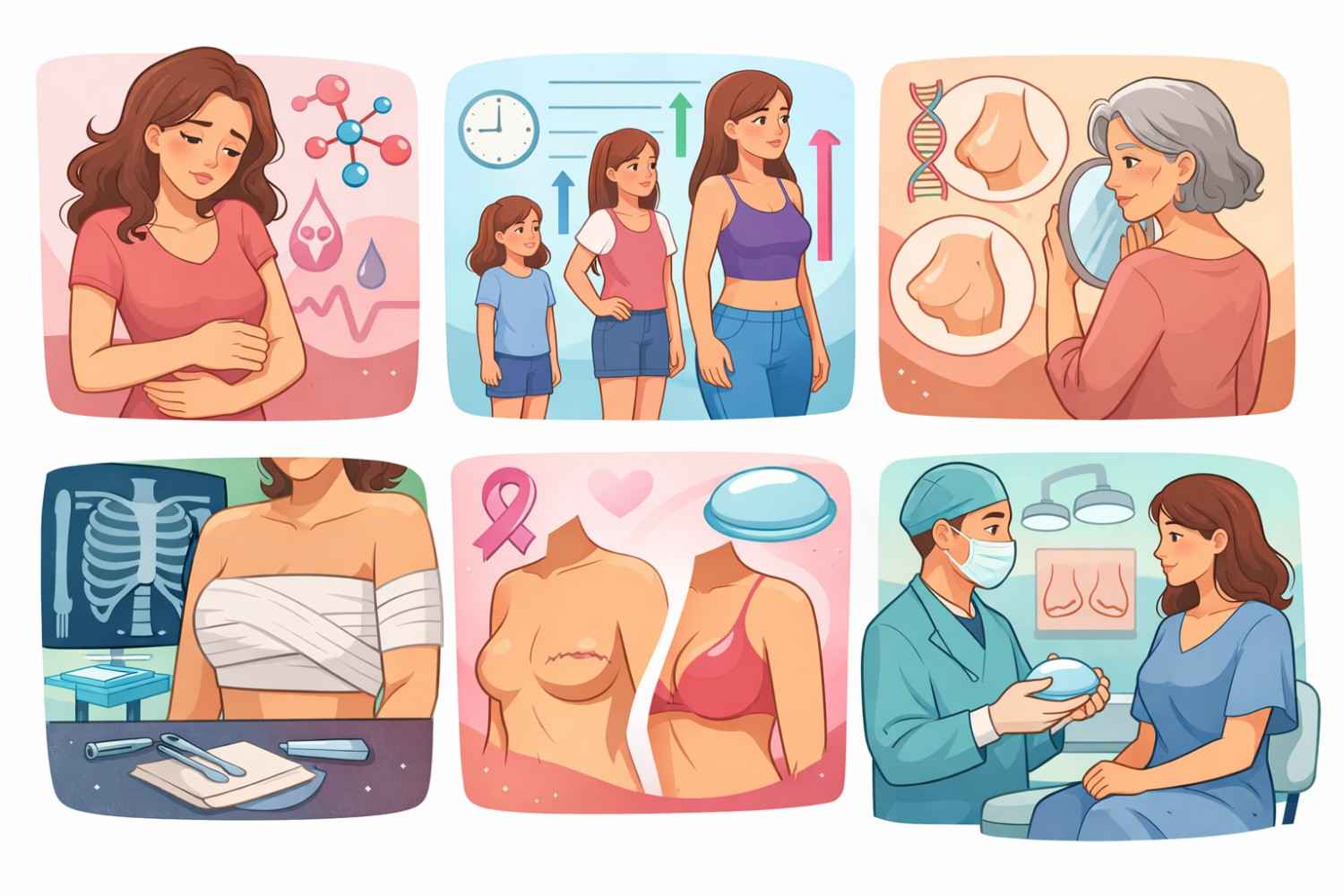
Here’s something that might surprise you: most women don’t have perfectly symmetrical breasts. It’s actually the norm rather than the exception. But when one breast is noticeably different from the other, it can make finding bras that fit a nightmare. It might also knock your confidence. Knowing why breast asymmetry surgery is required helps you figure out whether doing something about it makes sense for you.
1. Developmental and Genetic Factors
Think about how you inherited your mum’s eyes or your dad’s nose. Breast characteristics work the same way; they’re largely determined by your genetic makeup. During those awkward teenage years, your breasts probably didn’t develop at exactly the same pace. One might’ve grown faster or ended up larger. That’s completely normal.
Sometimes the difference evens out eventually. Other times, it sticks around. Your chest wall itself might not be perfectly symmetrical either, which affects how your breast tissue sits. If your mum or grandmother had uneven breasts, there’s a good chance you will too. These inherited patterns influence everything: nipple placement, overall size, and even how your breasts change over time.
2.Hormonal Changes and Life Events
Your hormones are constantly affecting your breast tissue, but they don’t always treat both sides equally.
Pregnancy Effects
When you’re pregnant, hormones flood your system and prepare your breasts for feeding. Sometimes one breast responds more dramatically to these changes than the other does.
Breastfeeding Impact
Babies can be fussy little things. Many prefer one breast, which means that side produces more milk. This can leave you with a lasting size difference, even years after weaning.
Menstrual Cycle Fluctuations
You’ve probably noticed your breasts feel different at certain times of the month. Swelling and tenderness don’t always happen evenly, though things typically settle down once your period’s over.
Menopause Transitions
As oestrogen levels drop, your breasts lose some of their volume and bounce. Unfortunately, this doesn’t always happen uniformly, so one might shrink more than the other.
3.Medical Conditions and Trauma
Some specific medical issues directly impact how breasts develop. A few are present from birth, whilst others happen later on.
Tuberous Breast Syndrome
This condition restricts how breast tissue grows. The affected breast ends up looking tubular instead of round, which becomes pretty obvious once puberty hits and development should be happening.
Previous Surgical Interventions
If you’ve had a lumpectomy, biopsy, or any other breast surgery, it changes the tissue structure permanently. Scar tissue forms, and removing tissue obviously affects size and shape.
Injury or Trauma
A serious chest injury can damage breast tissue or the structures underneath. This messes with normal development on that side, leaving things uneven.
4. Age-Related Changes and Weight Fluctuations
Getting older and lifestyle changes gradually alter your breasts, often in different ways for each side.
Natural Ageing Process
Your skin doesn’t bounce back like it used to. Breast tissue becomes less dense as you age, and gravity works on each breast differently depending on its size and ligament strength.
Significant Weight Loss
Breasts are partly made of fat, so they shrink when you lose weight. Because each breast has a different ratio of fat to glandular tissue, they don’t reduce evenly.
Repeated Weight Cycling
Yo-yo dieting stretches your skin and changes tissue density. After several rounds of gaining and losing, your breasts can end up looking quite different from each other.
Gravitational Effects Over Time
Decades of gravity do their thing. If one breast was already larger, it’s probably sagged more than the smaller one, which just makes existing asymmetry worse.
5. How Breast Asymmetry Correction Surgery Addresses Each Cause
Modern breast asymmetry surgery isn’t one-size-fits-all. The approach depends entirely on what’s causing your particular situation. Surgeons look at which breast represents your ideal size, then adjust from there.
Augmentation and Reduction Combinations
If it’s developmental, you might need the smaller breast augmented whilst the larger one gets reduced. Sometimes, both need adjusting to meet somewhere in the middle.
Lift Procedures with Volume Adjustment
Changes from hormones or ageing often respond well to lifts paired with volume tweaks. Fat grafting works nicely for subtle corrections without going the implant route.
Implant-Based Solutions
Bigger differences might call for implants of different sizes. Sometimes each breast needs a completely different surgical technique to achieve symmetry that looks natural on your frame.
Specialised Reconstruction Techniques
Conditions like tuberous breasts or Poland syndrome need specialised work. Surgeons release constricted tissue, reshape everything, and rebuild symmetry through careful reconstruction rather than just adding volume.
Final Thoughts
Whether it’s genes, life changes, or something medical, breast asymmetry happens for loads of reasons. The encouraging bit? Surgery has come a long way. Whatever’s caused yours, there’s probably a fix that’ll work. Dr Andrew Broadhurst takes time to understand what’s bothering you specifically and plans treatment around your individual situation. If the asymmetry’s getting to you, a consultation’s a good starting point for working out your options.

 bodyvie clinic
 Kaivalyam Yoga