Sara Ali
Carrying extra weight — whether during pregnancy, postpartum recovery, or general weight changes — places additional stress on your feet. One of the most affected areas is the arch.
Your arches act as the body’s natural shock absorbers. When body weight increases, the arch support need becomes more critical. Without proper structural protection, the arches can flatten under pressure, leading to discomfort, fatigue, and long-term strain.
Understanding how extra weight impacts your feet — and how to protect them — helps maintain comfort and prevent unnecessary stress.
Why Extra Weight Increases Arch Strain
Every step you take generates force equal to several times your body weight. Even modest weight gain significantly increases load on:
- The plantar fascia
- The heel
- The midfoot
- The ankle joints
When additional weight is carried consistently, the arch experiences greater downward pressure.
Over time, this can lead to:
- Arch flattening
- Increased pronation
- Heel discomfort
- Foot fatigue
- Lower back tension
Structural support becomes essential to prevent cumulative strain.
How the Arch Functions Under Load
The arch is made of bones, ligaments, tendons, and muscles working together.
Its primary roles include:
- Distributing weight evenly
- Absorbing impact
- Maintaining alignment
- Supporting balance
When load increases, ligaments stretch slightly. If the load exceeds the arch’s natural capacity, it may collapse inward more than intended.
Without reinforcement, repeated strain can irritate the plantar fascia and surrounding tissues.
Hormonal Changes and Ligament Softening
In pregnancy especially, hormonal shifts increase ligament flexibility.
This means:
- Connective tissue becomes more elastic
- Arch stability decreases
- Muscles compensate more
- Fatigue develops faster
When soft ligaments meet added weight, arch strain increases significantly.
Structural protection through supportive footwear helps offset this temporary instability.
The Consequences of Ignoring Arch Support Need
If arches are not properly supported during weight changes, symptoms may gradually develop:
- Morning heel soreness
- Aching midfoot
- Increased foot width
- Lower back stiffness
- Knee discomfort
Small imbalances at the arch affect the entire kinetic chain.
Protecting the foundation protects the rest of the body.
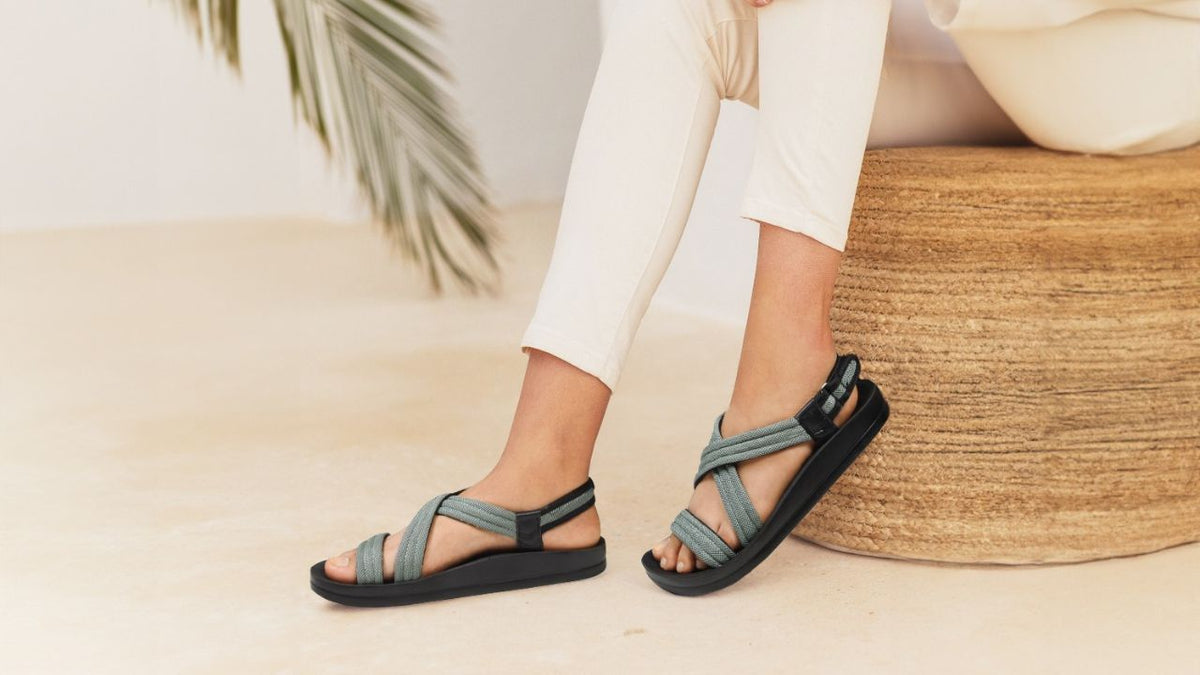
The Role of Arch Support Sandals
Arch support sandals provide reinforcement without restricting natural movement.
Unlike completely flat shoes, they include:
✔ Contoured arch structure
✔ Shock-absorbing midsoles
✔ Heel stabilization
✔ Even weight distribution
These features help maintain arch alignment under increased load.
Supportive sandals reduce strain by sharing the workload between footwear and soft tissues.
Structural Protection Starts Indoors
Many people focus on outdoor footwear but overlook indoor support.
Standing barefoot on tile or hardwood increases arch stress because hard surfaces offer no shock absorption.
If you haven’t already, read Why Indoor Footwear Matters More During Pregnancy to understand how prolonged standing at home contributes to cumulative strain.
Protecting your arches throughout the day — not just during outings — makes a significant difference.
Daily Habits That Strengthen Arch Protection
Beyond wearing supportive sandals, small daily adjustments improve resilience.
1. Avoid Prolonged Barefoot Standing
Hard floors amplify pressure on the plantar fascia.
2. Rotate Supportive Footwear
Avoid overusing one worn-out pair.
3. Stretch Calves Gently
Tight calves increase arch tension.
4. Perform Foot Strengthening Exercises
Toe curls and short-foot exercises activate intrinsic muscles.
5. Distribute Weight Evenly
Avoid carrying heavy loads on one side of the body.
Consistency prevents gradual overload.
Why Cushioning Alone Isn’t Enough
Many assume soft cushioning solves arch pain. While cushioning reduces impact, it does not replace structural support.
Too-soft soles may allow excessive pronation.
Proper structural protection includes:
- Firm arch contour
- Stable midsole
- Moderate cushioning
- Balanced flexibility
Arch support sandals combine these elements for effective load management.
Signs Your Arches Need More Support
You may require additional support if you notice:
- Flattened shoe wear patterns
- Increased arch fatigue
- Discomfort after short walks
- Heel pain upon waking
- Foot soreness at the end of the day
Addressing early symptoms prevents long-term issues.
Weight Changes Beyond Pregnancy
While pregnancy is a common cause of increased arch stress, other factors can also increase load:
- Lifestyle weight gain
- Strength training
- Occupational standing
- Carrying heavy equipment
- Postpartum body changes
In all cases, the arch support need rises as load increases.
Structural footwear remains a reliable protective tool.
Posture and Alignment Considerations
When arches flatten under extra weight:
- Ankles roll inward
- Knees rotate slightly
- Hips adjust
- Lower back compensates
This chain reaction increases muscular fatigue.
Arch support sandals help maintain neutral alignment, reducing stress throughout the body.
Long-Term Benefits of Protecting the Arch
Providing consistent structural protection can:
- Preserve arch height
- Reduce plantar fascia irritation
- Improve walking efficiency
- Minimize joint strain
- Enhance daily comfort
Small daily decisions have long-term impact.
Supporting the arch during weight changes helps maintain resilience over time.
When to Seek Professional Advice
Consult a healthcare provider if you experience:
- Severe heel pain
- Persistent swelling
- Sharp midfoot discomfort
- Sudden loss of arch height
Most arch strain improves with proper support and proactive care.
Creating a Protective Routine
A simple arch protection plan includes:
- Wearing arch support sandals daily
- Avoiding thin, flat footwear
- Taking seated breaks when possible
- Performing gentle strengthening exercises
- Monitoring changes in shoe fit
Routine support reduces cumulative stress.
Final Thoughts
Carrying extra weight increases the arch support need and places greater stress on connective tissue.
Without structural protection, arches may flatten under load, leading to fatigue and discomfort.
Arch support sandals provide stability, alignment, and shock absorption — helping protect your feet during periods of added strain.
Your feet adapt to what you ask of them. Giving them proper structural support ensures they remain strong, stable, and comfortable — even under extra weight.


 pretty pixie
 fog essentials