Cajodi Construction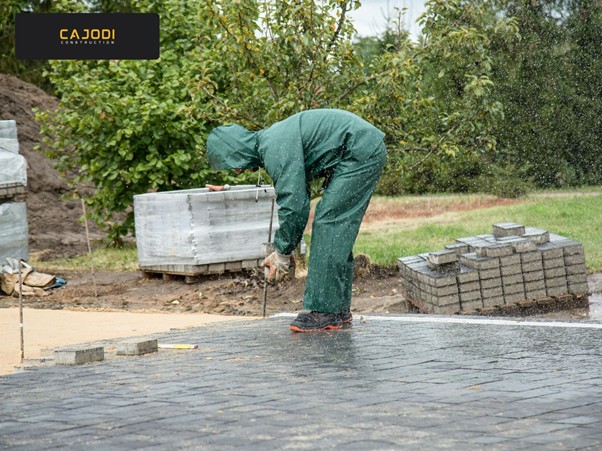
An entry path is the first physical interaction anyone has with your home. Before the door opens, before a word is exchanged, that walkway sets the tone. And the right paver installation plays an incredible role to make the mark.
So, it is important to hire the best and professional paver installation services if you really want to enhance the look of your outdoor space.
The Problem with “Basic”
Plain concrete walkways were never designed for longevity in places like Houston. The soil expands and contracts. Moisture lingers. Tree roots push upward from below. Over time, that once-smooth surface begins to fracture and tilt. You patch one section, then another. Eventually, the repairs look like a quilt.
Even when structurally intact, basic concrete tends to fade unevenly. It stains easily, radiates heat, and lacks dimension. Against a thoughtfully landscaped yard or freshly painted exterior, it can feel stark and disconnected.
You start noticing it more than you’d like.
Rethinking the Approach
Transforming an entry path isn’t about ornamentation for its own sake. It’s about proportion, texture, and intention.
The width alone can change everything. Many older walkways are too narrow, just wide enough for one person. Expanding the path creates comfort. Two people can walk side by side. Guests don’t step off into the grass. The entrance feels welcoming instead of constricted.
Then there’s material choice. Concrete has its place, but pavers introduce rhythm and variation. Natural stone brings organic texture. Even high-quality concrete pavers, when properly installed, offer flexibility that monolithic slabs can’t. They move slightly with the ground instead of fighting it.
Details That Elevate the Design
A border changes the perception of the entire walkway. A simple soldier course in a contrasting tone frames the surface and gives it structure.
Pattern plays a role too. Running bond feels classic. Herringbone adds energy and strength, particularly useful in high-traffic areas. Random ashlar patterns soften rigid lines and blend well with natural landscaping.
Lighting is often overlooked. Low-voltage path lights, spaced thoughtfully rather than mechanically, cast gentle shadows across textured pavers. At night, the walkway becomes dimensional. It guides without glaring.
And grading that’s the unglamorous part no one sees. Proper slope ensures water drains away from the home. A beautiful walkway that traps water is a short-lived one. The base preparation, the compaction, the edge restraints, those invisible elements determine whether the surface still looks good five years from now.
It’s craftsmanship beneath the surface that makes beauty last.
Blending with the Landscape
A transformed entry path shouldn’t feel dropped into place. It should belong.
Curves can soften a rigid façade. Straight lines can anchor a more organic yard. Sometimes stepping stones set within gravel or ground cover create a lighter, more relaxed approach. Other times, a formal paver layout complements symmetrical architecture.
Plantings along the edges matter. Low ornamental grasses brushing the border. Seasonal color that spills slightly toward the path. Not overgrown, just enough to make the walkway feel integrated rather than isolated.
When done well, the path doesn’t scream for attention. It quietly enhances everything around it.
Function Is Non-Negotiable
A beautiful walkway still needs to feel solid underfoot. No wobbling pavers. No edges lifting after the first heavy rain.
Slip resistance becomes important near irrigation zones or shaded areas where moisture lingers. Texture should be intentional, not abrasive but secure. The transition from driveway to walkway and walkway to porch should be smooth. Those small level changes are where people stumble.
The Subtle Shift in Perception
Here’s the interesting part: once the entry path changes with the look and right outdoor walkway paver installation, the house feels different.
It’s the same structure, same walls, and same roofline. Yet the approach reframes it. The home appears more finished, more considered. Property value often follows, but even before that, there’s a shift in how homeowners experience their own space.
You notice it when pulling into the driveway. The walkway catches light differently. The lines guide your eye toward the door. The entrance feels grounded.
It’s a small footprint, really, just a strip of land between curb and threshold. But transforming that strip alters the entire introduction.

 Ammar Saleem