Christina Wood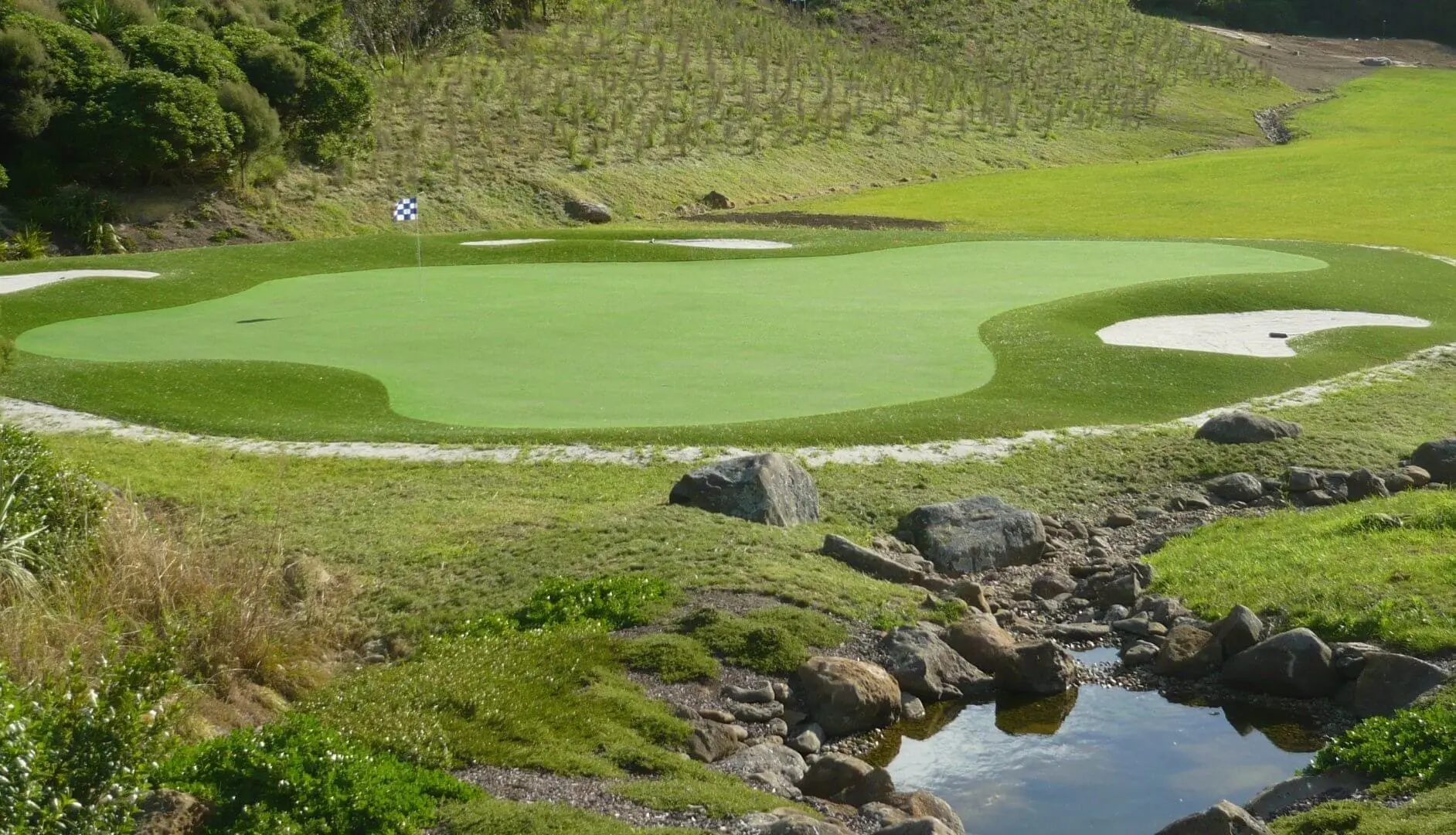
Golf turf plays a critical role in how practice surfaces perform, particularly when it comes to consistency, durability, and realism. Unlike general landscaping turf, golf-specific turf is engineered to support precise ball movement and repeated use without compromising performance.
If you are considering golf turf, it is important to understand how it is designed and why it differs from standard artificial grass.
What Is Golf Turf?
Golf turf is a specialised form of artificial grass designed specifically for golf applications such as putting greens, chipping areas, and practice zones.
It is engineered to:
- Replicate the feel of natural golf surfaces
- Provide consistent ball roll
- Maintain performance under frequent use
This makes it suitable for both residential and commercial practice environments.
Key Differences from Standard Turf
Golf turf differs from regular artificial grass in several important ways.
Fibre Length and Density
- Shorter fibres for smoother ball movement
- Higher density for consistent surface performance
Surface Texture
- Designed to minimise irregularities
- Provides predictable ball behaviour
Performance Focus
- Prioritises accuracy and control rather than just appearance
These differences are essential for creating a realistic practice experience.
Role in Putting Surfaces
On putting greens, golf turf directly affects how the ball rolls.
Key performance factors:
- Speed of the green
- Directional consistency
- Smoothness of the surface
A well-designed golf turf surface allows players to practise with greater accuracy and confidence.
Use in Chipping and Surround Areas
Golf turf is also used beyond putting greens.
Applications include:
- Fringe areas around greens
- Chipping zones
- Practice areas for short game
Different turf types may be used in these areas to replicate varying conditions found on real courses.
Durability Under Repeated Use
Practice surfaces are subject to frequent use, so durability is essential.
Golf turf is designed to:
- Withstand repeated foot traffic
- Resist flattening over time
- Maintain structure and performance
This ensures long-term usability without significant degradation.
Importance of Base and Installation
The performance of golf turf depends not only on the turf itself but also on how it is installed.
Key factors:
- Stable and level base
- Proper drainage system
- Accurate surface grading
Without correct installation, even high-quality turf will not perform as intended.
Maintenance Requirements
Golf turf is relatively low maintenance compared to natural grass, but some care is still required.
Typical maintenance includes:
- Brushing to keep fibres upright
- Removing debris
- Checking surface consistency
Regular upkeep helps maintain performance over time.
Suitability for NZ Conditions
Golf turf is well suited to New Zealand’s climate due to its durability and drainage capabilities.
Benefits include:
- Consistent performance in wet conditions
- Resistance to seasonal changes
- Reduced maintenance compared to natural greens
This makes it a practical option for both private and commercial use.
Final Thoughts
Golf turf is a specialised solution designed to deliver consistent performance for practice surfaces. Its structure, durability, and precision-focused design set it apart from standard artificial grass.
By understanding its role and how it is used, you can make more informed decisions when creating or upgrading a golf practice area, ensuring a surface that performs reliably over time.

 Rohit Verma