Marshall Morgan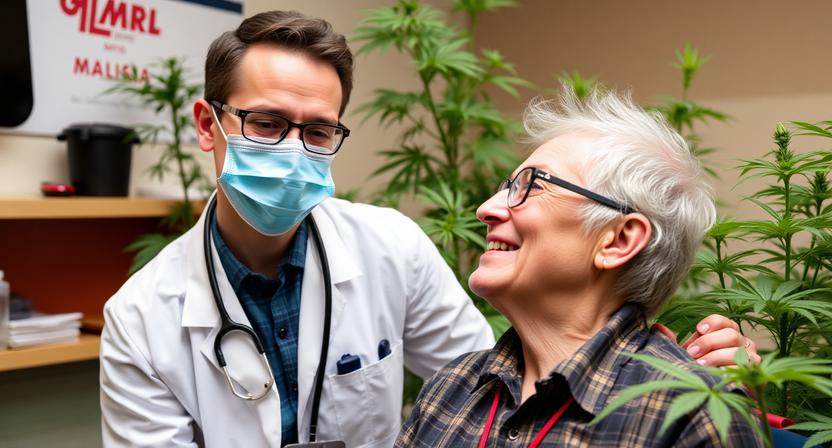
Epilepsy is a neurological condition characterized by recurrent, unpredictable seizures caused by abnormal electrical activity in the brain. For patients and families living with epilepsy in Florida, seizure management is an ongoing challenge that can affect every aspect of daily life, from driving to employment to personal safety. Florida’s medical cannabis program has offered a significant source of relief for many epilepsy patients, particularly those with treatment-resistant forms of the condition. Whether you need to find a medical marijuana doctor in Tampa or are working toward getting a medical marijuana card in Tallahassee, this guide covers everything you need to know.
Epilepsy and Medical Cannabis: Understanding the Connection
Epilepsy affects approximately 3.4 million Americans, and around one-third of those patients have epilepsy that does not respond adequately to antiepileptic drugs. This is referred to as drug-resistant or refractory epilepsy, and it represents one of the most difficult challenges in neurology. Patients may try five, six, or even more medications without achieving full seizure control, while dealing with significant side effects including cognitive fog, mood changes, liver strain, and bone density loss.
The relationship between cannabidiol (CBD) and seizure reduction has been one of the most rigorously studied areas in cannabis medicine. The FDA-approved drug Epidiolex, a pharmaceutical-grade CBD formulation, has been specifically approved for Lennox-Gastaut syndrome and Dravet syndrome, two severe forms of epilepsy. Beyond these specific syndromes, clinical and anecdotal evidence supports the use of cannabis in broader epilepsy management.
CBD appears to reduce neuronal excitability through several mechanisms, including modulation of calcium channels, interaction with transient receptor potential channels, and its effects on the endocannabinoid system’s role in balancing excitatory and inhibitory signals in the brain. For epilepsy patients in Florida, this scientific backing provides a strong rationale for exploring medical cannabis as part of a comprehensive seizure management plan.
Florida recognized epilepsy as a qualifying condition when it established its medical marijuana program, and the inclusion has given thousands of patients access to cannabis-based therapies through licensed physicians and dispensaries statewide.
Florida’s Medical Marijuana Program: Key Facts
Florida operates one of the largest and most accessible medical marijuana programs in the country. Under Amendment 2, which was approved by Florida voters in 2016, patients with a qualifying medical condition can obtain a physician certification and register with the Florida Department of Health’s Office of Medical Marijuana Use (OMMU) to receive their medical marijuana identification card.
Epilepsy is listed as a qualifying condition. The program permits a wide range of cannabis products including tinctures, capsules, concentrates, topicals, vaporized forms, and oral tablets. Florida does not permit smoking medical marijuana in public, though patients may smoke it in private.
The card registration fee is $75, paid to the state, and the card must be renewed annually. Physician certifications last 210 days, and renewals can typically be completed via telehealth for established patients. Florida has over 500 licensed dispensary locations statewide, making product access genuinely convenient for most residents.
Finding a Medical Marijuana Doctor in Tampa, Florida
Tampa is one of Florida’s most populated and medically resourced cities, home to major hospital systems, a large neurology community, and a well-established network of medical marijuana physicians. For epilepsy patients, this is advantageous because many are already connected to neurologists in the Tampa area who can either provide the medical records needed for an evaluation or, in some cases, are themselves certified to make medical marijuana recommendations.
When searching for a medical marijuana doctor in Tampa, look for a licensed Florida physician who is registered with the OMMU to issue recommendations. The certification process in Florida requires that the physician and patient have a bona fide physician-patient relationship, meaning the doctor must conduct a thorough evaluation rather than simply reviewing paperwork.
Your first appointment should involve a detailed review of your epilepsy diagnosis, seizure history, medications you have tried, and how your condition currently impacts your daily functioning. Bring your neurology records, medication history, and any EEG or imaging reports you have. The physician needs to confirm that your condition qualifies and that medical cannabis is appropriate given your overall health picture.
Tampa’s medical community is increasingly comfortable with cannabis medicine for neurological conditions. If your current neurologist is supportive, having them coordinate with your certifying cannabis physician can improve the quality of your overall care. If they are not yet familiar with the area, many cannabis-specialized physicians in Tampa are well-versed in working alongside neurology teams.
Tampa also has a number of telehealth-enabled medical marijuana providers, which is particularly beneficial for epilepsy patients who may have driving restrictions due to seizure risk. Remote evaluations eliminate transportation barriers while maintaining the medical rigor the program requires.
Getting Your Medical Marijuana Card in Tallahassee, Florida
Tallahassee, Florida’s capital city, sits in the northern panhandle region and serves as a hub for state government, education, and regional healthcare. For epilepsy patients in Leon County and the surrounding area, Tallahassee offers a growing range of medical marijuana physicians and licensed dispensaries.
After your physician completes and submits your certification through the OMMU registry, you apply for your card through the state’s online portal. You will need a valid Florida ID or driver’s license, proof of residency, your physician’s certification, and the $75 state fee. Processing typically takes a few weeks, but in the meantime, your physician’s certification serves as temporary legal documentation in certain situations.
Tallahassee has seen growth in its medical cannabis infrastructure since the program’s early years. Multiple licensed dispensaries now operate in the city, offering a range of products. For epilepsy patients, CBD-rich tinctures and capsules tend to be among the most frequently recommended starting points, though a physician may recommend different formulations depending on the nature and severity of your seizures.
Students at Florida State University and Florida A&M University who are managing epilepsy also have access to the same state program. A valid Florida ID and medical history are sufficient to initiate the evaluation process, regardless of whether you are a long-term resident or a student living in Tallahassee temporarily.
What Epilepsy Patients Should Expect From Medical Cannabis
For epilepsy patients considering medical cannabis, the evidence most strongly supports CBD-dominant products for seizure reduction. Starting with a low dose and titrating slowly is standard practice, particularly because individual responses vary significantly based on seizure type, body weight, medications being used concurrently, and the specific cannabis formulation.
Some antiepileptic drugs interact with cannabinoids, most notably CBD’s known interaction with clobazam, which can increase clobazam levels in the blood. This is why close coordination between your neurologist and your certifying cannabis physician is important. Regular monitoring of medication levels and seizure frequency allows your care team to make informed adjustments.
Patients often find that it takes several weeks to several months to identify the optimal dose and product combination. Keeping a detailed seizure diary that notes the date, time, duration, and type of each seizure alongside your cannabis dosing information is one of the most helpful things you can do during this period. It provides concrete data to guide your treatment decisions.
Many epilepsy patients report not just fewer seizures but also improvements in sleep, reduced anxiety about seizure occurrence, and better cognitive clarity once they find the right product and dosage. These quality-of-life improvements can be just as meaningful as changes in seizure frequency.
A Path Forward for Epilepsy Patients in Florida
Florida’s medical marijuana program represents a genuine opportunity for epilepsy patients who have not found adequate relief through traditional antiepileptic medications alone. With strong scientific backing for cannabidiol’s role in seizure management, qualified physicians available across the state, and accessible dispensaries in cities like Tampa and Tallahassee, the pathway from diagnosis to treatment has never been more clearly defined.
Begin with an evaluation from a licensed medical marijuana physician, come prepared with your medical history, and work collaboratively with your neurology team to integrate cannabis into your broader care plan. For many patients living with epilepsy in Florida, this step has opened the door to a more stable, manageable daily life.


 drwyatt Jennings
 enfield abudhabi