Covington Plasctic Molding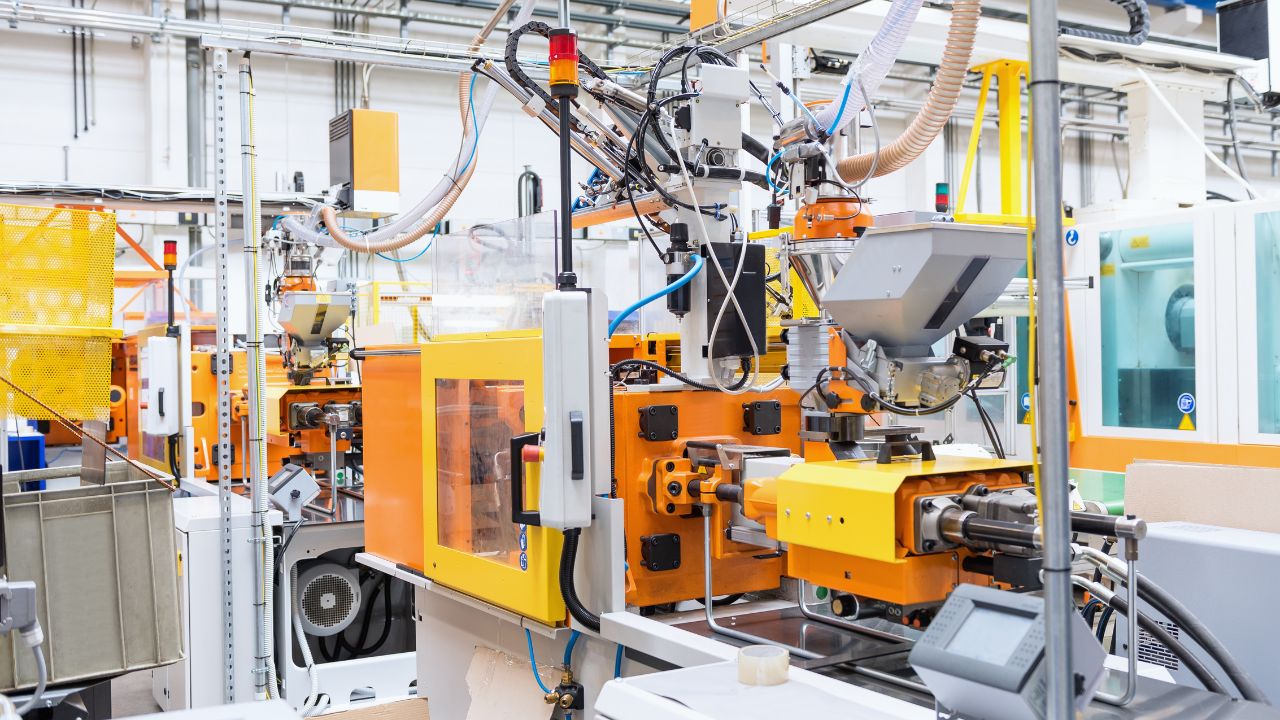
Plastic injection molding is common enough that most people in manufacturing take it for granted. Heat the resin, inject it into a mold, cool it, eject the part, repeat. It looks simple only on paper.
But the moment production targets climb into the hundreds of thousands, or even millions, the process stops being routine. Every decision starts carrying weight: mold design, material behavior, cycle time, cooling efficiency, and machine stability. Small issues that barely register in short runs can quietly multiply into major problems when a mold is cycling all day, every day.
That’s the territory of high-volume injection molding. It’s less about the molding process itself and more about how that process is engineered to run at scale without losing precision or reliability.
When Injection Molding Becomes “High Volume”
There’s no universal number that defines high-volume production, but the shift usually happens when parts are needed in the hundreds of thousands or more. At that level, the priorities change.
Prototype molds and short-run tooling are built for flexibility. They allow engineers to test designs, make adjustments, and move quickly. High-volume production molds, by contrast, are built for endurance. They’re expected to run for years, producing identical parts across enormous production runs.
A simple consumer product might require several million molded components annually. Automotive and electronics manufacturers routinely operate at that scale. Once demand reaches that level, the tooling, materials, and process control all have to keep up.
The Mold Does the Heavy Lifting
If injection molding were a stage performance, the mold would be the lead actor.
High-volume molds are engineered to survive relentless use. The cavity surfaces must have very close tolerances when they are repeatedly cycled hundreds of thousands of times. The cooling channels are strategically placed so that the part’s heat is evenly pulled away and that all parts cool consistently. Every detail associated with how the mold opens to allow the parts to be ejected has been engineered to reduce wear over time.
All these features are not created by chance; toolmakers have put in tremendous amounts of effort into perfecting these specs prior to starting the manufacturing process.
A poorly designed mold can slow the entire process. Cooling may take too long, extending cycle times. Parts might warp slightly as they cool. Surface finishes could degrade after repeated use. Multiply those problems by hundreds of thousands of cycles, and you begin to see why tooling quality matters so much.
Good molds, on the other hand, become remarkably reliable. Once dialed in, they simply run.
Why High Volume Injection Molding Matters
Take a look inside a modern vehicle, an appliance, or even a simple household device. Many of the internal components, connectors, clips, housings, and enclosures exist because injection molding can produce them quickly and reliably.
Custom plastic injection molding makes it possible to manufacture those parts at scale while maintaining tight tolerances and repeatable quality.
When everything works the way it should, the process almost fades into the background. Machines run, molds cycle, and parts move through inspection and packaging. Day after day, the output stays steady.


 150 backlinks
 frazie Miller