Work DesQ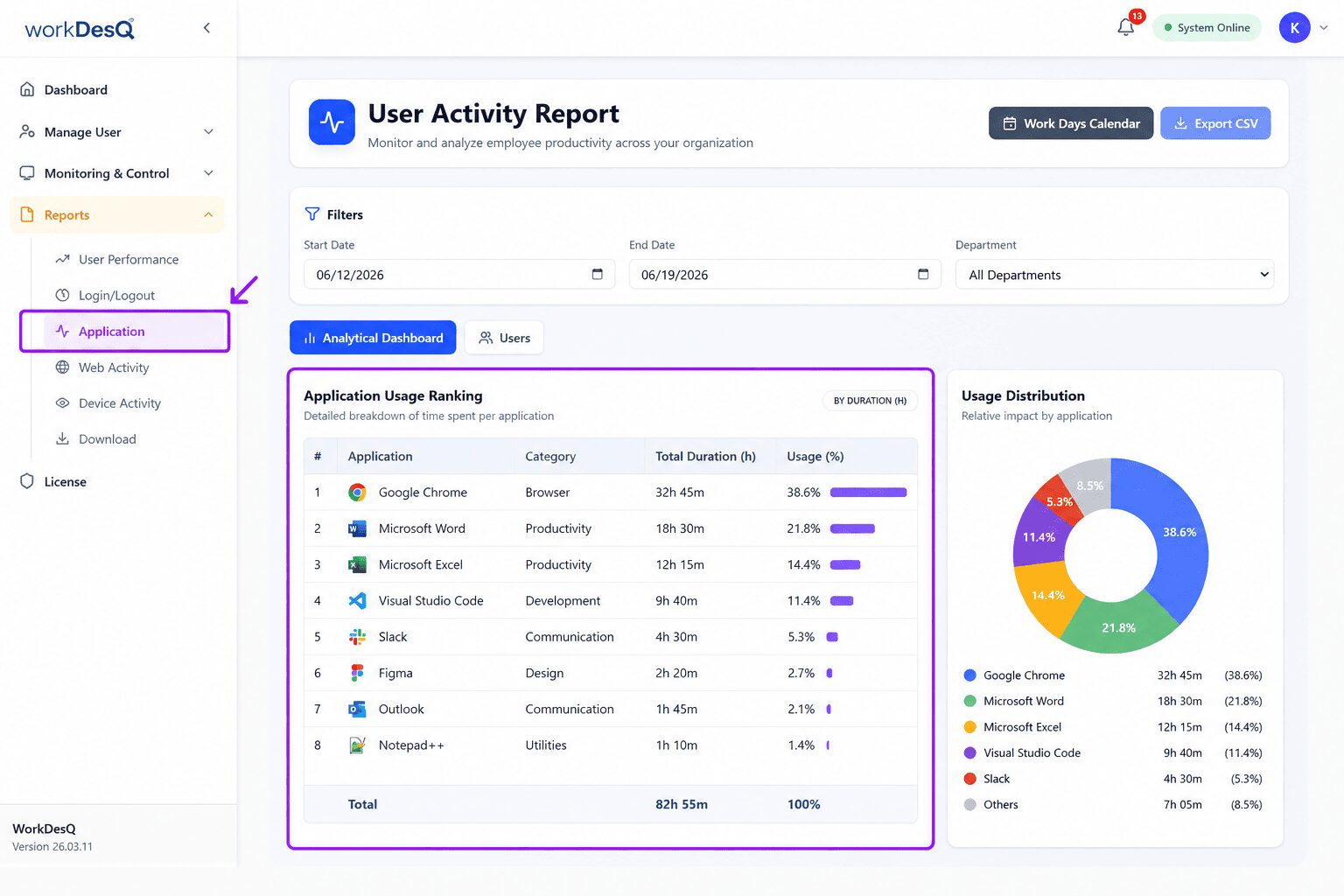
Many businesses want to improve productivity without creating pressure on employees. The best way to achieve this is through application usage monitoring, which provides clear insights into how work applications are used during working hours. Instead of relying on assumptions, managers can make decisions based on accurate information.
Application usage monitoring helps organizations improve workplace transparency by showing productive work patterns, supporting fair performance reviews, and helping employees manage their time better. When implemented with clear policies and open communication, it creates a more accountable and productive work environment.
Key Takeaways
- Improves workplace transparency
- Tracks work-related application usage
- Supports fair employee evaluations
- Helps improve productivity
- Identifies workflow challenges
- Encourages accountability
- Makes remote team management easier
How Application Usage Monitoring Increases Workplace Transparency
Modern workplaces depend on technology more than ever before. Employees use different applications throughout the day to complete projects, communicate with teammates, manage customers, and perform daily tasks. Without visibility into how these tools are being used, managers often struggle to understand productivity levels.
This is where how application usage monitoring increases workplace transparency becomes important. Instead of monitoring employees unfairly, businesses can create an open work environment where everyone understands expectations and performance is measured using real data.
Transparency builds trust. When employees know that monitoring focuses on improving workflows rather than spying on individuals, they are more likely to stay engaged and productive.
What Is Application Usage Monitoring?
Application usage monitoring is the process of tracking how employees use work-related software during business hours.
It records information such as:
- Applications used
- Time spent on each application
- Productive work hours
- Idle time
- Frequently used business tools
- Daily activity reports
The goal is to help businesses understand work habits and improve overall efficiency.
What Does Workplace Transparency Mean?
Workplace transparency means employees and managers have a clear understanding of work expectations, responsibilities, and performance.
Transparent workplaces focus on:
- Honest communication
- Fair performance evaluation
- Clear productivity goals
- Equal treatment for employees
- Data-based decision making
Application usage monitoring supports these goals by providing objective information instead of opinions.
Why Workplace Transparency Matters
A transparent workplace creates stronger relationships between employees and management.
Benefits include:
- Better employee trust
- Improved teamwork
- Faster problem solving
- Higher productivity
- Better employee engagement
- Fair performance reviews
When everyone works with the same information, misunderstandings become less common.
How Application Usage Monitoring Increases Workplace Transparency
- Provides Accurate Productivity Insights
Managers no longer need to guess whether work is progressing.
Application usage monitoring provides accurate reports showing how work applications are being used throughout the day.
Instead of making decisions based on assumptions, businesses can rely on real activity data.
- Creates Fair Performance Reviews
Performance reviews should always be based on measurable results.
Application usage reports help managers understand:
- Time spent on productive applications
- Work consistency
- Daily activity patterns
- Overall work efficiency
This creates a more balanced evaluation process for every employee.
- Reduces Misunderstandings
Sometimes employees appear busy but are working on tasks that managers cannot easily see.
Application usage monitoring helps eliminate confusion by providing clear work activity reports.
Both employees and managers have access to accurate information, reducing unnecessary discussions about productivity.
- Encourages Better Time Management
When employees understand how their work time is used, they naturally become more aware of their daily habits.
Many employees begin to:
- Reduce distractions
- Organize tasks better
- Focus on important work
- Improve daily productivity
This benefits both employees and employers.
- Supports Remote and Hybrid Teams
Managing remote teams can be challenging without proper visibility.
Application usage monitoring helps managers understand work progress regardless of employee location.
It ensures everyone follows the same performance standards whether working:
- From the office
- From home
- In hybrid work environments
- Helps Identify Workflow Problems
Not every productivity issue is caused by employees.
Sometimes slow systems, outdated software, or complicated processes reduce efficiency.
Application usage reports help businesses identify:
- Software that wastes time
- Frequently interrupted workflows
- Underused business tools
- Areas where additional training is needed
These insights improve business operations.
- Builds Employee Accountability
Transparency works both ways.
Employees know their work is measured fairly using actual activity reports instead of opinions.
This encourages accountability without creating unnecessary pressure.
Employees also gain confidence knowing their efforts are visible and recognized.
- Supports Better Business Decisions
Business leaders need reliable information before making decisions.
Application usage monitoring provides reports that help managers:
- Allocate resources
- Improve project planning
- Identify high-performing teams
- Support employee development
- Improve operational efficiency
Better information leads to better business outcomes.
Best Practices for Transparent Application Usage Monitoring
Successful businesses follow simple guidelines when implementing monitoring software.
Communicate Clearly
Explain:
- Why monitoring is used
- What information is collected
- How reports are used
- Employee rights and privacy
Open communication builds trust.
Focus on Productivity
The purpose should always be improving workflows, not controlling employees.
Managers should use reports to:
- Remove obstacles
- Improve processes
- Support employees
- Recognize achievements
Protect Employee Privacy
Businesses should collect only work-related information.
Monitoring should never extend beyond working hours or personal activities.
Respecting privacy strengthens employee confidence.
Share Performance Insights
Employees benefit from seeing their own productivity reports.
Regular feedback sessions help employees improve while encouraging open conversations.
Industries That Benefit from Application Usage Monitoring
Many industries use application usage monitoring to improve workplace transparency.
These include:
- IT companies
- Software development
- Customer support centers
- Marketing agencies
- Financial services
- Healthcare administration
- Consulting firms
- Educational organizations
Every organization that depends on digital work can benefit from better visibility.
Why Businesses Choose WorkDesQ for Application Usage Monitoring
WorkDesQ helps businesses improve workplace transparency through simple and reliable monitoring features.
Key capabilities include:
- Application usage tracking
- Employee productivity reports
- Time tracking
- Attendance management
- Active and idle time reports
- Website usage monitoring
- Real-time dashboards
- Easy-to-understand analytics
The platform provides meaningful insights while supporting transparent workplace practices and responsible employee management.
Common Mistakes to Avoid
Businesses should avoid these common mistakes:
- Not informing employees about monitoring
- Using reports to micromanage staff
- Ignoring employee feedback
- Collecting unnecessary personal information
- Measuring productivity using only time spent online
Monitoring should always support business improvement and employee success.
Final Thoughts
Understanding how application usage monitoring increases workplace transparency helps businesses create a more open, productive, and accountable work environment. By using accurate work data instead of assumptions, organizations can improve communication, support fair performance evaluations, and help employees manage their time more effectively.
When implemented responsibly, application usage monitoring strengthens trust rather than reducing it. Combined with employee productivity monitoring software like WorkDesQ, businesses gain valuable insights that improve workflows, support remote teams, and encourage continuous improvement.
Transparency is not about watching employees—it is about giving everyone the information they need to work better together.
Frequently Asked Questions (FAQs)
What is application usage monitoring?
Application usage monitoring tracks the software employees use during working hours and provides reports on application activity, work time, and productivity.
How does application usage monitoring improve workplace transparency?
It provides accurate work activity reports that help managers make fair decisions based on real data instead of assumptions.
Is application usage monitoring helpful for remote teams?
Yes. It helps businesses monitor productivity, manage work hours, and improve accountability for remote and hybrid employees.
Does application usage monitoring improve productivity?
Yes. Employees become more aware of their work habits, while managers can identify workflow improvements using detailed reports.
Why do businesses use WorkDesQ for application usage monitoring?
Businesses choose WorkDesQ because it offers application usage tracking, employee productivity reports, attendance management, time tracking, and easy-to-understand dashboards that help improve workplace transparency.


 David J
 Eknath Girhepunje