Sahu
Sahu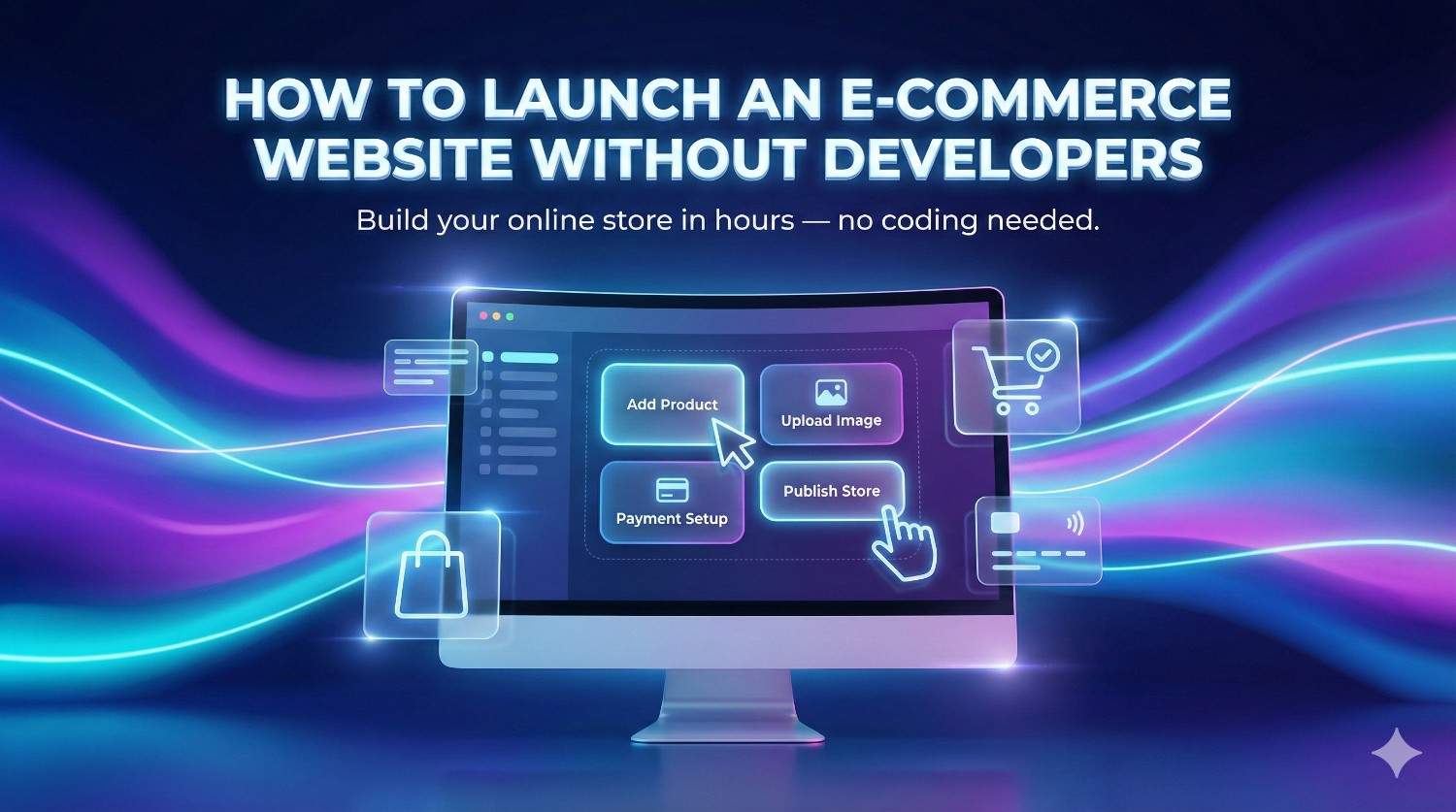
Introduction
Starting an e-commerce business is one of the fastest ways to grow in today’s digital world. But for many entrepreneurs, the biggest barrier is technical – building a website. Traditionally, launching an online store meant hiring developers, managing code, and spending thousands before even making your first sale.
The good news? You no longer need developers to launch your e-commerce website. Modern no-code platforms have made it easier than ever to design, build, and manage an online store — all by yourself. With drag-and-drop tools, pre-built templates, and automated systems, anyone can create a professional e-commerce website in just a few hours.
Why You Don’t Need Developers Anymore
A decade ago, websites were built entirely with code. Every layout, button, and feature required technical knowledge. That made web development expensive and time-consuming.
Now, the no-code revolution has changed everything. Today’s tools allow you to create websites visually — simply by dragging and dropping elements on the screen. You can design pages, upload products, and even manage payments without writing a single line of code.
This means small businesses, startups, and solo entrepreneurs can take full control of their online presence. Instead of depending on developers for updates or fixes, you can make changes instantly, launch faster, and scale whenever you want.
Step 1: Choose the Right No-Code Platform
The foundation of your online store is the platform you choose. A good no-code e-commerce builder should offer:
- Ready-to-use templates for online stores
- Drag-and-drop design tools
- Secure payment integrations
- SEO optimization
- Mobile responsiveness
Platforms like Frequency are built for exactly this purpose — helping businesses go online without the need for developers. You simply select a design, customize it to match your brand, and publish your site. Everything from layout to checkout is already optimized for performance and conversions.
Step 2: Design Your Store for Customers
Your website is your digital storefront — it should attract, engage, and convert visitors into customers. Start by choosing a clean, professional layout that highlights your products clearly.
Here’s what to focus on:
- Homepage: Use high-quality images and clear headlines.
- Product Pages: Add detailed descriptions, pricing, and customer reviews.
- Checkout Process: Keep it fast, simple, and secure.
- Navigation: Make it easy for users to browse products or categories.
No-code builders simplify this process by providing pre-built e-commerce layouts that already follow best design practices. You only need to adjust colors, fonts, and images to match your brand.
Step 3: Add Products and Set Up Payments
Once your design is ready, it’s time to add your products or services. Most no-code platforms let you upload images, set prices, add stock information, and organize products into categories effortlessly.
The next step is enabling payments. Modern builders support secure integrations with gateways like Stripe, PayPal, or Razorpay. You can start accepting online payments instantly without writing a single line of code or setting up complex systems.
For service-based businesses, you can add booking or inquiry forms instead of a traditional checkout. The goal is to make transactions smooth and professional.
Step 4: Optimize for Mobile and SEO
More than 70% of customers browse and shop using their smartphones. That’s why your e-commerce site must be fully responsive. The good news — no-code platforms automatically optimize your site for mobile screens.
Next comes SEO (Search Engine Optimization) — the key to making your website visible on Google. Even if you don’t know SEO, no-code tools make it easy to add meta tags, titles, and descriptions. You can also track performance, edit URLs, and integrate with tools like Google Analytics — all from your dashboard.
This ensures your store not only looks great but also ranks well and attracts organic traffic.
Step 5: Manage and Scale Easily
Once your website is live, the real journey begins — managing and growing your store. With no-code tools, you can handle everything from one dashboard:
- Add new products anytime
- Update pricing and inventory
- Track sales and customer behavior
- Launch offers or seasonal promotions
This flexibility allows you to scale your business easily without depending on developers for every change.
Frequency, for example, helps entrepreneurs manage their entire website and store from one platform — saving time, money, and effort. Whether it’s editing pages or tracking sales, everything is designed to be intuitive and beginner-friendly.
Step 6: Market Your Store for Growth
Even the best website won’t succeed without visibility. Once your e-commerce site is live, focus on driving traffic and building brand awareness.
Start with:
- Social media marketing: Share your products and stories on Instagram, Facebook, and LinkedIn.
- Email campaigns: Send offers or new arrivals to your customers.
- Content marketing: Write blogs about your products or customer experiences.
- Paid ads: Use Google or Meta ads to attract your ideal audience.
By combining these strategies, you’ll create consistent engagement and convert visitors into loyal customers.
The Future Is No-Code
The shift toward no-code website building is more than a trend — it’s the future of online business. It empowers entrepreneurs to move fast, stay flexible, and maintain full control of their digital journey.
You no longer need to wait weeks or pay thousands for developers. You can launch, manage, and grow your e-commerce website yourself — quickly, affordably, and professionally.
With the right no-code platform, anyone can turn an idea into a fully functional online store. The barriers are gone — all that’s left is action.
Conclusion
Launching an e-commerce website without developers is now easier than ever. Thanks to no-code tools, you can design your store, manage sales, and grow your business — all without technical knowledge.
These platforms bring together everything you need: design flexibility, automation, scalability, and reliable performance. Whether you’re starting fresh or taking your offline store online, no-code systems make the process fast and stress-free.
Tools like Frequency empower entrepreneurs to build and manage their e-commerce websites effortlessly — saving both time and cost while maintaining a professional edge.
The easiest time to start is now — build smart, launch fast, and let your online business grow with confidence.


 steve Johnson
 Andi Cheung