Abel Willium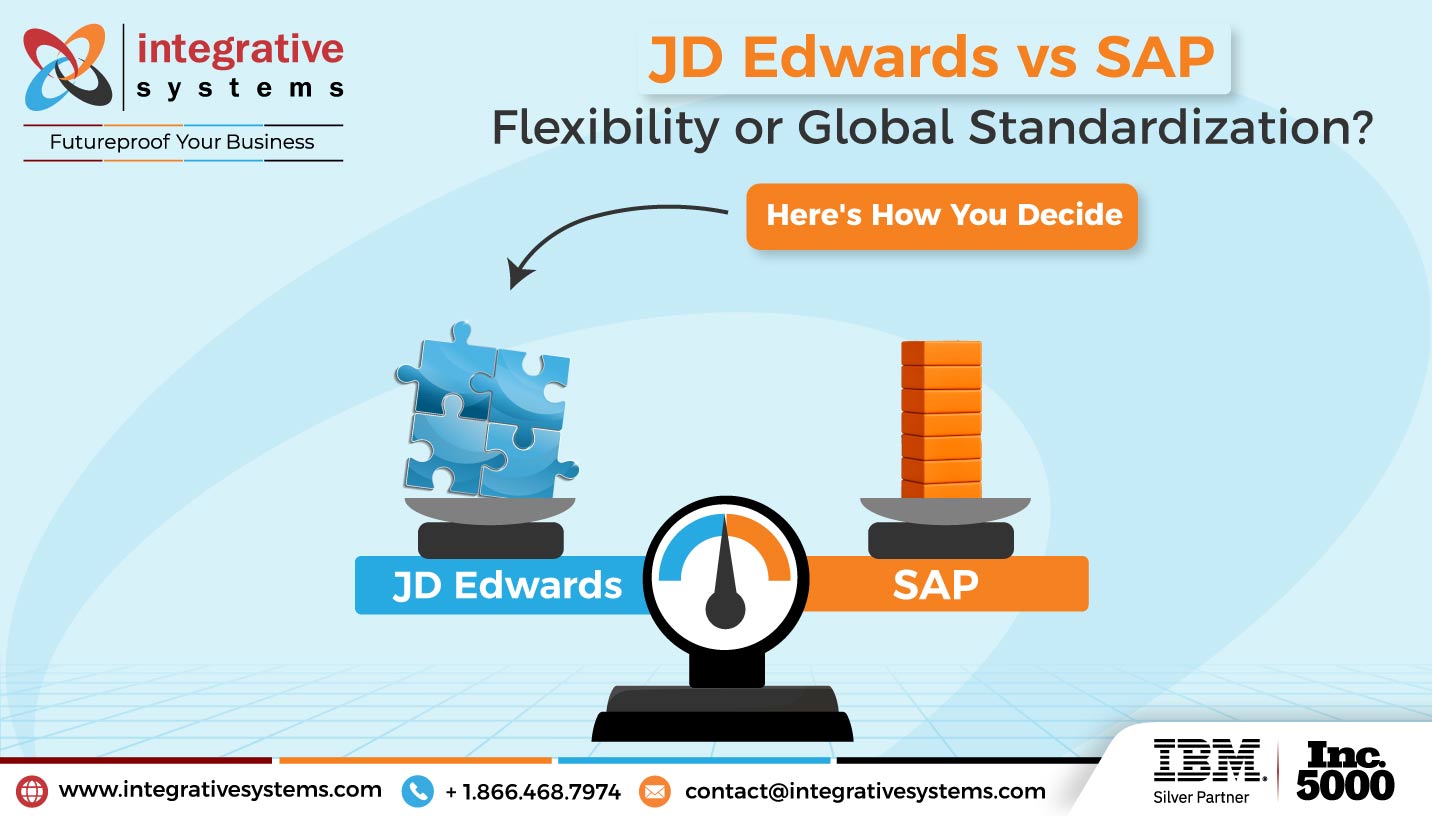
Choosing between JD Edwards vs SAP depends on your business size, workflow complexity, industry requirements, and long-term growth objectives.
Oracle JD Edwards EnterpriseOne is best suited for asset-intensive industries that need flexible deployment options, industry-specific functionality, and lower implementation complexity.
SAP ERP is designed for large-scale enterprises that require structured business processes, global operations support, and enterprise-wide standardization.
This JD Edwards vs SAP comparison explores key factors, including deployment, implementation, customization, industry fit, upgrades, and total cost of ownership, helping you determine the ERP solution that aligns with your business needs.
What Is JD Edwards?
JD Edwards EnterpriseOne is an ERP platform developed by Oracle. It is widely used by organizations looking for deployment flexibility and industry-focused capabilities.
JD Edwards EnterpriseOne is commonly adopted across resource-intensive industries, including:
- Manufacturing
- Construction
- Engineering
- Distribution
- Real Estate
One of the key advantages of JD Edwards is its support for on-premises, cloud, and hybrid deployments. Its modular architecture allows businesses to start with required capabilities and expand functionality as operational needs evolve.
What Is SAP ERP?
SAP ERP is an enterprise resource planning solution built to support large organizations with complex global operations.
SAP connects essential business functions, including supply chain, procurement, manufacturing, finance, and other enterprise processes, into a unified ecosystem.
SAP ERP is recognized for supporting standardized business processes across multiple locations and business units. However, its extensive functionality often results in longer implementation timelines, greater customization challenges, and higher investment requirements.
JD Edwards vs SAP Comparison at a Glance
|
Comparison Area |
JD Edwards EnterpriseOne |
SAP ERP |
|
Best suited for |
Mid-sized to large enterprises |
Large global enterprises |
|
Deployment |
On-premises, cloud, hybrid |
Cloud-first with on-premises options |
|
Implementation |
Faster and flexible |
Longer and more complex |
|
Customization |
High |
Moderate to High |
|
Manufacturing |
Strong industry-specific capabilities |
Extensive global manufacturing support |
|
Asset Management |
Excellent |
Strong |
|
Integration |
Oracle ecosystem and third-party applications |
Extensive SAP ecosystem |
|
Total Cost of Ownership |
Generally lower |
Generally higher |
Both ERP platforms provide enterprise-grade capabilities. The right choice depends on operational requirements, industry needs, deployment strategy, and future business objectives.
JD Edwards vs SAP: Key Differences
Deployment and Flexibility
JD Edwards provides flexible deployment options, including on-premises, cloud, and hybrid environments. This makes it suitable for companies with existing infrastructure investments or specific industry compliance requirements.
SAP follows a cloud-focused approach designed for organizations seeking enterprise-wide process standardization, which may require detailed migration planning.
Implementation
JD Edwards E1 supports modular implementation, allowing organizations to deploy capabilities in phases and scale as business requirements grow.
SAP ERP implementations often involve larger transformation programs with longer timelines and significant change management requirements.
Customization
JD Edwards adapts well to existing business processes and supports modernization while maintaining operational continuity.
SAP focuses on standardized processes, requiring businesses to align their operations with SAP frameworks.
Industry Fit
JD Edwards is widely used in manufacturing, construction, engineering, distribution, and other asset-intensive industries.
SAP has a strong presence among multinational organizations across industries such as manufacturing, retail, healthcare, financial services, and utilities.
Total Cost of Ownership
ERP costs include more than licensing. Implementation, customization, infrastructure, training, support, and upgrades also impact total investment.
In a JD Edwards vs SAP comparison, JD Edwards generally offers lower total cost of ownership, while SAP delivers value for organizations requiring global-scale operations and standardization.
JD Edwards vs SAP – Which ERP Should You Choose?
Your ERP decision should be based on how your business operates and your future growth plans.
Choose JD Edwards EnterpriseOne if you need:
- Flexible deployment options
- Industry-specific functionality
- Lower implementation complexity
- Incremental upgrades and modernization
- Support for resource-intensive industries
Organizations already using JD Edwards can benefit from JD Edwards consulting services and JD Edwards support services to optimize existing environments before considering ERP replacement.
Choose SAP ERP if you need:
- Standardized enterprise processes
- Global operational support
- Centralized governance
- Comprehensive enterprise ecosystem capabilities
- Support for large transformation initiatives
Final Checklist for Choosing Between JD Edwards and SAP
Before selecting between JD Edwards vs SAP ERP, consider:
- Do you need flexibility or global standardization?
- Should you upgrade your existing ERP or replace it?
- Can you support the required implementation timeline and budget?
- How much customization will your business require?
- Do you have the expertise needed for upgrades and integrations?
The right ERP solution is the one that aligns with your operational model, implementation capacity, and long-term business strategy.
For organizations running JD Edwards, expert JD Edwards services can help maximize ERP value through managed services, upgrades, integrations, customization, automation, and CNC support.
A JD Edwards readiness assessment can help identify optimization opportunities before starting a major transformation initiative.

 GodDigital GodDigital
 mary william