alice winson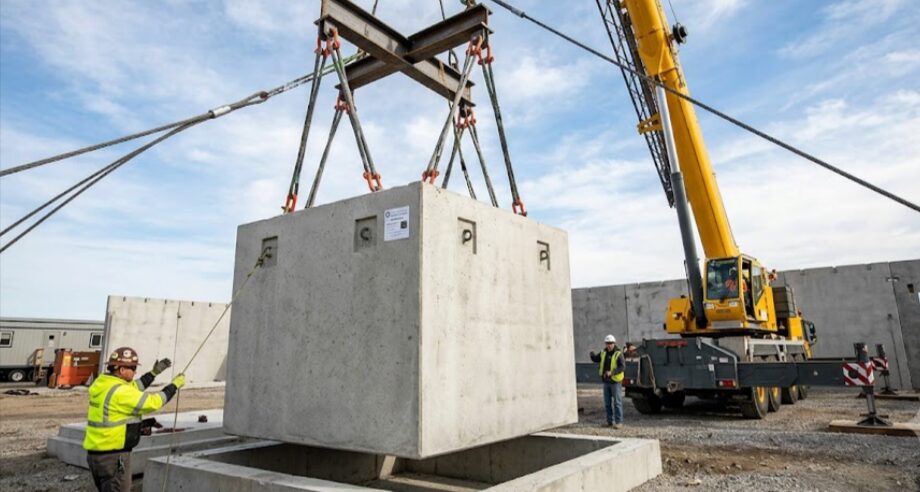
Modern construction is all about speed, precision and safety. If you’ve been to a commercial construction site recently, you’ve probably seen huge precast concrete blocks being moved into place like giant Lego pieces.
Although precast concrete can provide incredible advantages when it comes to quality control and project timelines, moving these multi-ton structures requires specialised expertise. Precast rigging can help with that.
Whether you’re a project manager, a site supervisor or an aspiring rigger, knowing how precast elements relate to the rigging systems used to move them is essential for a successful build.
Precast concrete is revolutionising the construction game.Before we get into the heavy lifting let’s look at why precast concrete blocks and panels have become the industry standard. Precast concrete is made in a controlled factory setting, instead of the traditional method of pouring and curing concrete at the actual site where it will be used (which can be subject to the vagaries of weather).
The result of this process is a number of advantages:
Unmatched Durability: Factory curing offers the proper temperature and moisture for a far stronger end product.
Time Savings: Precast blocks are cast off-site, while on-site excavation and foundation work is done, significantly shortening project timelines.
Cost-Efficiency: Standardised moulds mean lower labour costs and less waste.
However, when these blocks reach the construction site they are fully cured and extremely dense making them very heavy. They need a perfect rigging plan to get them where they need to go and put them in place.
The Art & Science of Precast Rigging
Rigging is not simply attaching a chain to a block and yelling “hoist!” It is a very calculated process, with centre of gravity, load distribution, crane capacity and more.
In most cases a standard crane setup is not sufficient to handle precast concrete blocks. Riggers use special equipment to keep the load stable and stop it cracking under its own weight when it is lifted.
Precast Elements Rigging Equipment Requirements
Spreader bars and lifting beams are essential in order to evenly distribute the weight of long or odd shaped precast blocks and prevent bending moments that may cause damage to the concrete.
Lifting Clutches and Anchors: Precast blocks are made with engineered lifting inserts (cast-in anchors). It is important to match the correct lifting clutch with the correct type of anchor for site safety.
Slings and Shackles: High-strength synthetic slings or wire rope slings have a rating specifically for the weight and sharp edges often associated with concrete elements.
Precast Lift: Essential Steps for a Safe and Successful
A successful lift is achieved long before the crane engine is started. Here’s a look at the standard checklist each crew should follow:
Check the Precast Blocks. Look for any hairline cracks, chips or damage that may have happened in shipping. Ensure cast-in lifting loops/anchors are free of debris.
Check the Total Load Weight. Don’t guess. The weight of the precast block shall be stated / recorded clearly. When calculating the total crane load don’t forget to include the weight of the rigging gear itself.
Analyse Site Conditions: Wind speed, overhead power lines and ground stability are major variables. Make sure the crane is on solid level ground with proper outrigger pads.
Establish Clear Communication: The crane operator and the dogman (spotter) should have a mutually agreed system of hand signals or dedicated radio channels.
If your team requires premium concrete elements and expert guidance on their safe handling, aligning with industry leaders such as BSL Group guarantees that your project will be supported by high-grade engineering standards and dependable supply chains.
Common Precast Rigging Errors to Avoid
Cutting corners can land even the most experienced crews in trouble. Steer clear of these common mistakes:
Using Improper Sling Angles : The tension on the sling increases dramatically as the angle between the sling and the horizontal plane decreases. Always follow the engineered lift plan.
Not taking into account the centre of gravity: If the lifting point is not at the centre of gravity of the block, the load will tilt violently when lifted and could shock the crane or hit nearby structures.
Ignoring Dynamic Forces: Dynamic loads such as sudden stops, jerks or swinging movements can be in excess of the rated capacity of your rigging gear. The trick is to be smooth and in control.
Conclusion: Safety First, Always
The use of precast rigging and precast concrete blocks makes the difference between a chaotic job site and a highly profitable, streamlined operation. With the right rigging hardware, crew training on weight distribution and trusted manufacturers, you can tap into the full power of precast construction safely and efficiently.


 custom tags