Alessandra Conti
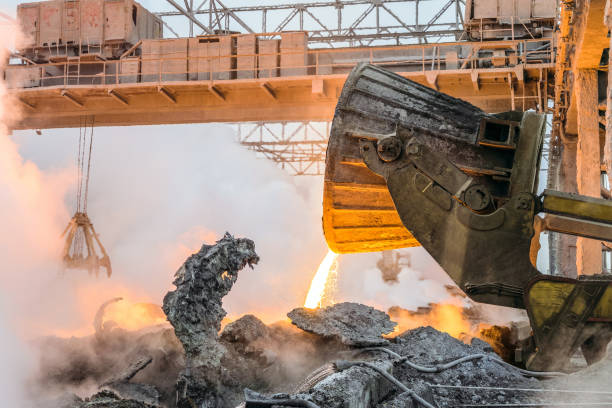
Slag dumping is an important part of metal production, especially in steelmaking, where slag is generated as a by-product during smelting and refining. Slag must be cooled, transported, processed, stored, reused, or disposed of safely to reduce environmental risks and keep plants operating efficiently. Its management is closely linked with industrial waste handling, resource recovery, construction material reuse, and regulatory compliance.
As per MarkNtel Advisors, the global slag dumping sector was valued at around USD 10.53 billion in 2025 and is projected to grow from USD 11.12 billion in 2026 to nearly USD 15.44 billion by 2032, expanding at a CAGR of about 5.2% during 2026–2032. This growth is supported by rising steel production, blast furnace slag generation, Asia-Pacific’s leading share, stricter waste rules, and growing adoption of slag recycling technologies.
Steel Production Remains the Main Source
Steel manufacturing is the largest end-use source for slag dumping services because slag is generated during blast furnace, basic oxygen furnace, and electric arc furnace operations. MarkNtel Advisors notes that steel manufacturing accounted for about 67% share in 2026. As steel plants operate continuously, slag handling becomes a necessary part of plant logistics and environmental management.
The World Steel Association highlights material efficiency and co-product use as important parts of steel-sector sustainability. This is relevant because slag can often be processed into materials for cement, road construction, aggregates, and other applications instead of being sent directly to disposal sites.
Blast Furnace Slag Holds a Leading Position
Blast furnace slag holds the largest share by slag type, accounting for about 41% in 2026, according to MarkNtel Advisors. This slag is generated during ironmaking and can be processed into granulated blast furnace slag for cement and concrete applications. Its reuse can reduce demand for natural aggregates and support lower-clinker construction materials.
The U.S. Geological Survey notes that slag can have useful environmental and industrial applications, including uses linked with removing certain contaminants. Such potential supports the shift from simple dumping toward recovery, processing, and responsible reuse.
Asia-Pacific Leads Due to Industrial Scale
Asia-Pacific holds the largest regional share, supported by steel production capacity, industrialization, infrastructure development, and construction demand. MarkNtel Advisors indicates that the region accounted for about 58.53% share in 2026. Countries with large steelmaking bases generate significant slag volumes, requiring organized handling, transport, storage, and processing systems.
The International Energy Agency identifies steel as a major industrial sector with strong links to energy demand and emissions. As the steel industry modernizes, slag handling is expected to become more closely connected with cleaner production, resource efficiency, and circular material use.
Recycling Technologies Change Disposal Practices
Growing adoption of slag recycling technologies is one of the key trends shaping the sector. Processing methods such as crushing, screening, metal recovery, granulation, aging, stabilization, and classification allow slag to be reused in cement, asphalt, road bases, embankments, railway ballast, and construction aggregates. These processes reduce landfill pressure and recover residual metal value.
The European Slag Association promotes the use of ferrous slag products and technical knowledge related to their applications. Its work reflects the broader movement toward treating slag as a recoverable industrial by-product rather than only as waste.
Environmental Regulation Shapes Operations
Improper slag dumping can create environmental concerns, including dust generation, alkaline runoff, heavy metal leaching, land contamination, and water-quality risks. These issues make site design, monitoring, drainage control, lining systems, dust suppression, and material testing important. Regulations are pushing operators toward safer disposal practices and higher reuse rates.
The United Nations Environment Programme promotes circularity and resource efficiency across sectors. Slag management aligns with this direction because better recovery and reuse can reduce waste volumes, conserve natural materials, and lower environmental pressure from industrial by-products.
Equipment and Service Providers Support Plant Operations
Slag dumping requires specialized equipment and service models. Plants use slag pots, carriers, dumpers, cranes, conveyors, crushers, screens, granulators, dust-control systems, and transport vehicles. Service providers may manage slag cooling, metal recovery, storage yards, processing lines, and product distribution. Reliability is important because poor handling can disrupt steel plant operations.
Companies such as Harsco Environmental provide environmental and material-processing services for metal producers, including slag management and resource recovery. Such service providers support steel plants that need both operational continuity and improved by-product utilization.
Outlook
The slag dumping sector is expected to develop steadily as steel production, industrial waste control, recycling technologies, and environmental regulation continue to shape demand. Traditional dumping will remain necessary where reuse options are limited, but processed slag applications are likely to gain wider importance in construction, cement, and infrastructure materials.
Future progress will depend on testing standards, reuse approvals, plant-level logistics, environmental safeguards, metal recovery efficiency, and customer acceptance of slag-based materials. As industries move toward circular resource use, slag management is expected to shift further from disposal-focused handling toward recovery, processing, and responsible industrial by-product utilization.


 user names09