Kevin Hill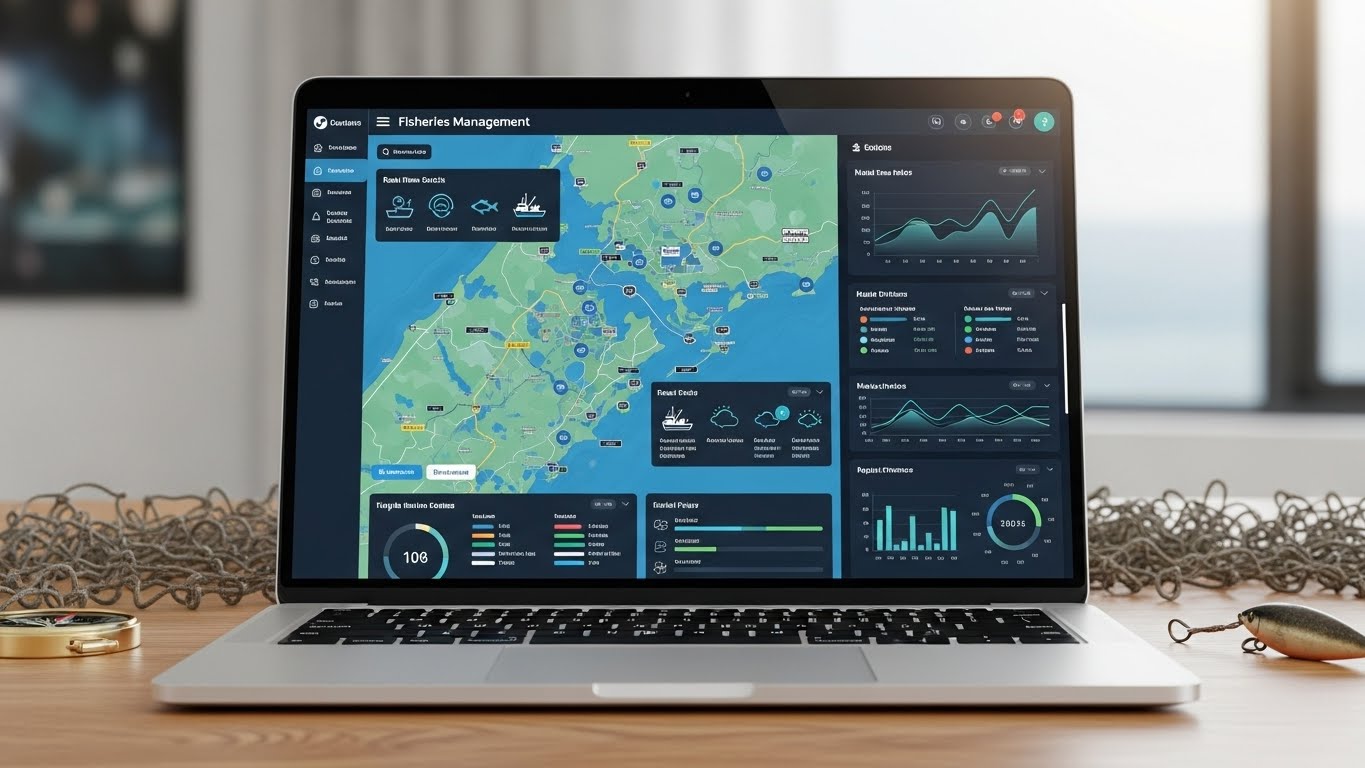
Aquatic conservation faces escalating challenges from climate change, habitat degradation, overfishing, and cumulative anthropogenic pressures that threaten marine and freshwater biodiversity while undermining ecosystem services supporting human communities worldwide. Addressing these complex, interconnected threats requires moving beyond reactive management approaches toward predictive strategies that anticipate problems, optimize interventions, and adapt proactively to changing environmental conditions. Advanced fisheries software incorporating predictive analytics, machine learning algorithms, and sophisticated data integration capabilities represents transformative technology enabling this transition from retrospective assessment to forward-looking conservation. By analyzing historical patterns, identifying ecological relationships, and projecting future scenarios under varying management and environmental conditions, predictive analytics empowers resource managers to make evidence-based decisions that balance conservation imperatives against sustainable resource use while adapting strategies as conditions evolve and new information emerges. Understanding how these analytical approaches work, what they reveal about population dynamics and ecosystem processes, and how to implement them effectively illuminates pathways toward more successful aquatic conservation in an era of unprecedented environmental change.
Fundamentals of Predictive Analytics in Fisheries Applications
Predictive analytics encompasses diverse statistical and computational approaches that identify patterns in historical data, quantify relationships between variables, and project future outcomes based on these learned patterns. In fisheries contexts, modern software applies these techniques to extensive datasets from monitoring programs, experimental studies, environmental sensors, and management records, revealing population dynamics, environmental dependencies, and management effectiveness that inform future-oriented conservation strategies.
Time series analysis represents foundational predictive approach, examining how populations, environmental conditions, or ecosystem metrics change across time to identify trends, cycles, and regime shifts that inform expectations about future trajectories. Sophisticated fisheries software implements multiple time series methods including autoregressive models that predict future values based on recent history, state-space models that separate true population dynamics from observation errors, and structural break detection that identifies sudden ecosystem changes requiring management adaptation. These temporal analyses reveal whether populations exhibit stable fluctuations around equilibria, gradual trends suggesting systematic changes, or abrupt shifts indicating ecosystem reorganization with profound management implications.
Regression modeling quantifies relationships between response variables like fish abundance or survival and explanatory variables including environmental conditions, habitat characteristics, management actions, and biological factors. By fitting statistical models to observed data, fisheries software estimates effect sizes, identifies significant predictors, and generates predictions for new scenarios representing management alternatives or future environmental conditions. Advanced implementations incorporate nonlinear relationships, interactions between variables, and hierarchical structures that reflect spatial or temporal organization, providing realistic representations of complex ecological systems that simple models oversimplify.
Machine learning algorithms including random forests, neural networks, and support vector machines complement traditional statistical approaches by discovering complex patterns and nonlinear relationships that humans might not hypothesize or that conventional analyses struggle to model effectively. These data-driven methods excel at prediction tasks where numerous interacting variables create intricate response surfaces defying simple mathematical description. Modern fisheries software increasingly integrates machine learning alongside traditional statistics, leveraging strengths of both approaches to maximize predictive accuracy while maintaining interpretability that pure machine learning sometimes sacrifices.
Population Modeling and Demographic Forecasting
Understanding and predicting population dynamics represents core fisheries software application, as sustainable management requires knowing how populations respond to harvest, environmental variation, and conservation interventions. Predictive population models project future abundance, age structure, and genetic diversity under alternative management scenarios, enabling proactive strategies that maintain populations within desired ranges rather than reacting to collapses after they occur.
Age-structured population models track cohorts through time, accounting for age-specific survival, growth, and reproduction that collectively determine population trajectories. Fisheries software implementing these models enables managers to simulate harvest impacts, evaluating whether proposed catch levels remain sustainable or risk depleting spawning stocks below thresholds threatening population viability. By projecting populations forward under various harvest scenarios, managers identify sustainable yield levels that balance fishing opportunity against conservation requirements, avoiding both overfishing that degrades populations and excessive caution that unnecessarily restricts beneficial use.
Recruitment forecasting predicts incoming cohort strength based on environmental conditions, spawning stock size, and ecological relationships affecting early life survival. Accurate recruitment predictions enable proactive harvest adjustments, increasing allowable catch when strong year classes enter fisheries while restricting harvest during poor recruitment years, maintaining population stability despite environmental variability that creates boom-bust cycles when management cannot adapt. Advanced fisheries software incorporates environmental covariates like ocean temperature, upwelling intensity, or freshwater flow into recruitment models, improving forecast accuracy while revealing mechanisms underlying productivity variation.
Stochastic projection models incorporate uncertainty and environmental variability into population forecasts, generating probability distributions of future outcomes rather than single-point predictions that ignore inherent unpredictability. These probabilistic forecasts enable risk-based management where decision-makers balance conservative approaches minimizing collapse risks against aggressive strategies maximizing short-term yields but accepting higher uncertainty. Modern software provides intuitive visualizations of forecast uncertainty through confidence intervals, probability distributions, and scenario comparisons that communicate complex analytical results to non-technical stakeholders requiring accessible information for informed decisions.
Habitat Modeling and Spatial Predictions
Species distributions and habitat use patterns exhibit strong spatial structure reflecting environmental gradients, physical features, and biotic interactions that determine where organisms occur and thrive. Predictive spatial models implemented in fisheries software map suitable habitat, identify critical areas requiring protection, and forecast how distributions might shift under climate change or habitat modification, informing spatially explicit conservation strategies that protect key locations while allowing sustainable use elsewhere.
Species distribution modeling correlates observed presence locations with environmental variables including temperature, depth, substrate type, prey availability, and habitat structure, generating predictive maps showing habitat suitability across landscapes or seascapes. These models identify unsampled areas likely supporting populations, guide survey effort toward high-probability locations, and reveal environmental requirements that habitat restoration or protection must provide. Advanced implementations account for detection probability, spatial autocorrelation, and species interactions that influence distributions beyond simple environmental matching.
Climate change projections utilize species distribution models with future environmental scenarios from climate models, forecasting how warming, ocean acidification, or precipitation changes might shift suitable habitat ranges. These projections identify populations vulnerable to climate impacts through limited dispersal ability, habitat specialization, or geographic constraints that prevent tracking shifting conditions. Fisheries software enabling these climate vulnerability assessments guides adaptation strategies including protecting climate refugia, facilitating connectivity supporting range shifts, or implementing assisted migration when natural dispersal cannot keep pace with environmental change.
Connectivity modeling identifies movement corridors, migration pathways, and dispersal routes that link populations across fragmented landscapes, informing conservation network design that maintains genetic exchange and demographic rescue effects. By analyzing habitat patches, movement barriers, and species dispersal capabilities, predictive models reveal which locations disproportionately contribute to landscape connectivity, deserving protection priority over isolated patches contributing little to network function. This network perspective, implemented through graph theory and circuit theory approaches in sophisticated fisheries software, transforms conservation from protecting individual sites toward maintaining functional landscapes supporting viable metapopulations.
Ecosystem-Based Management and Food Web Predictions
Single-species management increasingly proves insufficient as recognition grows that populations interact through predation, competition, and indirect effects that simple models ignoring community context cannot capture. Ecosystem-based approaches implemented through advanced fisheries software account for these interactions, predicting how management actions affecting one species cascade through food webs to influence entire communities, enabling holistic strategies that maintain ecosystem function rather than just individual populations.
Food web models represent ecosystem structure through trophic interactions, quantifying energy flow from primary producers through herbivores to multiple predator levels while accounting for detrital pathways recycling nutrients. By simulating harvest impacts, environmental changes, or invasive species effects through these models, fisheries software reveals indirect consequences that single-species analyses miss—for instance, how harvesting predators releases prey populations that then overgraze primary producers, fundamentally altering ecosystem structure and function. These multispecies predictions inform ecosystem-based management that considers community consequences alongside target species impacts.
Ecosystem indicators synthesize complex community and environmental data into metrics that track overall ecosystem status, providing early warning of degradation before individual species declines become obvious. Predictive models link indicator trends to ecosystem processes, enabling interpretation of indicator changes as meaningful signals rather than random noise, while also forecasting future indicator trajectories under alternative management scenarios. Modern fisheries software calculates numerous indicators from monitoring data, compares values against reference points indicating healthy versus degraded states, and projects indicator evolution under different policies, supporting adaptive management that responds to ecosystem-level signals.
Cumulative impact assessment evaluates combined effects of multiple stressors—fishing, pollution, habitat loss, climate change—that interact to impact ecosystems beyond simple additive effects. Sophisticated fisheries software integrates data on various pressures, models their individual and interactive effects, and predicts cumulative outcomes that inform prioritization of mitigation actions producing greatest benefit for conservation investment. These holistic assessments prevent management focusing narrowly on single threats while ignoring others that collectively overwhelm isolated interventions.
Adaptive Management and Decision Support Systems
Predictive analytics reaches full potential when integrated into adaptive management frameworks that treat management actions as experiments generating information to refine understanding and improve future decisions. Decision support systems built on fisheries software formalize this learning process, incorporating monitoring data to update models, evaluate management performance, and recommend strategy adjustments based on accumulating evidence.
Bayesian updating provides mathematical framework for adaptive learning, combining prior knowledge with new data to generate refined parameter estimates and predictions that become progressively more accurate as information accumulates. Fisheries software implementing Bayesian approaches starts with initial parameter distributions representing existing knowledge and uncertainty, then updates these distributions as monitoring provides observations, progressively narrowing uncertainty while allowing surprises when data reveal unexpected patterns. This learning approach explicitly accounts for uncertainty, acknowledges imperfect knowledge, and improves predictions as experience grows.
Management strategy evaluation tests proposed policies through simulation before implementation, projecting long-term outcomes under realistic scenarios including environmental variability, implementation uncertainty, and imperfect monitoring. By comparing alternatives through extensive simulation, fisheries software identifies robust strategies performing adequately across diverse conditions rather than optimally under specific assumptions that reality may violate. This precautionary approach, now standard in progressive fisheries management, prevents adoption of risky strategies that appear optimal under favorable assumptions but catastrophically fail when conditions diverge from expectations.
Real-time decision support provides immediate analysis and recommendations as new data arrive, enabling rapid management response to emerging situations requiring prompt action. Modern cloud-based fisheries software continuously ingests monitoring data, updates predictive models, triggers alerts when metrics exceed thresholds, and generates updated projections informing adaptive responses. This immediacy transforms management from annual assessment cycles that respond slowly to changing conditions toward dynamic adjustment matching temporal scales of ecological processes and management needs.
Data Integration and Quality Assurance
Predictive analytics requires comprehensive, high-quality data spanning multiple sources, time periods, and information types, creating substantial data management challenges that sophisticated fisheries software addresses through integration tools, quality control automation, and standardized workflows ensuring analytical reliability.
Automated data ingestion from electronic monitoring systems, environmental sensors, catch reporting databases, and biological sampling programs eliminates manual data entry reducing errors while accelerating availability for analysis. Modern software connects directly to data sources through APIs, database connections, or file monitoring, retrieving new information automatically and incorporating it into analytical datasets without human intervention beyond initial configuration.
Quality control algorithms flag suspicious values, identify outliers requiring review, check consistency across related measurements, and verify data completeness before analyses proceed. These automated checks catch errors that manual review might miss while documenting quality assurance processes ensuring transparency and reproducibility. Advanced implementations employ machine learning to learn normal data patterns, automatically detecting anomalies suggesting equipment malfunctions, data corruption, or unusual biological events requiring investigation.
Metadata management and data provenance tracking document data sources, collection methods, processing steps, and quality assessments, providing context essential for proper interpretation while enabling reproducibility when analyses require replication. Sophisticated fisheries software maintains comprehensive metadata alongside analytical datasets, ensuring that users understand data limitations, appropriate uses, and potential biases affecting interpretation.
Visualization and Communication Tools
Predictive analytics generates complex results that require clear communication to diverse audiences including resource managers, policymakers, stakeholders, and the public. Modern fisheries software emphasizes visualization and reporting tools that transform sophisticated analyses into accessible presentations enabling informed decision-making across technical and non-technical audiences.
Interactive dashboards provide real-time views of population status, ecosystem indicators, and predictive forecasts through intuitive graphics updating automatically as new data arrive. These dashboards enable managers to monitor conditions continuously, identify emerging issues promptly, and track progress toward management objectives without requiring technical expertise in statistical analysis or programming.
Scenario comparison tools allow managers to explore alternative management strategies, visualizing projected outcomes under different policies through side-by-side comparisons highlighting trade-offs between competing objectives. By making consequences of different choices explicit and comparable, these tools facilitate transparent decision processes where stakeholders understand what alternatives offer and what they sacrifice.
Uncertainty visualization communicates forecast reliability through confidence intervals, probability distributions, and risk metrics that honestly represent limitations rather than suggesting false precision. Advanced fisheries software provides multiple uncertainty representation approaches suitable for different audiences, from technical probability distributions for scientists to simple risk categories for general audiences.
Conclusion: Embracing Data-Driven Conservation
The integration of predictive analytics into fisheries software represents fundamental advancement in aquatic conservation capability, enabling transition from reactive crisis management toward proactive strategies that anticipate problems, optimize interventions, and adapt continuously as conditions evolve and knowledge improves. While requiring investments in monitoring infrastructure, analytical capacity, and institutional frameworks supporting science-based management, these data-driven approaches deliver substantial returns through improved conservation outcomes, more efficient resource use, and enhanced stakeholder confidence in management processes. As computational capabilities expand, analytical methods advance, and data availability grows through improved monitoring technologies, fisheries software incorporating predictive analytics will become increasingly central to successful aquatic conservation, supporting evidence-based stewardship of resources that both conservation and human communities depend upon for ecological, economic, and cultural values worth protecting for current and future generations.


 TechRank Australia
 step hen