Gokul p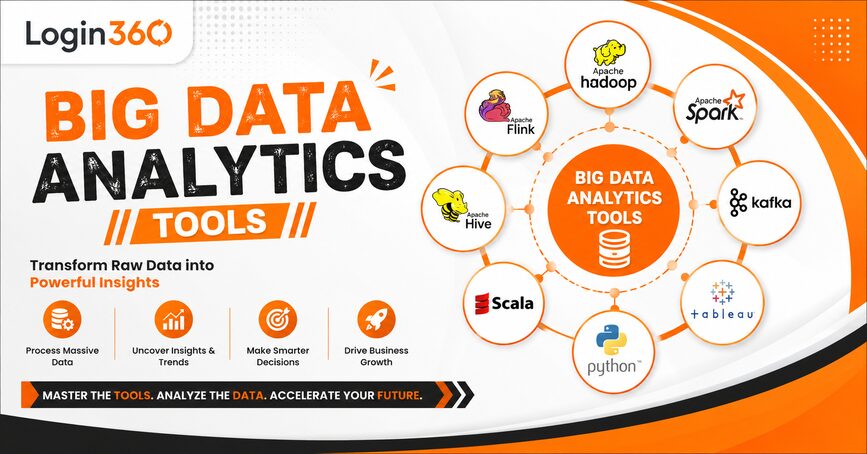
Introduction
Data has become one of the most valuable resources for modern businesses. Every day, companies collect information from online transactions, websites, mobile applications, customer feedback, social media platforms, and digital marketing campaigns. This data helps organizations understand customer needs, improve business operations, and make better strategic decisions. However, raw information is difficult to interpret without proper analysis.
Why Data Analytics Tools Are Important
Businesses generate huge amounts of data every second, making manual analysis both slow and inefficient. Data analytics tools automate the process of cleaning, organizing, and analyzing information, allowing companies to make accurate decisions in less time. These platforms reduce human errors while improving productivity and operational efficiency.
With interactive dashboards and detailed reports, decision-makers can quickly evaluate business performance and take appropriate actions. As a result, companies can improve customer satisfaction, increase revenue, and optimize overall business operations.
Top Data Analytics Tools Used by Companies
1. Microsoft Power BI
Microsoft Power BI is one of the leading business intelligence solutions used by organizations across the world. It enables users to connect data from multiple sources, organize information, and create interactive dashboards without requiring advanced programming knowledge.
Power BI includes several useful features such as real-time reporting, AI-powered insights, cloud connectivity, mobile support, secure collaboration, and customizable visualizations. Since it integrates easily with Microsoft Excel, Azure, SQL Server, and other Microsoft services, businesses from healthcare, banking, manufacturing, retail, education, and IT sectors widely use this platform to monitor business performance and generate meaningful reports.
2. Tableau
Tableau is a powerful data visualization tool that converts complex business data into easy-to-understand charts, graphs, and dashboards. Its simple drag-and-drop interface allows both beginners and experienced professionals to analyze information efficiently.
Organizations use Tableau for tracking sales, monitoring financial performance, analyzing operational efficiency, and understanding customer behavior. Its attractive visual reports make it easier for management teams to identify patterns, discover trends, and make informed business decisions.
3. SQL (Structured Query Language)
SQL is one of the most important technologies in data analytics because business information is commonly stored in relational databases. Using SQL, professionals can combine multiple database tables, generate reports, calculate business metrics, and answer complex analytical questions. Popular database systems, including MySQL, PostgreSQL, Oracle Database, Microsoft SQL Server, and SQLite, all rely on SQL. Because of its widespread use, SQL continues to be one of the most valuable technical skills for aspiring data analysts.
4. Python
Python has become the preferred programming language for data analytics due to its simple syntax and extensive library support. It helps analysts perform data cleaning, statistical analysis, data visualization, automation, and machine learning with ease. Libraries such as Pandas, NumPy, Matplotlib, Plotly, and Scikit-learn provide everything needed for analyzing large datasets and building predictive models.
-
R Programming
R is a programming language developed specifically for statistical analysis and data visualization. It is widely used by researchers, statisticians, and data scientists who work with complex datasets and advanced analytical models.
R provides numerous packages for predictive analytics, statistical testing, machine learning, and graphical reporting. Industries including pharmaceuticals, healthcare, academic research, and government organizations depend on R because it delivers highly accurate statistical results and advanced analytical capabilities.
6. Google Looker Studio
Google Looker Studio is a cloud-based reporting and dashboard solution that allows organizations to create professional reports free of cost. It is particularly useful for businesses that rely on Google’s digital marketing ecosystem.
The platform integrates with Google Analytics, Google Ads, Google Search Console, Google Sheets, BigQuery, and YouTube. With its cloud-based infrastructure and real-time reporting features, teams can collaborate easily while monitoring website traffic, marketing campaigns, customer engagement, and business performance from a single dashboard.
7. Apache Spark
Apache Spark is a high-speed analytics engine designed for processing massive datasets efficiently. Unlike traditional systems, Spark uses distributed computing technology to perform calculations across multiple servers simultaneously.
It is commonly used for real-time analytics, machine learning applications, big data processing, and streaming data analysis.
-
SAS
SAS is a commercial analytics software widely recognized for advanced statistical analysis, predictive modeling, and business intelligence. It has been trusted by enterprises for decades due to its reliable performance and comprehensive analytical capabilities.
Banking, insurance, healthcare, and government sectors use SAS for customer segmentation, fraud detection, forecasting, risk management, and regulatory reporting. Although it requires a commercial license, many large organizations continue to invest in SAS because of its powerful enterprise features and long-term reliability.
9. Apache Hadoop
Apache Hadoop is an open-source framework developed for storing and processing extremely large volumes of structured and unstructured data. It distributes information across multiple servers, providing scalability, fault tolerance, and efficient data management.
Organizations working with big data environments use Hadoop to process huge datasets without requiring expensive hardware.
How Companies Choose the Right Analytics Tool
Choosing the right analytics platform depends on the specific needs of an organization. Businesses evaluate factors such as company size, available budget, data complexity, reporting requirements, security, scalability, and integration with existing systems before selecting a solution.
Some organizations prefer visualization tools like Power BI and Tableau because they are easy to use, while others require programming languages such as Python or R for advanced analytics. Companies working with big data generally select Spark or Hadoop due to their ability to process massive datasets efficiently.
Essential Skills for Data Analysts
Becoming a successful data analyst requires more than learning software tools. Professionals must develop strong analytical thinking, problem-solving abilities, communication skills, and statistical knowledge. Understanding databases, data visualization techniques, programming languages, and business intelligence concepts enables analysts to generate meaningful insights that support business growth.
Career Opportunities
The increasing demand for data-driven decision-making has created numerous career opportunities across different industries. Professionals with expertise in analytics tools can work as data analysts, business analysts, reporting analysts, marketing analysts, financial analysts, product analysts, operations analysts, business intelligence developers, data visualization specialists, or junior data scientists.
Future of Data Analytics
Modern analytics platforms are introducing intelligent features that automatically prepare data, identify trends, generate predictive insights, and recommend business actions.
Cloud-based analytics solutions also allow organizations to access reports securely from anywhere while improving collaboration among teams. Professionals who continue learning emerging technologies such as AI-powered analytics, Power BI, Tableau, Python, SQL, Spark, and Hadoop will enjoy excellent career opportunities in the coming years.
Conclusion
Data analytics tools have become an essential part of every modern business. They help organizations transform raw information into meaningful insights that support better decision-making, improve operational efficiency, and enhance customer satisfaction. Whether businesses use SQL for database management, Python for advanced analysis, Power BI for business intelligence, Tableau for visualization, or Spark and Hadoop for big data processing, each tool contributes to business growth in its own way.


 Rental plaza
 zara john