Jayden Lee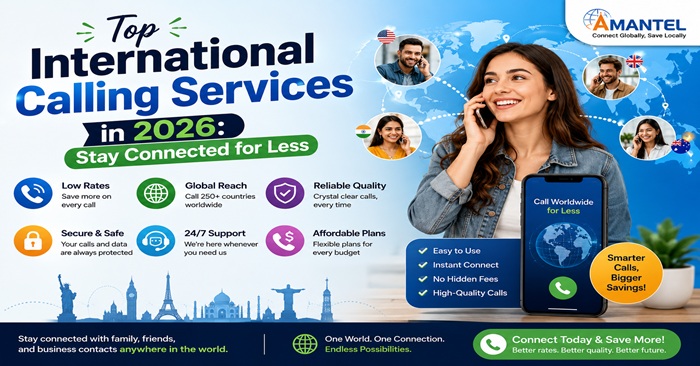
Staying connected across borders is no longer a luxury—it’s a daily need for families, students, remote workers, and businesses. The good news is that international calling doesn’t have to be expensive anymore. In 2026, a wide range of international calling services make it easy to talk to loved ones or clients abroad at a fraction of traditional carrier costs. This guide walks you through the main options and how to use them wisely so you actually save money.
Why Traditional International Calling Services Is So Expensive
Mobile operators still charge high per‑minute rates for direct international calls. If you dial a foreign number using your regular SIM without any special pack, you’re usually paying some of the highest tariffs available. These costs include roaming fees, international routing charges, and legacy pricing models that haven’t kept up with modern technology.
That’s why so many people are switching to smarter alternatives—apps, VoIP services, Wi‑Fi calling, and country‑specific bundles—designed from the ground up to cut those extra charges.
Main Types of International Calling Services
To make sense of the options, it helps to group them into a few broad categories:
App‑to‑app calling services
These are the messaging and calling apps you already know—used when both sides have internet and the same app. Calls are typically free between users.
VoIP and calling apps to phone numbers
These services let you call regular landlines and mobile numbers abroad using internet and low per‑minute rates. You usually pay with credit or a small subscription.
Prepaid calling cards
Physical or digital cards that give you a certain amount of international minutes via local access numbers. Still popular where internet is unreliable.
Carrier packs and Wi‑Fi calling
Special international packs and built‑in Wi‑Fi calling features offered by mobile operators, useful for people who prefer sticking to their main SIM.
Each type has its strengths, and the best choice depends on how you call, whom you call, and what kind of connectivity you both have.
App‑to‑App International Calling Services: Free but Requires Internet
If both you and your contacts use smartphones with internet, app‑to‑app calling is the easiest way to reduce costs:
- You install a popular communication app.
- Your contact installs the same app.
- You call over data or Wi‑Fi instead of regular voice networks.
The biggest advantage is cost: these calls are usually free, even for hours‑long conversations. The downside is that they depend on internet quality. If either side has weak data or unstable Wi‑Fi, call quality may suffer.
App‑to‑app calling works best for:
- Family and friends who already use messaging apps
- Students and travelers connected to Wi‑Fi
- Quick check‑ins or long chats when data is affordable
- VoIP and Calling Apps: Cheap Calls to Any Phone Number
When you need to call a normal phone number—like an older relative on a landline or a client who doesn’t use calling apps—VoIP and international calling services step in:
- You download a calling app.
- You buy credit or a plan inside the app.
- You dial international numbers directly from your phone.
Per‑minute rates are usually far lower than traditional international tariffs. Many services show the exact price before you call, so you can estimate how much a 10‑ or 30‑minute call will cost. Some also offer unlimited or high‑minute bundles to specific countries, perfect for expats and remote workers.
VoIP and calling apps are ideal for:
- Regular calls to landlines and basic mobiles
- Older relatives or non‑tech‑savvy contacts
- People who call the same country frequently
Prepaid Calling Cards: Reliable for Low‑Internet Areas
Prepaid calling cards may feel old‑school, but they still play an important role. They’re handy when:
- You’re calling from a region with poor or expensive internet.
- You prefer dialing from a standard phone instead of an app.
- You like knowing exactly how many minutes you’re buying.
You typically call a local access number, enter a PIN, then dial the international number. The card deducts minutes according to its rate table. This method isn’t as flexible as apps but can be more stable where mobile networks are stronger than data.
Carrier Packs and Wi‑Fi Calling: Simple but Compare Carefully
Many mobile operators offer international packs and Wi‑Fi calling as part of their plans. These options are convenient because you keep using your normal phone number:
- International packs give you a discounted rate or a small bundle of minutes to certain countries.
- Wi‑Fi calling routes your calls over the internet instead of the mobile network, often improving value and quality.
However, these are not always the cheapest options. It’s important to compare the actual per‑minute cost against VoIP apps and bundles. For low‑to‑moderate usage, apps often win; for those who prefer a single bill and minimal setup, carrier packs can still make sense.
How to Pick the Right Service for Your Needs
To choose the best international calling services, ask yourself:
- Who do I call most? One country or many?
- Do my contacts have smartphones and internet?
- How often do I call—occasionally or regularly?
- Do I prefer flexibility or fixed monthly plans?
You can then mix and match:
- Use app‑to‑app calls whenever both sides are online.
- Use VoIP or calling apps for landlines and mobiles abroad.
- Add a prepaid calling card or carrier pack only if your situation truly benefits from it.
A practical approach is to test two or three services with short calls and compare both quality and cost. Once you find the combination that works, stick with it.
Final Thoughts
International calling services in 2026 are all about choice. You’re no longer locked into paying high tariffs just because you want to hear someone’s voice in another country. By understanding the main types of services and matching them to your habits and your contacts’ realities, you can stay connected for less—without sacrificing clarity or reliability.


 Flowers next
 Mobile 24/7 Long Crack Nasty Chip Repair