Albert Albert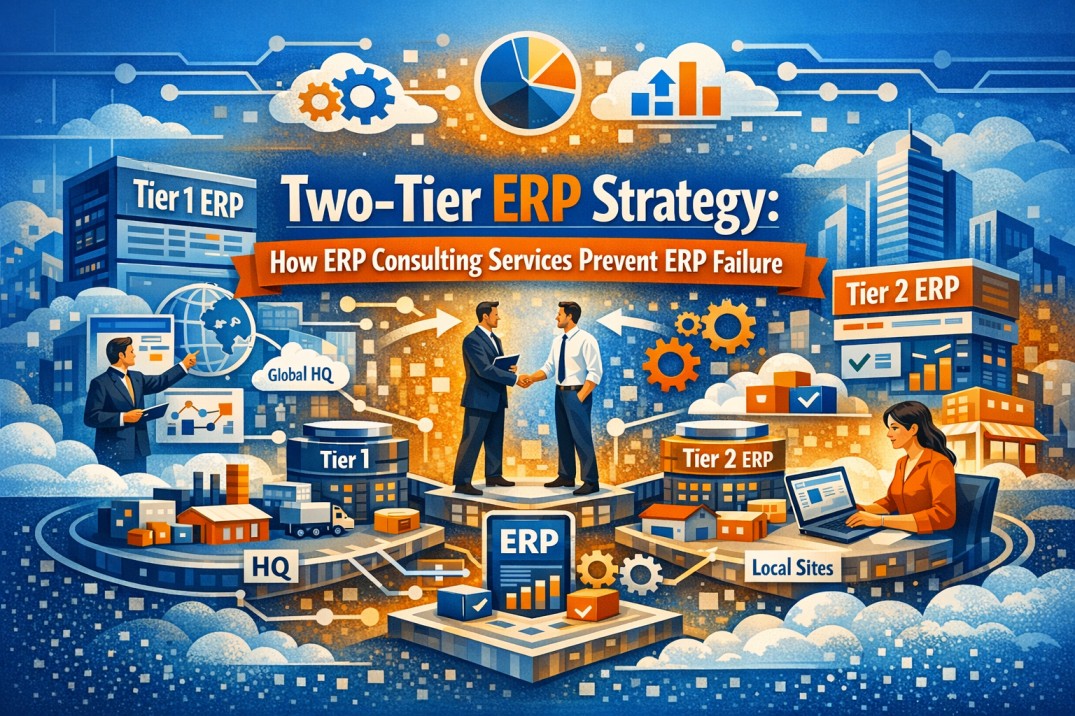
As businesses expand across regions and markets, managing operations through a single enterprise system becomes increasingly complex. Global organizations often operate multiple subsidiaries, each with unique regulatory requirements, operational workflows, and market dynamics. Traditional ERP strategies attempted to manage all these operations through a single, centralized platform. However, this approach frequently introduces challenges related to scalability, flexibility, and operational efficiency.
In response to these challenges, many organizations are adopting the two-tier ERP model, a strategy that uses one ERP system at the corporate headquarters level while deploying different ERP solutions for subsidiaries. This model allows organizations to maintain centralized control while enabling local flexibility.
The growing complexity of modern business environments has led companies to seek guidance from Erp Consulting Services to design ERP architectures that support both global governance and regional adaptability. Through structured erp implementation strategy services, organizations can successfully deploy two-tier ERP systems while minimizing the risk of ERP Failure.
Understanding how the two-tier ERP model works and why consultants frequently recommend it can help businesses develop ERP strategies that support growth, scalability, and operational efficiency.
Understanding the Two-Tier ERP Model
The two-tier ERP model divides enterprise systems into two layers. The first tier is the core ERP platform used by corporate headquarters. This system typically manages centralized processes such as financial reporting, corporate compliance, strategic planning, and enterprise-wide analytics.
The second tier consists of ERP systems implemented at the subsidiary or regional level. These systems manage local operations such as regional supply chains, manufacturing workflows, and country-specific regulatory requirements.
This structure allows subsidiaries to operate with systems that are better suited to their operational needs while maintaining data integration with the headquarters ERP platform.
Historically, companies attempted to deploy a single ERP system across all business units. While this approach ensured consistency, it often lacked the flexibility required for subsidiaries operating in different markets. The two-tier model addresses this issue by allowing organizations to balance central control with local agility.
Many organizations rely on Erp Consulting Services to determine whether this architecture aligns with their operational requirements and long-term digital transformation goals.
Why Single ERP Systems Often Struggle in Global Organizations
Large organizations operating across multiple countries face a wide range of operational challenges. Different regions may have unique tax regulations, labor laws, reporting standards, and supply chain structures.
When a single ERP system is forced to accommodate all these requirements, the system often becomes highly customized and difficult to manage. Excessive customization can introduce system complexity that affects performance, maintenance, and future upgrades.
In some cases, subsidiaries are forced to adopt workflows that were designed for headquarters operations rather than local business needs. This mismatch can reduce productivity and create operational inefficiencies.
Over time, these challenges may contribute to ERP Failure, particularly when employees struggle to adapt to systems that do not align with their operational environment.
Organizations that implement erp implementation strategy services often identify these risks early and explore alternative ERP architectures that better support global operations.
The Strategic Benefits of a Two-Tier ERP Model
The two-tier ERP model offers several strategic advantages for growing organizations. One of the most important benefits is flexibility. Subsidiaries can adopt ERP systems that are tailored to their specific operational requirements while still maintaining connectivity with the headquarters system.
This flexibility allows companies to respond more effectively to regional market conditions and regulatory environments. For example, a subsidiary operating in a rapidly changing market may require a more agile ERP system capable of supporting new business models.
At the same time, the headquarters ERP system maintains centralized visibility across the organization. Financial data, performance metrics, and strategic insights can still be consolidated at the corporate level.
This balance between control and flexibility is one reason why Erp Consulting Services frequently recommend the two-tier model for multinational organizations.
The Role of ERP Consulting Services in Designing Two-Tier Strategies
Implementing a two-tier ERP architecture requires careful planning and technical expertise. Organizations must ensure that both ERP systems can communicate effectively and share critical business data.
This integration is essential for maintaining consistent financial reporting, regulatory compliance, and enterprise-level analytics.
Professional Erp Consulting Services guide organizations through this process by evaluating existing systems, operational workflows, and data integration requirements. Consultants then design ERP architectures that ensure seamless communication between headquarters and subsidiary platforms.
In addition to technical integration, consultants help define governance frameworks that clarify how data flows between systems and how responsibilities are distributed across organizational levels.
Through structured planning and analysis, consultants help businesses deploy ERP environments that support both global oversight and local operational efficiency.
Data Integration: Connecting Headquarters and Subsidiaries
One of the most critical components of the two-tier ERP model is data integration. Although subsidiaries operate their own ERP systems, key information must still flow into the headquarters system for reporting and analysis.
This integration ensures that corporate leadership maintains visibility into operational performance across the entire organization.
Modern integration technologies such as APIs and cloud-based middleware allow organizations to synchronize data between multiple ERP systems efficiently. Financial data, inventory information, and operational metrics can be transferred automatically, reducing the need for manual data consolidation.
Organizations that rely on erp implementation strategy services often develop integration frameworks that ensure data consistency while maintaining system performance.
Without effective integration, two-tier ERP environments can create data silos that reduce the value of enterprise analytics.
Avoiding ERP Failure in Multi-System Environments
While the two-tier ERP model offers many benefits, it also introduces new challenges. Managing multiple ERP systems requires strong governance, clear integration strategies, and well-defined operational processes.
Without these safeguards, organizations risk creating fragmented systems that lack coordination and transparency.
For example, inconsistent data definitions across systems can lead to reporting discrepancies, while poorly designed integration frameworks may result in delayed or inaccurate information flows.
These issues can ultimately lead to ERP Failure, particularly if organizations underestimate the complexity of managing multiple enterprise systems.
To prevent these problems, companies often partner with experienced Erp Consulting Services that specialize in multi-system ERP environments. Consultants ensure that integration frameworks, governance policies, and system architectures support long-term operational stability.
When Should Organizations Consider a Two-Tier ERP Model?
Not every organization requires a two-tier ERP architecture. However, companies operating in multiple regions or industries often benefit significantly from this strategy.
Organizations with rapidly growing subsidiaries frequently encounter challenges when attempting to deploy a single ERP system across all locations. In such cases, subsidiaries may require faster implementation timelines and more flexible systems than the headquarters platform can provide.
The two-tier model allows these organizations to deploy ERP solutions that meet local needs while maintaining centralized governance.
Through detailed assessments conducted by erp implementation strategy services, businesses can determine whether a two-tier architecture aligns with their operational complexity and growth strategy.
The Future of ERP Architecture
As businesses continue to expand globally and adopt cloud technologies, ERP architectures are becoming more flexible and modular. Cloud-based ERP platforms allow organizations to integrate multiple systems more easily than traditional on-premise solutions.
This flexibility makes the two-tier ERP model even more attractive for modern enterprises. Organizations can adopt specialized ERP solutions for subsidiaries while maintaining centralized control through cloud integration frameworks.
Artificial intelligence and advanced analytics are also beginning to play a larger role in ERP ecosystems. These technologies allow organizations to analyze data across multiple systems and generate insights that support strategic decision-making.
By working with experienced Erp Consulting Services and implementing structured erp implementation strategy services, businesses can build ERP architectures that support innovation while minimizing the risk of ERP Failure.
Conclusion
The two-tier ERP model has emerged as a powerful strategy for organizations seeking to balance global oversight with local operational flexibility. By deploying one ERP system at headquarters and different systems for subsidiaries, companies can create technology environments that support both strategic governance and regional adaptability.
However, implementing this model requires careful planning, strong integration frameworks, and clear governance policies. Without these elements, organizations risk creating fragmented systems that undermine operational efficiency.
Businesses that partner with experienced Erp Consulting Services and invest in structured erp implementation strategy services can successfully implement two-tier ERP architectures while reducing the risk of ERP Failure.
As global operations become increasingly complex, the two-tier ERP model will continue to play a vital role in helping organizations build scalable, flexible, and future-ready enterprise systems.


 steve Johnson
 sophia Jain