Mike Sandlas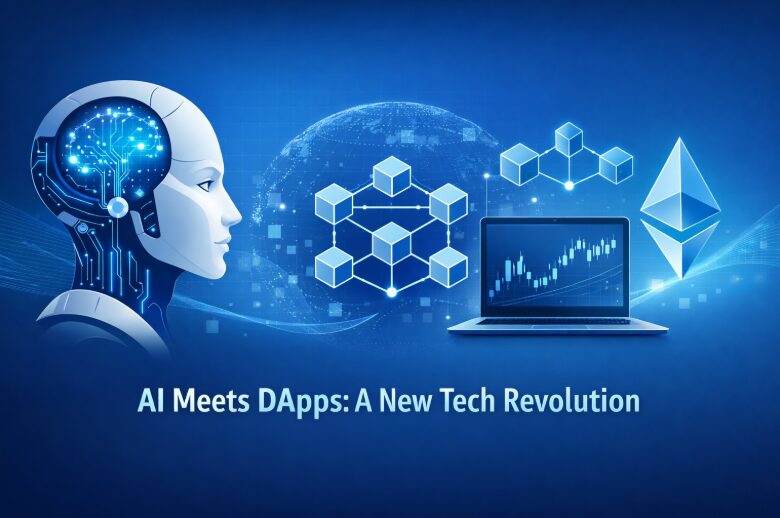
The collision of artificial intelligence and decentralized applications is not just another technology trend—it’s the beginning of a structural shift in how software is designed, owned, and experienced. For years, AI has been largely controlled by centralized corporations, while decentralized applications (DApps) have focused on trustless infrastructure, transparency, and user sovereignty. When these two forces combine, they unlock possibilities that were previously unimaginable, creating systems that can learn, adapt, and operate without centralized authority. Businesses working with a DApp software development company are already exploring how intelligent automation can enhance blockchain ecosystems, enabling applications that are not only decentralized but also context-aware and predictive. With networks such as Ethereum providing programmable infrastructure, the stage is set for AI-powered decentralized ecosystems that could reshape industries from finance to healthcare.
Understanding the Convergence of AI and Decentralization
Artificial intelligence excels at analyzing large datasets, identifying patterns, and making predictions, while decentralized technologies focus on trust, transparency, and distributed control. Individually, both are transformative, but together they form a powerful synergy. AI can improve the usability and intelligence of decentralized platforms, while blockchain ensures the integrity, security, and auditability of AI-driven decisions. This convergence addresses one of the biggest challenges in modern technology: trust. Users often question whether AI decisions are biased or manipulated, but decentralized systems provide verifiable processes that can increase confidence in automated outcomes. At the same time, AI can simplify blockchain interactions by automating complex processes such as smart contract execution, risk assessment, and data analysis, making decentralized platforms more accessible to mainstream users.
Intelligent Smart Contracts: Beyond Static Automation
Smart contracts have traditionally been deterministic, executing predefined logic when certain conditions are met. However, integrating AI introduces adaptive intelligence into these contracts, enabling them to evolve based on data inputs and environmental changes. Imagine decentralized insurance systems that automatically adjust premiums based on real-time risk data or supply chain contracts that dynamically optimize logistics routes using predictive analytics. AI-enhanced smart contracts could also reduce vulnerabilities by identifying anomalies in transaction patterns before exploits occur. Instead of relying solely on manual audits, decentralized systems could leverage machine learning models to monitor network activity continuously, improving both security and efficiency. This evolution transforms smart contracts from static scripts into intelligent agents capable of complex decision-making.
Decentralized Data Markets and AI Training
One of the most significant challenges in AI development is access to high-quality data. Centralized companies often control vast datasets, creating barriers for innovation and raising concerns about privacy. Decentralized data marketplaces offer an alternative model, allowing individuals and organizations to share or monetize data securely without relinquishing ownership. Blockchain technology ensures that contributors are fairly compensated and that data usage is transparent. AI models trained on decentralized datasets could become more diverse, unbiased, and representative, improving outcomes across industries. This approach also empowers individuals, enabling them to participate directly in the AI economy rather than being passive data sources for large corporations.
Autonomous Decentralized Organizations Powered by AI
Decentralized Autonomous Organizations (DAOs) are already redefining governance by enabling communities to make decisions collectively through token-based voting mechanisms. When AI is integrated into DAOs, governance becomes more sophisticated and efficient. AI systems can analyze proposals, predict potential outcomes, and recommend optimal strategies based on historical data and market trends. This doesn’t eliminate human participation but enhances decision-making with data-driven insights. AI-powered DAOs could manage investment funds, coordinate global projects, or even govern digital ecosystems without centralized leadership. The combination of collective intelligence and machine learning creates governance models that are both democratic and efficient, potentially reshaping organizational structures in the digital age.
AI-Driven User Experiences in Decentralized Applications
One barrier to widespread DApp adoption has been user experience complexity. Managing wallets, private keys, and transaction fees can be intimidating for non-technical users. AI has the potential to eliminate these barriers by providing intuitive interfaces, automated onboarding, and personalized recommendations. Intelligent assistants can guide users through transactions, explain risks, and optimize interactions in real time. Conversational interfaces powered by advanced language models, including those developed by organizations such as OpenAI, can make decentralized platforms feel as seamless as traditional apps while maintaining decentralization principles. This fusion of usability and autonomy could accelerate mass adoption by making blockchain technology accessible to everyday users.
Security Enhancements Through Predictive Intelligence
Security remains one of the most critical concerns in decentralized ecosystems, especially as financial value locked in blockchain networks continues to grow. AI introduces predictive security capabilities that can identify suspicious patterns, detect anomalies, and prevent attacks before they occur. Machine learning models can analyze vast transaction datasets to identify vulnerabilities that human auditors might miss. Combined with blockchain’s immutability and transparency, AI-powered monitoring systems can create highly secure environments for decentralized applications. This proactive approach represents a shift from reactive security measures to predictive risk management, significantly reducing the likelihood of large-scale exploits and fraud.
The Role of Blockchain Development Services in AI Integration
As organizations explore integrating AI into decentralized ecosystems, demand for blockchain development services is increasing rapidly. These services help businesses design architectures that combine distributed ledgers with machine learning pipelines, ensuring scalability, security, and interoperability. Developers must address complex challenges such as data storage optimization, on-chain and off-chain computation balance, and privacy-preserving AI training. Hybrid models, where heavy AI computation occurs off-chain while verification and governance remain on-chain, are becoming a preferred approach. This architecture allows organizations to leverage AI’s computational power without compromising decentralization principles. The expertise provided by development services plays a crucial role in transforming theoretical concepts into practical, scalable solutions.
Decentralized Finance Meets Artificial Intelligence
Decentralized finance (DeFi) is one of the most promising areas for AI integration. Financial markets generate massive amounts of data, making them ideal environments for machine learning applications. AI can enhance trading strategies, liquidity management, credit scoring, and fraud detection within decentralized finance ecosystems. Predictive analytics can help investors make better decisions, while automated portfolio management systems can optimize returns with minimal human intervention. AI-powered risk assessment tools can also improve lending platforms by analyzing borrower behavior patterns more accurately than traditional credit scoring models. This combination creates financial systems that are not only decentralized but also intelligent, efficient, and adaptive.
Ethical Considerations and Challenges
Despite its transformative potential, the convergence of AI and decentralized technologies raises important ethical and technical challenges. Data privacy, algorithmic bias, and accountability remain significant concerns. While decentralization can increase transparency, it also complicates governance when AI systems make autonomous decisions. Determining responsibility for errors or harmful outcomes becomes more complex in distributed environments. Scalability is another challenge, as both AI computation and blockchain transactions require significant resources. Developers must also address interoperability between different blockchain networks and AI frameworks to ensure seamless integration. Overcoming these challenges will require collaboration between technologists, regulators, and industry stakeholders to create standards and best practices.
The Future of Intelligent Decentralized Ecosystems
Looking ahead, the integration of AI and DApps could lead to entirely new categories of applications. Intelligent marketplaces could match buyers and sellers dynamically based on preferences and behavior patterns. Healthcare platforms could analyze patient data securely while preserving privacy through decentralized storage. Supply chains could become self-optimizing networks that respond automatically to disruptions. Gaming ecosystems could feature AI-driven economies where virtual assets evolve based on player behavior. These innovations represent only the beginning of what is possible when intelligent systems operate on decentralized infrastructure. As technology continues to evolve, the boundaries between automation, ownership, and governance will blur, creating ecosystems that function more like living organisms than traditional software platforms.
Transforming Digital Finance with decentralized exchange development services
One of the most impactful areas where AI and decentralization intersect is digital asset trading. Platforms leveraging decentralized exchange development services are beginning to incorporate AI-driven analytics, automated market-making strategies, and predictive liquidity optimization. These capabilities enable more efficient trading environments, reduce slippage, and improve user profitability. AI can also detect market manipulation patterns and provide real-time insights to traders, enhancing transparency and trust. As decentralized exchanges evolve, they may become fully autonomous financial ecosystems capable of self-regulation and adaptive growth, representing a major shift from traditional financial institutions.
Conclusion: A Technological Revolution in Motion
The convergence of AI and decentralized applications represents a profound technological evolution that extends far beyond incremental innovation. It introduces systems that are intelligent yet trustless, automated yet transparent, and decentralized yet highly efficient. Businesses, developers, and users all stand to benefit from this transformation as new opportunities emerge across industries. While challenges remain, the momentum behind AI-powered decentralized ecosystems continues to grow, driven by advancements in machine learning, blockchain infrastructure, and distributed computing. As these technologies mature together, they have the potential to redefine how digital systems operate, shifting power from centralized entities to intelligent, community-driven networks. The revolution is not a distant future scenario—it is already underway, and its impact will shape the next generation of the internet.


 Redington Limited