Kevin Hill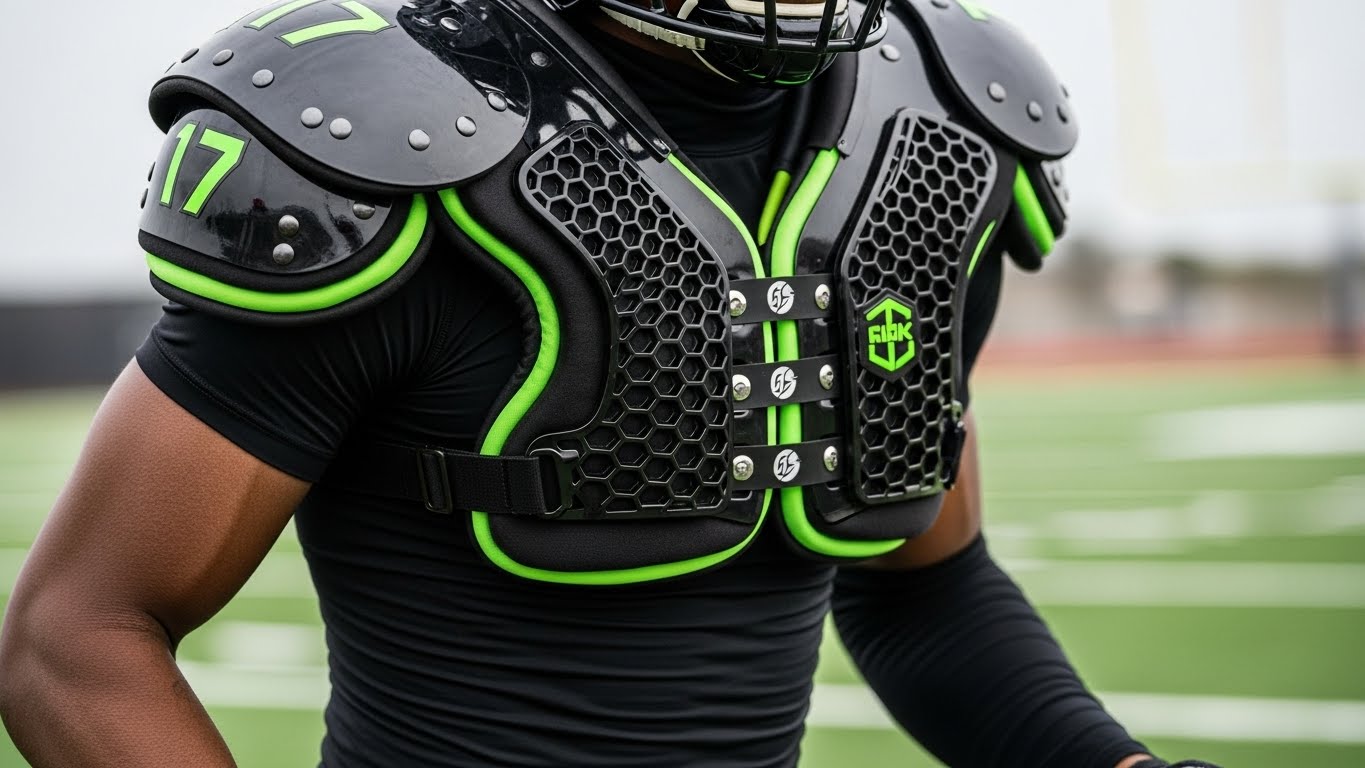
Football’s diverse positional requirements demand specialized equipment that reflects the dramatically different physical demands players face based on their role. While all shoulder pads must provide adequate protection, the optimal design for a quarterback, wide receiver, or defensive back differs fundamentally from what offensive and defensive linemen need. Understanding what distinguishes best shoulder pads for skill positions from lineman-specific gear reveals how equipment engineering has evolved to support position-specific performance while maintaining the safety standards all players deserve.
The Fundamental Design Philosophy Divide
The core distinction between skill position and lineman shoulder pads stems from divergent priorities that reflect each position group’s unique demands. Skill position players—quarterbacks, running backs, wide receivers, defensive backs, and sometimes linebackers—prioritize mobility, arm range of motion, and minimal weight that allows maximum speed and agility. Their game involves extensive running, sudden direction changes, reaching for passes, and throwing or catching footballs.
Linemen, conversely, engage in constant hand-to-hand combat at the line of scrimmage. They need maximum shoulder cap protection, extensive chest and back coverage, and robust construction that withstands hundreds of collisions per game. While mobility matters for linemen, protection takes clear precedence in their equipment design philosophy.
This philosophical difference manifests in every aspect of shoulder pad construction—from overall weight and bulk to specific design elements like shoulder cap profile, arch height, and coverage area. The best shoulder pads reflect an optimization equation where mobility and protection are carefully balanced, whereas lineman gear tilts decisively toward maximum protection even at the cost of some mobility restriction.
Shoulder Cap Design and Mobility
The shoulder cap—the curved protective shell covering the top of the shoulder—represents perhaps the most visually obvious difference between position-specific shoulder pads. Lineman shoulder pads feature large, protruding caps that extend well beyond the natural shoulder line, providing extensive coverage and creating a formidable barrier against opposing players.
The best shoulder pads for skill positions utilize dramatically smaller, lower-profile shoulder caps that hug closer to the natural shoulder contour. This reduced profile serves multiple critical functions for skill players. Quarterbacks need unrestricted arm elevation for throwing motions—bulky shoulder caps interfere with proper throwing mechanics and can cause the pad to press uncomfortably into the neck during the throwing motion’s follow-through phase.
Wide receivers and defensive backs require complete freedom for reaching and extending arms to catch or defend passes. Even slight restrictions in shoulder mobility can mean the difference between completing a catch and watching the ball sail past outstretched fingertips. The streamlined caps on skill position pads eliminate this interference while still providing protection against the impacts these players experience.
Modern engineering allows skill position shoulder caps to provide adequate protection despite reduced size through advanced materials and impact-dispersing geometries. Multi-density foams and energy-absorbing polymers enable smaller caps to manage impact forces effectively, proving that protection need not require bulk.
Weight Considerations and Performance Impact
Weight differences between position-specific shoulder pads significantly impact player performance. Lineman shoulder pads typically weigh 4-6 pounds for quality models, with some premium protection-focused designs exceeding 7 pounds. This substantial weight reflects thick padding, extensive coverage areas, and robust construction necessary for the punishment linemen endure.
The best shoulder pads weigh considerably less—typically 2.5-4 pounds for adult sizes. This 30-50% weight reduction translates to meaningful performance advantages. Research from biomechanics laboratories demonstrates that each pound of equipment weight requires approximately 4-5% additional energy expenditure during running activities. For skill position players who may run several miles during a game, this energy cost compounds into significant fatigue factors affecting late-game performance.
Beyond raw endurance, reduced weight improves acceleration and agility. Skill players must change direction explosively and reach top speed quickly—capabilities that equipment weight directly impacts. The best shoulder pads for skill positions recognize that every ounce matters when fractions of a second determine whether a defender catches a ball carrier or a receiver creates separation from coverage.
Coverage Area and Protection Zones
Lineman shoulder pads provide extensive coverage protecting not just the shoulders but also significant portions of the chest, back, ribs, and spine. The protection envelope extends from the base of the neck down to mid-torso, offering comprehensive shielding appropriate for players who experience constant contact throughout games.
Skill position shoulder pads feature more minimal coverage focused on critical impact zones while leaving other areas unprotected to reduce weight and bulk. The best shoulder pads for skill positions concentrate protection on the shoulder joints, clavicle, upper chest, and upper back—the areas most vulnerable to the specific types of impacts skill players experience.
This selective coverage philosophy recognizes that skill position players face different injury patterns than linemen. While linemen experience frequent repetitive impacts to the torso from blocking and being blocked, skill players more commonly suffer shoulder impacts from tackles, falls, and collisions during open-field running. Their equipment addresses these specific risks without over-protecting areas that don’t require extensive padding.
Cantilever and Arch Systems
The cantilever system—the arched support structure connecting front and back shoulder pad plates—differs substantially between position types. Lineman pads typically feature robust, highly arched cantilevers that create significant standoff between the pad and the player’s body. This arch accommodates thick padding while ensuring the hard shell doesn’t press directly against the body during impacts.
The best shoulder pads employ lower-profile cantilever systems that minimize standoff distance. This closer fit reduces the pad’s overall profile, improving aesthetics and reducing the target area opponents can grab during tackles. Some premium skill position designs use flexible cantilever materials that allow dynamic adjustment to shoulder movement rather than maintaining a fixed arch—an innovation that enhances mobility without sacrificing protection.
The cantilever design also affects how pads sit on the body. Lineman pads with high arches create space for substantial chest and back padding, while skill position pads’ lower arches result in more form-fitting equipment that moves with the athlete rather than as a separate rigid shell.
Strap Configuration and Adjustment Systems
Attachment systems vary significantly between position-specific shoulder pads, reflecting different priorities for security versus adjustability. Lineman gear typically features simple, robust strapping systems prioritizing secure attachment that prevents pad shifting during intense contact. These systems often use thick elastic straps and large buckles built for durability over fine-tuned adjustability.
The best shoulder pads for skill positions incorporate more sophisticated adjustment mechanisms allowing precise fit customization. Multiple adjustment points enable players to fine-tune how pads sit on their shoulders, ensuring optimal comfort and mobility. Some premium models feature tool-free adjustment systems allowing players to make modifications quickly between plays or practice periods based on how the pads feel during activity.
Quick-release mechanisms appear more commonly on skill position pads, recognizing that these players may need to remove equipment rapidly for injury assessment or during timeout breaks. Linemen less frequently remove pads during games, making quick-release capability less critical for their equipment.
Ventilation and Thermal Management
Heat management presents different challenges for various position groups. Linemen, despite their extensive padding, spend most game time in relatively short bursts of activity followed by huddle breaks. Skill position players, particularly defensive backs and wide receivers, may run continuously for extended periods without breaks, generating substantial heat that equipment can trap.
The best shoulder pads incorporate advanced ventilation systems including perforated foam padding, mesh fabric panels, and airflow channels that promote heat dissipation. These features help maintain comfortable body temperatures that prevent heat-related performance degradation and safety issues.
Lineman shoulder pads also benefit from ventilation features, though the extensive padding required for protection limits how much ventilation can be incorporated without compromising protective capabilities. The thermal management balance differs—skill position pads can sacrifice some padding thickness to accommodate ventilation, while lineman gear must maintain padding integrity even if that means accepting greater heat retention.
Customization and Aesthetic Options
Modern shoulder pad manufacturers offer extensive customization for skill position equipment recognizing that these visible players often prefer equipment that reflects personal style while meeting performance requirements. The best shoulder pads for skill positions come in various colors beyond traditional white, feature customizable decal applications, and offer aesthetic options that lineman gear typically doesn’t provide.
This customization extends beyond mere appearance. Skill position players can often select from multiple pad thicknesses, choose between different shoulder cap profiles, and even specify the exact coverage zones they prefer. This level of personalization allows elite athletes to dial in equipment that perfectly matches their individual preferences and playing style.
Price Points and Market Positioning
Position-specific shoulder pads occupy different market segments reflecting their target audiences and construction complexity. High-end lineman shoulder pads typically retail for $200-400, reflecting the extensive materials and robust construction these designs require. Premium models with maximum protection capabilities can exceed $450.
The best shoulder pads for skill positions span a similar price range ($150-350 for premium models), though the pricing reflects different value propositions. Skill position pads incorporate advanced lightweight materials, sophisticated design engineering, and precision manufacturing that justify premium pricing despite using less total material than comparably-priced lineman gear.
Mid-range options exist for both categories, typically $100-200, offering solid performance for high school and amateur players who don’t require the ultimate performance optimization that elite athletes demand.
Professional and Collegiate Preferences
Analysis of equipment choices at the NFL and NCAA levels reveals strong position-specific preferences that validate the importance of specialized designs. NFL skill position players overwhelmingly favor lightweight, low-profile models from manufacturers specializing in skill position equipment. Meanwhile, linemen predominantly choose maximum-protection designs even among players who could theoretically wear any equipment they prefer.
These preferences from athletes with access to any equipment they desire provide compelling evidence that position-specific optimization matters meaningfully for performance. Players consistently choose equipment aligned with their positional demands rather than selecting based on brand prestige or other factors, suggesting that functional differences between skill position and lineman gear significantly impact on-field experience.
Conclusion
The distinction between the best shoulder pads for skill positions and lineman-specific gear reflects football’s fundamental reality—different positions demand different equipment optimized for their unique physical requirements. Skill position players benefit from lightweight, low-profile designs that maximize mobility and minimize weight, while linemen need robust, extensive protection that shields them from constant high-impact collisions.
Understanding these differences helps players, parents, and coaches make informed equipment decisions that support both safety and performance. Attempting to use inappropriate equipment—a skill player wearing bulky lineman pads or a lineman using minimal skill position protection—compromises either performance or safety unnecessarily. The evolution of position-specific shoulder pad design represents equipment engineering at its best, creating specialized solutions that allow every player to perform optimally while maintaining appropriate protection for their role’s specific demands.


 2hfbz0n7zu 2hfbz0n7zu
 Smith John