Tom Robots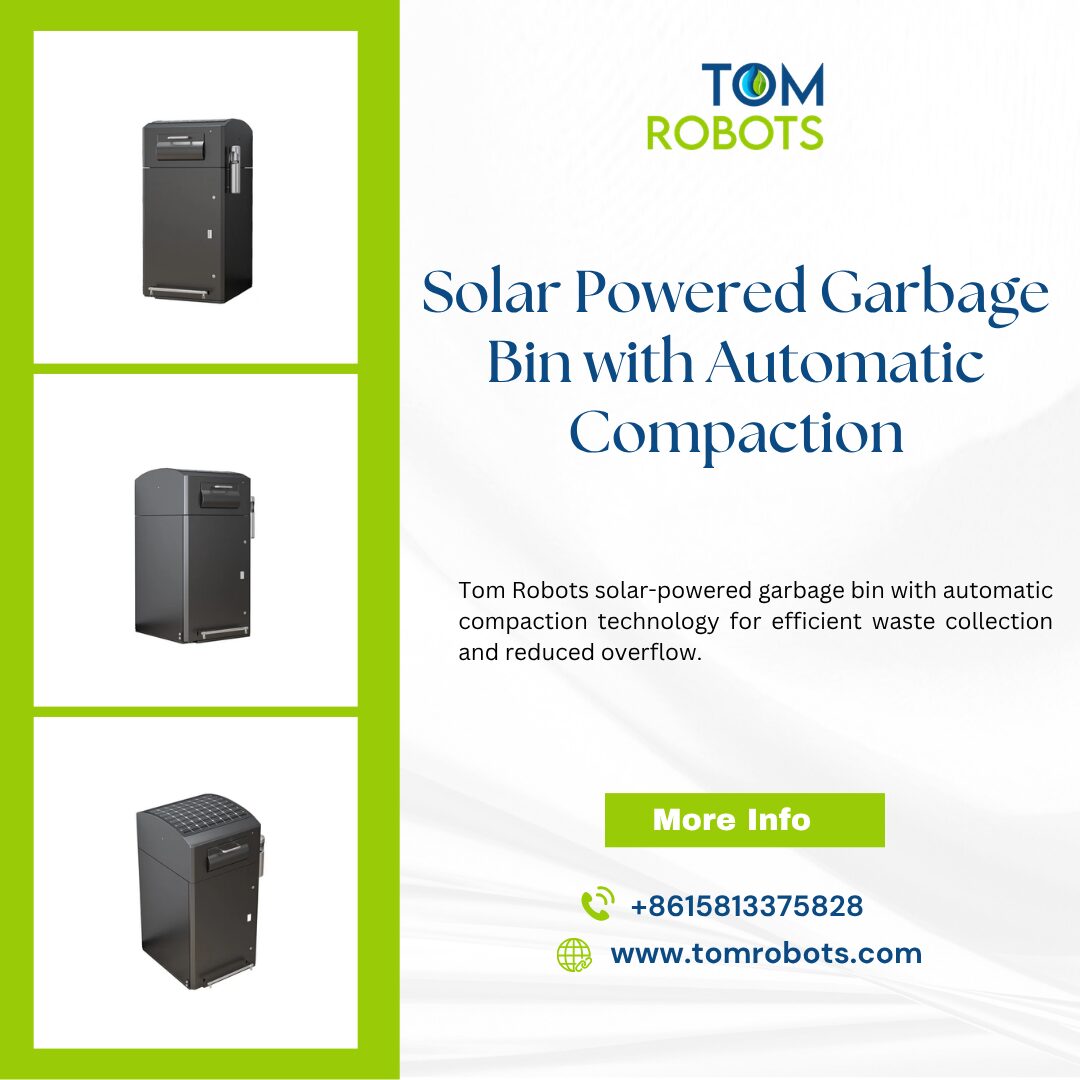
A park’s maintenance supervisor in a mid-sized city once described his summer weekends in one word overflow. Every Friday afternoon, before a big event or a hot weekend crowd, his crew would swing by every bin in the busiest part of town just to stay ahead of the mess. By Sunday evening half of those same bins were spilling over anyway. That kind of cycle is exactly why more cities are now looking at a Solar-Powered Garbage Compactor as something worth actually budgeting for, not just a nice idea from a sustainability brochure.
What Is Actually Happening Inside These Bins
From the outside, a solar compactor does not look all that different from a normal street bin. The difference is on top and underneath. A small solar panel sits on the lid and quietly charges a battery through the day, even on cloudy afternoons in most climates. Once the bin fills up to a certain point, a compaction mechanism kicks in and presses everything down, making room for more trash instead of letting it pile up past the rim.
That single feature changes a lot. A bin that once needed emptying daily might now go four or five times longer before a crew has to show up. For a city dealing with tight staffing, that difference alone can be the reason this technology gets serious budget attention instead of getting quietly shelved.
Colder cities should still ask manufacturers directly about battery behavior in freezing temperatures, since performance is not always identical everywhere.
Why Fewer Truck Trips Actually Saves Real Money
Here is something easy to miss when people first hear about these units. The solar compacting bin itself is not really the expensive part of waste collection. Driving a truck around town all day, paying staff to ride along, and burning fuel to empty containers that are barely half full—that is where the real cost sits.
Once bins hold more trash before needing a pickup, routes can shrink. Instead of visiting every location on a fixed weekly schedule whether it needs it or not, some cities set up sensors that flag which bins are actually close to full. Crews then go where the trash actually is instead of running the same loop out of habit. Over a full year, that kind of change tends to add up to a noticeably smaller fuel and labor bill.
Not Every Corner Needs One
It is tempting to picture these bins going everywhere at once, but that is usually not the smartest move. Sunlight is the whole engine behind how these units work, so a spot buried under thick tree cover or stuck permanently in a building’s shadow will not charge properly no matter how good the equipment is.
Before ordering anything, it helps to actually walk the proposed locations at a few different times of day and watch how the light moves. Busy parks, transit hubs, shopping streets, and event spaces tend to be worth it almost immediately, since those are exactly the places where trash builds up fastest. A quiet residential block probably does not need this upgrade at all, and a standard bin works just fine there.
The Price Tag Looks Bigger Than It Actually Is
Nobody is going to pretend these units are cheap to buy. That upfront number is usually the first thing that makes a budget meeting go quiet. But looking only at the purchase price tells half the story. Fewer collection runs, less cleanup after overflow, and fewer angry calls about litter all quietly offset that initial cost over time.
Some cities have chosen to test the waters with a small pilot in one busy district before rolling anything out further, which gives them real numbers to bring back to the next budget conversation instead of just projections on paper.
Somebody Still Has to Check on Them
Less frequent emptying does not mean zero maintenance. Solar panels need an occasional wipe down if dust, leaves, or bird droppings start blocking sunlight, and batteries will eventually wear out and need swapping, just like any battery does. Staff should get a short walkthrough on how the compaction mechanism operates so a small mechanical issue gets caught early instead of turning into a bin that simply stops working one day with no warning.
Cities that build this kind of light upkeep into someone’s regular rounds tend to get a lot more years out of each unit than cities that install them and forget about them entirely.
Planning Ahead Makes the Difference
None of this needs to be figured out perfectly on the first try. Thinking through sunlight, foot traffic, and who is responsible for basic upkeep before placing an order tends to save a lot of headaches later, even if the rollout starts small.
For municipalities exploring their options, a Solar Compression Garbage Bin from Tom Robots offers a solid place to start, especially in districts where foot traffic is heavy and collection staff are already stretched thin. Taking the time to get placement and maintenance right from day one is usually what separates a successful rollout from a pile of expensive bins nobody quite knows how to manage.


 Eknath Girhepunje