Chudasama Outsourcing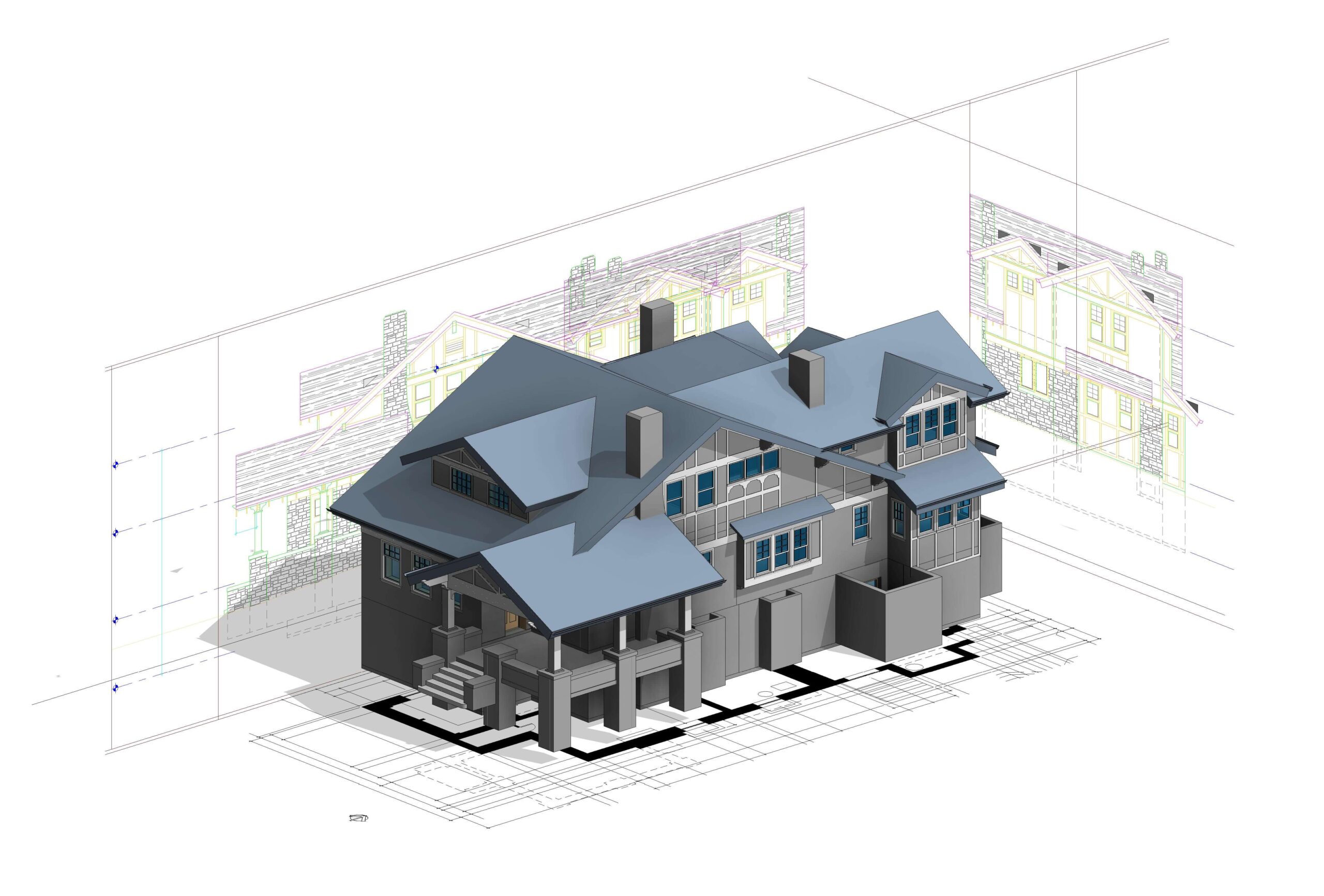
Architecture and construction have undergone massive changes over the last few decades. For a long time, blueprints and 2D drawings were the primary ways to plan a building. Computer-Aided Design (CAD) eventually replaced physical drafting tables, allowing professionals to create precise digital lines and shapes. This made the design process much faster and easier to modify.
However, modern building projects require more than just digital lines. They require deep, interconnected data. Building Information Modeling (BIM) answers this need by creating a highly detailed 3D representation of a physical structure. BIM goes far beyond geometry to include information about materials, structural properties, and spatial relationships.
Understanding the shift from traditional drafting to information-rich modeling is essential for anyone involved in building design. Transitioning your project files unlocks new levels of efficiency and foresight. This post covers the core differences between these two systems, the step-by-step conversion process, and why moving to BIM is rapidly becoming an industry requirement.
Core Differences Between 2D Drafting and 3D Modeling
CAD systems primarily focus on representing physical objects through 2D lines, arcs, and text. A CAD drawing acts as a digital version of a traditional paper blueprint. It shows you what a building looks like from specific angles, such as a floor plan or an elevation. If you change a wall on the floor plan, you must manually update the elevation drawing to match.
BIM fundamentally changes how we interact with building data. Instead of drawing lines, you build a digital prototype using intelligent 3D objects. A wall in a BIM model is not just a rectangle on a screen. It contains data about its exact dimensions, the materials used to build it, its thermal properties, and its cost.
Because a BIM model is a central database, updating an element in one view automatically updates it across the entire project. This dynamic relationship between objects means fewer errors and a much clearer understanding of the final structure before ground is even broken.
The CAD to BIM Conversion Process
Moving from flat drawings to a smart 3D model requires a methodical approach. Professional teams often rely on expert CAD To BIM Conversion Services to handle the heavy lifting. The process generally follows a few key steps:
1. Data Collection and Review
The conversion starts by gathering all existing CAD files, PDFs, and physical sketches. Engineers review these documents to ensure they have all the necessary elevations, floor plans, and section details.
2. Setting Up the BIM Environment
The modeling team configures the BIM software to match the project’s specific standards. This includes setting up the correct units of measurement, grid lines, and building levels.
3. Creating the 3D Geometry
Modelers begin building the 3D geometry based on the 2D CAD layouts. They place walls, doors, windows, and structural columns in their precise locations.
4. Adding Information and Parameters
Once the physical geometry is in place, the team populates the model with data. They assign material specifications, manufacturer details, and performance criteria to the digital objects.
5. Quality Control and Clash Detection
The final step involves rigorous quality checks. The team verifies that the new 3D model aligns perfectly with the original CAD files and resolves any overlapping elements.
Key Benefits of Transitioning to BIM
Converting older files to a modern BIM format brings significant advantages to the entire construction lifecycle.
First, it greatly enhances collaboration. Architects, structural engineers, and MEP (mechanical, electrical, and plumbing) contractors can all work within the same shared model. This unified approach eliminates the silos that often lead to miscommunication. Teams like Chudasama Outsourcing help facilitate this by providing accurate, centralized models that multiple disciplines can rely on.
Second, the ability to perform clash detection saves massive amounts of time and money. In a 2D workflow, it is very easy to accidentally route a plumbing pipe directly through an HVAC duct. You might not notice the mistake until you are physically on the construction site. BIM software highlights these conflicts digitally, allowing teams to fix them before construction begins.
Finally, better planning leads to overall cost reduction. With exact material quantities generated automatically by the model, estimators can order the precise amount of supplies needed. This reduces waste and keeps budgets firmly on track.
Why BIM Is Becoming a Global Standard
Governments and regulatory bodies around the world recognize the efficiency of smart modeling. Many countries now require BIM for all publicly funded infrastructure projects.
The United Kingdom mandates BIM Level 2 for government construction, while nations across Europe and Asia are implementing similar rules. These mandates aim to reduce public spending, improve the sustainability of new buildings, and shorten project timelines. Even in the private sector, clients now expect the transparency and predictability that only a detailed 3D model can provide. If a firm wants to remain competitive, adopting these new workflows is no longer optional.
Navigating Conversion Challenges
While the benefits are clear, the transition process comes with a few hurdles. One major challenge is ensuring data accuracy. Interpreting complex 2D drawings requires a deep understanding of construction principles. A misunderstood line on a CAD file can easily become a major structural error in a 3D model.
Software interoperability can also pose a problem. Different stakeholders might use different design programs, making it difficult to combine everything into a single master model. Overcoming these challenges requires strict modeling protocols, continuous staff training, and rigorous quality assurance reviews at every stage of the conversion.
The Future of Construction and Facility Management
The usefulness of a 3D information model does not end when the building is completed. The final model transitions into an incredibly valuable tool for facility management.
Building owners use this data-rich file as a “digital twin” of their physical property. They can easily track maintenance schedules, locate hidden utility lines, and plan future renovations with total accuracy. By investing in the conversion process early on, construction teams deliver a smarter, safer, and highly efficient product that serves the building owner for decades to come.


 Realtor Pro
 Nanda Kailash