Munaqash Interiors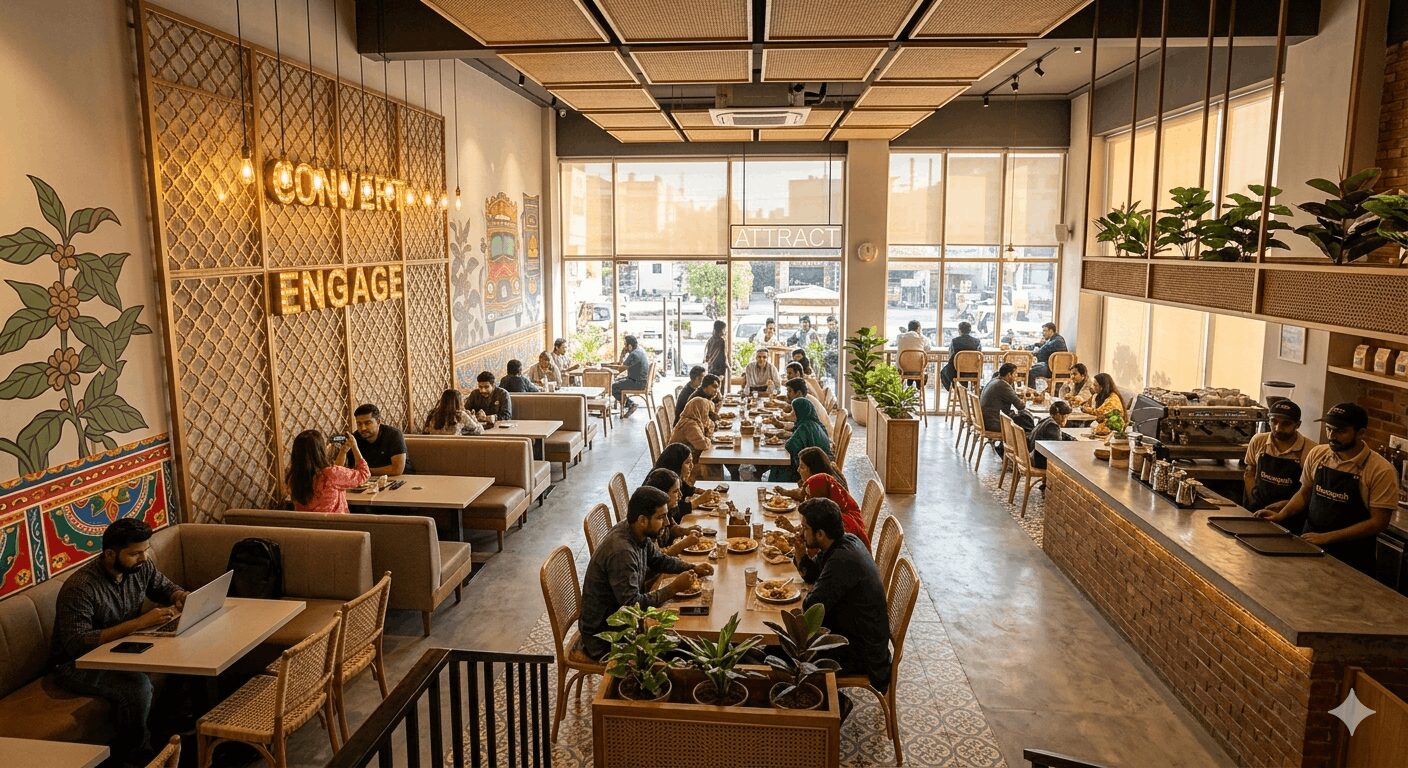
The culinary landscape in Pakistan has undergone a seismic shift over the last decade. From the vibrant food streets of Lahore to the upscale eateries of Islamabad and Karachi, dining out is no longer just about the food—it is an immersive experience. In an era dominated by social media and “Instagrammable” moments, the interior design of a cafe or restaurant has become as critical to its success as the menu itself.
To thrive in Pakistan’s competitive hospitality sector, owners must move beyond simple aesthetics. They must create spaces designed to attract the eye, engage the senses, and ultimately convert casual visitors into loyal, repeat customers.
1. The Art of Attraction: The First Impression
In the world of restaurant business, the “Attraction” phase starts before a customer even steps inside. In busy commercial hubs like Gulberg or DHA, your storefront is your most powerful marketing tool.
- The Facade and Entrance: A restaurant’s exterior should tell a story. Whether it’s through large glass windows that showcase a warm interior or a unique architectural entrance, the goal is to pique curiosity.
- Lighting as a Beacon: In Pakistan, evening dining is a major culture. Warm, layered lighting that spills out onto the street creates an inviting glow, signaling comfort and hospitality to passersby.
- Visual Storytelling: Modern Pakistani diners are drawn to themes. Whether it’s a rustic “chai shai” aesthetic, a sleek industrial cafe, or a traditional heritage-rich dining hall, a clear visual identity helps a brand stand out in a crowded marketplace.
2. The Science of Engagement: Creating an Experience
Once a customer is through the door, the interior design must take over to “Engage” them. Engagement is about how the space feels, smells, and sounds.
- Zoning and Layout: A common mistake in Pakistani restaurants is overcrowding tables to maximize seating. True engagement happens when customers feel they have their own “bubble.” Strategic zoning—using plants, screens, or varying floor levels—can create intimate spaces even in a large hall.
- The Power of Texture: High-quality interior design utilizes a mix of materials. In Pakistan, we see a beautiful trend of mixing cold materials like polished concrete or marble with warm elements like reclaimed wood, local brickwork, or brass accents. These textures invite customers to touch and feel connected to the environment.
- Acoustics and Comfort: Engagement ends the moment a customer has to shout to be heard. Incorporating sound-absorbing materials, such as upholstered seating, wall tapestries, or acoustic ceiling baffles, ensures that the “noise” of a busy kitchen or other diners doesn’t ruin the experience.
3. The Strategy of Conversion: Turning Visitors into Brand Ambassadors
In the context of interior design, “Conversion” doesn’t just mean a single sale. It means the customer stayed long enough to order dessert, felt comfortable enough to return next week, and took a photo that promoted the restaurant to hundreds of people online.
- The “Instagram Corner”: It is a reality of 2026 that people eat with their cameras first. Dedicated “photo-ops”—a neon sign, a mural by a local artist, or a uniquely tiled floor—are functional design elements that act as free organic marketing.
- Comfort for Longevity: If the chairs are uncomfortable, the customer will leave quickly. To “convert” a visitor into someone who spends more, ergonomics are key. High-quality seating and the right table height encourage long conversations and “one more coffee” orders.
- Service Efficiency: Conversion also depends on the speed of service. A well-designed interior considers the “flow” of the staff. If waiters are constantly bumping into chairs or have to walk too far to reach a station, service lags, and customer satisfaction drops. A hidden, efficient floor plan is the backbone of a profitable restaurant.
The Local Context: Designing for the Pakistani Palate
Designing for the Pakistani market requires a deep understanding of local social habits. Unlike Western “grab-and-go” cultures, Pakistani dining is often communal and family-oriented.
- Flexible Seating: Restaurants must be able to accommodate a solo freelancer with a laptop at noon and a family of twelve for dinner. Modular furniture and flexible layouts are essential.
- The Washroom Standard: A major “conversion” factor in Pakistan is the cleanliness and design of the restrooms. A luxury dining room paired with a neglected washroom is a guaranteed way to lose a customer forever. High-end fixtures and consistent design in the “back-of-house” areas signal a commitment to hygiene and quality.
Conclusion: Investing in the “Third Space”
A restaurant or cafe is often referred to as the “Third Space”—the place between home and work where people go to connect. In Pakistan, where social life revolves around food, the interior design is the silent salesman that works 24/7.
By focusing on the “Attract, Engage, Convert” framework, restaurant owners can ensure their space is more than just four walls and a kitchen. It becomes a destination. Whether you are launching a boutique cafe or a sprawling multi-cuisine restaurant, remember that every tile, light fixture, and chair choice is a brick in the foundation of your brand’s success.


 Z5 Logitsics LIMITED
 Canberra Concrete Plumbing