Safwan Sayyal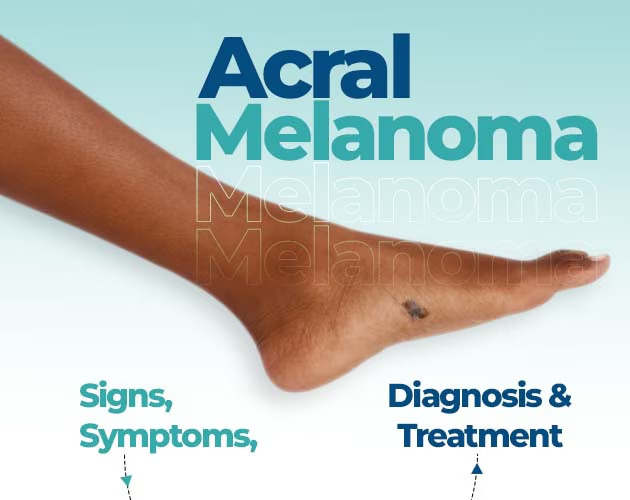
When most people think of skin cancer, they imagine moles on the back, shoulders, or face areas frequently exposed to the sun. However, one of the most dangerous forms of the disease appears where the sun rarely shines. Acral lentiginous melanoma (ALM) is a specific subtype of melanoma that develops on the palms of the hands, the soles of the feet, or under the nails (subungual).
Because these areas are often overlooked during routine self-exams, ALM is frequently diagnosed at a later stage than other skin cancers. In this guide, you will learn how to identify the warning signs, understand the risk factors, and discover why early clinical intervention is the key to successful treatment.
What is Acral Lentiginous Melanoma?
Acral lentiginous melanoma is a rare but aggressive form of skin cancer that occurs on the “acral” or peripheral parts of the body. Unlike common melanomas, ALM is not strongly linked to ultraviolet (UV) radiation from the sun. Instead, it is thought to be driven by genetic factors or physical pressure and trauma to the skin.
While it accounts for only about 2–3% of all melanoma cases in light-skinned populations, it is the most common form of melanoma diagnosed in people with darker skin tones, including those of African, Asian, and Hispanic descent.
Key Warning Signs and Symptoms
Identifying acral lentiginous melanoma requires a vigilant eye for subtle changes in the extremities. Because it doesn’t always look like a typical “mole,” it is often mistaken for a bruise, a fungal infection, or a simple callus.
Appearance on Palms and Soles
On the fleshy parts of the hands and feet, ALM often appears as:
- A flat, growing patch of discolored skin.
- An irregular border that seems to “bleed” into the surrounding skin.
- A mix of colors, including shades of black, brown, blue-gray, or even reddish-pink.
- A lesion that may become thick, scaly, or ulcerated as it progresses.
Subungual Melanoma
When it occurs in the nail bed, it is often referred to as subungual melanoma. Look for:
- A new dark streak or band running vertically along the length of the nail.
- Pigment that extends from the nail onto the surrounding cuticle (known as Hutchinson’s sign).
- Brittleness or cracking of the nail without an obvious injury.
Risk Factors: Who is at Risk?
One of the most important things to understand about ALM is that it does not discriminate based on sun exposure or skin type.
- Ethnicity: While anyone can develop ALM, it represents a disproportionately high percentage of melanoma cases in non-white populations.
- Age: It is most commonly diagnosed in older adults, typically those aged 60 and above.
- Genetic Mutations: Research suggests that ALM may involve different genetic mutations (such as the KIT gene) compared to sun-induced melanomas (which often involve the BRAF gene).
- Trauma: Some clinical observations suggest that chronic pressure or a history of sharp trauma to the feet or hands might play a role in its development.
The Importance of Early Detection
Because ALM is often painless and hidden on the soles of the feet, patients may live with it for months or years before seeking help. Unfortunately, the survival rate for ALM is lower than other melanomas, primarily because it is often caught after it has already metastasized (spread) to the lymph nodes or internal organs.
Diagnostic Procedures
If a suspicious lesion is found, a healthcare professional will typically perform:
- Dermatoscopy: Using a high-powered magnifying tool to look at the pigment patterns.
- Skin Biopsy: Removing a small tissue sample to be analyzed by a pathologist. This is the only definitive way to diagnose ALM.
- Imaging: If cancer is confirmed, PET or CT scans may be used to determine if the disease has spread.
Pros and Cons
|
Strategy |
Pros |
Cons |
|
Surgical Excision |
High success rate for early-stage ALM; removes the primary tumor. |
Can be complex on areas like fingertips or heels; may require skin grafts. |
|
Immunotherapy |
Effective for advanced cases where surgery isn’t enough. |
Can have significant side effects; not all patients respond. |
|
Targeted Therapy |
Attacks specific genetic mutations (like KIT). |
Requires specific genetic testing; cancer can sometimes develop resistance. |
|
Amputation |
Necessary in rare, very advanced subungual cases. |
Life-altering physical impact; only used as a last resort. |
Frequently Asked Questions
Can acral melanoma be caused by wearing tight shoes?
There is no definitive proof that tight shoes cause ALM. However, chronic friction or trauma to the feet is a factor that some researchers believe might contribute to the development of the disease.
Is a dark line on my fingernail always cancer?
No. Many people, especially those with darker skin, have “melanonychia” benign pigmented lines in their nails. However, if the line is new, changing, or wider than 3mm, you should see a doctor immediately.
Why is ALM more common in people with darker skin?
It isn’t necessarily that ALM occurs more frequently in people of color, but rather that other forms of sun-related melanoma occur less frequently. This makes ALM the dominant subtype in these populations.
Is acral melanoma itchy?
Usually, it is not. It is typically a silent, painless lesion, though it may become sore or bleed if it becomes an open sore (ulcerated) in the later stages.
Conclusion
Acral lentiginous melanoma is a reminder that skin cancer detection goes beyond the areas we see in the mirror every day. Because this specific type of cancer is not caused by the sun, it can happen to anyone, regardless of their lifestyle or skin tone.


 jessie harris
 enfield abudhabi