Shaik Yaseen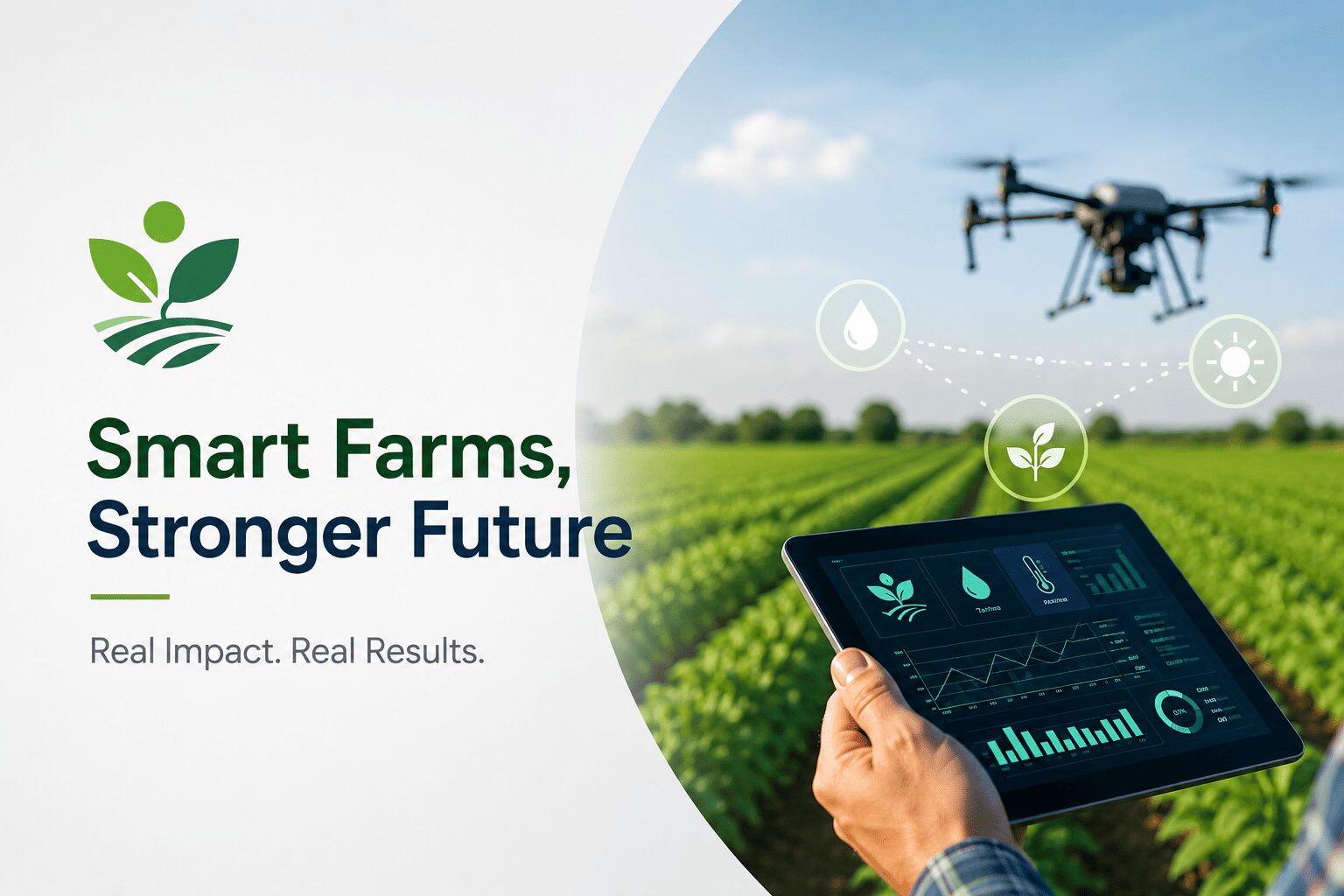
Farming has always depended on experience, timing, and patience. But in recent years, agriculture has become far more unpredictable than before. Rising fertilizer costs, changing weather patterns, labor shortages, and water scarcity are putting pressure on farms everywhere.
Because of this, more farmers and agribusinesses are now exploring how technology can improve productivity without increasing operational stress. This is one reason discussions around AI use cases in agriculture have grown rapidly over the last few years.
But despite all the hype, many people still ask the same question:
Can AI actually help farms in the real world, or is it just another trend?
The answer is simple.
Technology cannot replace farming knowledge or human decision making. However, when used correctly, it can help farmers reduce waste, improve efficiency, monitor crops more accurately, and make better long term decisions.
That is why agriculture is slowly becoming more data driven than ever before.
Farming Is Moving Toward Precision
Traditional farming methods often depend heavily on manual observation and routine based decisions. While experience still plays a massive role, relying only on instinct can sometimes lead to unnecessary expenses.
For example, many farms still use blanket spraying methods where chemicals are applied across entire fields even if only small sections are affected. Similarly, irrigation schedules are often based on fixed timing instead of actual soil conditions.
Modern ai use cases in agriculture are changing this approach by helping farms become more precise.
Technology can now analyze:
- soil moisture
- weather conditions
- crop stress
- nutrient levels
- pest activity
in real time. Instead of reacting after damage happens, farmers can identify issues earlier and respond more efficiently.
This shift toward precision farming is becoming increasingly important as operational costs continue to rise.
Water Management Is Becoming Smarter
Water is one of the most valuable resources in agriculture, especially in regions facing inconsistent rainfall and drought conditions.
Over irrigation not only wastes water but can also damage soil health over time. This is where intelligent irrigation systems are creating practical value.
By combining sensor data, satellite insights, and weather analysis, these systems help farms determine exactly when and how much water crops actually need.
Many recent AI use cases in agriculture focus heavily on irrigation efficiency because water management directly impacts both sustainability and profitability.
Many businesses are now working with intelligent technology solutions that focus on improving operational efficiency through smarter monitoring systems and data driven decision making
Crop Monitoring Is Improving
One of the biggest advantages of modern farming technology is predictive analysis.
Crop diseases and nutrient deficiencies often become expensive because they are discovered too late. By the time visible symptoms appear, damage may already affect large portions of the field.
Today, monitoring tools can analyze drone imagery and field data to detect early signs of:
- disease risks
- crop stress
- pest infestations
- nutrient imbalance
This allows farmers to respond faster and reduce potential losses before problems spread further.
Several agricultural technology providers, including Rubixe, have increasingly focused on predictive farming systems because early intervention can significantly improve long term productivity.
Labor Challenges Are Increasing Automation
Agriculture has also been facing growing labor shortages across many regions. Seasonal labor availability has become inconsistent, and manual processes continue to increase operational pressure on farms.
This is another reason why ai use cases in agriculture are gaining more attention globally.
Automation systems can help reduce repetitive manual work such as:
- field monitoring
- crop sorting
- irrigation control
- harvesting support
While technology is unlikely to replace farmers entirely, it can reduce workload and improve efficiency in labor intensive areas.
The goal is not to remove human involvement from farming but to support farmers with better tools and smarter operational insights.
Technology Still Needs Human Experience
Despite all the advancements, farming still depends heavily on human judgment.
Modern systems can process large amounts of data quickly, but they cannot fully replace the real world experience farmers develop over decades. Soil conditions, seasonal behavior, and local environmental factors still require practical understanding.
That is why successful adoption usually happens when technology works alongside farmers rather than replacing them.
Companies like Rubixe often emphasize practical implementation because businesses today are becoming more interested in realistic solutions instead of futuristic promises that may not work at ground level.
Traditional Farming vs Smart Farming
|
Farming Area |
Traditional Farming |
Smart Farming |
|
Irrigation |
Fixed schedules |
Sensor based water management |
|
Pest Control |
Blanket chemical usage |
Precision targeted treatment |
|
Crop Monitoring |
Manual inspection |
Predictive analysis |
|
Labor Dependency |
High manual effort |
Partial automation support |
|
Yield Forecasting |
Estimation based planning |
Data driven forecasting |
Adoption Still Has Challenges
Even though technology offers clear advantages, adoption in agriculture is not always simple.
Many farms still face challenges such as:
- high setup costs
- lack of technical knowledge
- limited digital infrastructure
- uncertainty about long term returns
Smaller farms especially may hesitate because implementation costs can feel risky initially.
That is why the conversation around AI use cases in agriculture is becoming more practical now. Businesses no longer want unrealistic promises.Instead, they are looking for advanced automation services and scalable systems that improve productivity without making farming operations more complicated.
This practical approach is becoming more common across consulting and technology companies, including Rubixe, as the industry moves toward more measurable and results driven adoption.
Final Thoughts
So, can technology really help save modern farming?
It cannot solve every agricultural challenge overnight. But it can absolutely help farms operate more efficiently, reduce waste, improve monitoring, and make smarter decisions in a rapidly changing environment.
From irrigation optimization to predictive crop analysis, many modern farming technologies are already helping farmers improve efficiency and adapt to changing agricultural challenges.
As agriculture continues evolving, farms that combine traditional knowledge with intelligent technology will likely be in a much stronger position for long term sustainability. That is why businesses and technology providers like Rubixe are increasingly focusing on practical, scalable, and real world implementation instead of treating technology as just another industry trend.


 Developer Bazaar Technologies
 Nirwana AI