Sophie Jane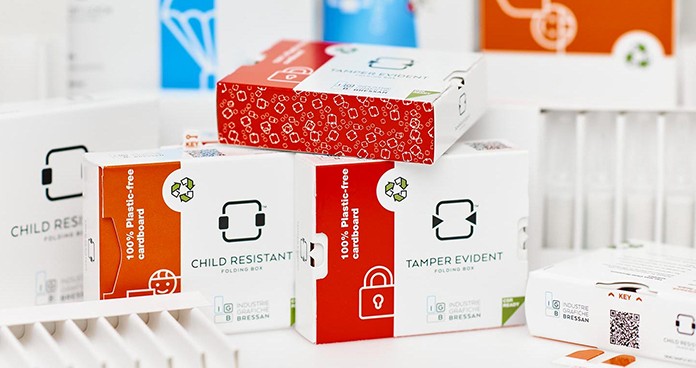
Despite years of regulatory clarity at the federal level, child-resistant packaging compliance continues to be one of the most common violations cited in cannabis facility inspections across the United States.
The reason is not that operators do not care, most do. The issue is that the rules are more layered than they appear, and the consequences of getting them wrong range from product recalls to license suspension.
The federal baseline: what CPSC requires
The Poison Prevention Packaging Act (PPPA), enforced by the US Consumer Product Safety Commission, establishes the federal standard for child-resistant packaging.
Under PPPA, cannabis products intended for consumers must be sold in packaging that is significantly difficult for children under five years old to open within a reasonable time, while not being difficult for normal adults to use.
The specific test protocol, 16 CFR Part 1700, requires that CR packaging be tested with panels of children aged 42 to 51 months.
Fewer than 20 percent of children in the test panel may successfully open the package within five minutes. At the same time, 90 percent of adults in the test panel must be able to open it within five minutes.
State-level additions that go further
Several US states have layered additional requirements on top of the federal baseline. California requires that cannabis packaging be child-resistant at the point of sale and remain CR through multiple openings, a standard called multiple-use child resistance.
Colorado requires that all cannabis packaging be opaque. Oregon mandates that CR packaging must not be appealing to children, which affects graphic design choices. Washington state requires that the package carry a specific child-safety warning in a defined minimum font size.
If your brand operates across multiple states, your packaging must satisfy the most restrictive standard among the states where you sell.
What child-resistant actually means: the mechanisms
For rigid boxes, the most common CR mechanism involves a two-step open sequence: a simultaneous press at two points followed by a pull, or a button-and-slide mechanism.
Rigid child-resistant boxes from suppliers like New York Packaging Hub incorporate these certified mechanisms into a fully customizable box format. The CR functionality is built into the structure, not added as an afterthought.
How to keep your packaging brand-forward within CR constraints
Modern CR box technology allows for full-color printing on both the exterior and interior of the box. You can apply soft-touch lamination, foil stamping, spot UV, and embossed logos to a CR-compliant box in the same way you would to any premium rigid package. The key constraint is the mechanism itself, it must not be covered or obstructed by decoration.
Ordering CR packaging for your cannabis brand
Lead times for custom child-resistant boxes typically run 12 to 14 business days for standard production after artwork approval. Rush orders are available in 7 to 8 business days with a 25 percent surcharge. Minimum order quantities start at 100 units.
Before ordering, confirm that your chosen supplier can provide a signed certificate of compliance confirming their CR packaging has been tested to 16 CFR Part 1700 standards.
New York Packaging Hub supplies custom child-resistant boxes starting at $1.23 per unit, certified to CPSC standards, with FSC-certified board options and full custom print capability.


 Ruby Cars
 Dream Boat Docks