Leonora Lee Lee
How Generative AI Is Transforming the Retail Industry in 2026
Introduction
The retail industry in 2026 is undergoing a major transformation driven by artificial intelligence. From personalized shopping experiences to smarter inventory management, generative AI is helping retailers improve efficiency, customer engagement, and operational accuracy. Businesses are no longer using AI only for automation; they are using it to create adaptive and predictive retail ecosystems that respond to customer behavior in real time. Recent industry research highlights that AI adoption in retail has accelerated rapidly as companies seek faster decision-making, improved forecasting, and seamless omnichannel experiences.
Personalized Shopping Experiences at Scale
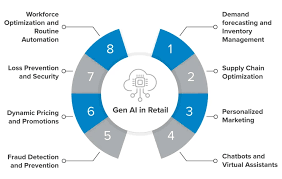
One of the most significant changes in retail is the rise of hyper-personalized customer experiences. Generative AI can analyze browsing patterns, purchasing behavior, and customer preferences to deliver tailored recommendations instantly. Instead of offering the same promotions to every shopper, retailers now create individualized shopping journeys that increase engagement and conversion rates.
AI-powered virtual assistants and conversational search tools also allow shoppers to describe products in natural language and receive accurate recommendations. This shift improves product discovery and reduces friction in online shopping. Many retailers are also using AI-generated content to create dynamic product descriptions, targeted emails, and localized marketing campaigns that feel more relevant to consumers.
Smarter Inventory and Supply Chain Management
Generative AI is transforming backend retail operations by improving inventory forecasting and supply chain visibility. Traditional forecasting methods often struggled with changing consumer demand, seasonal fluctuations, and external market factors. AI-driven systems can now process large volumes of historical and real-time data to predict demand with far greater accuracy.
This capability helps retailers reduce stock shortages, avoid overstocking, and optimize warehouse operations. Research in 2026 shows that AI-powered forecasting systems significantly improve inventory precision while lowering operational costs. Retailers are also using intelligent AI agents to automate replenishment decisions and identify high-performing products more efficiently.
AI-Generated Visual Merchandising and Store Design
Retailers are increasingly using generative AI to improve in-store experiences and visual merchandising strategies. AI systems can generate optimized store layouts, shelf arrangements, and digital displays based on customer traffic patterns and sales data. These technologies help businesses maximize product visibility and improve the shopping experience.
Recent developments in AI-powered planogram generation have dramatically reduced the time required to create effective retail layouts. Automated systems can quickly adapt displays for different store formats and regional preferences, enabling retailers to respond to changing trends much faster than before.
Enhanced Customer Support and Conversational Commerce
Customer service has also evolved with the growth of conversational AI. Intelligent assistants can now handle complex customer interactions, provide instant responses, and support shoppers across websites, mobile apps, and physical stores. These systems operate continuously, reducing wait times and improving satisfaction levels.
Conversational commerce is becoming a defining feature of modern retail. AI-driven chat interfaces guide customers through product selection, order tracking, and post-purchase support in a more natural and efficient manner. This trend is reshaping how consumers interact with retailers while helping businesses reduce service costs and improve scalability.
Ethical AI and the Future of Retail
As AI adoption expands, retailers are placing greater emphasis on transparency, accessibility, and responsible AI governance. Businesses are recognizing the importance of protecting customer data while ensuring AI systems remain inclusive and user-friendly. Experts note that accessibility and ethical design will play a critical role in long-term retail success.
The future of retail will continue to be shaped by intelligent automation, predictive analytics, and immersive shopping experiences. The rise of generative ai in retail trends demonstrates how AI is moving beyond experimentation and becoming a core driver of innovation, efficiency, and customer satisfaction across the global retail landscape.


 ukla lyrics
 Growing Technologies