David James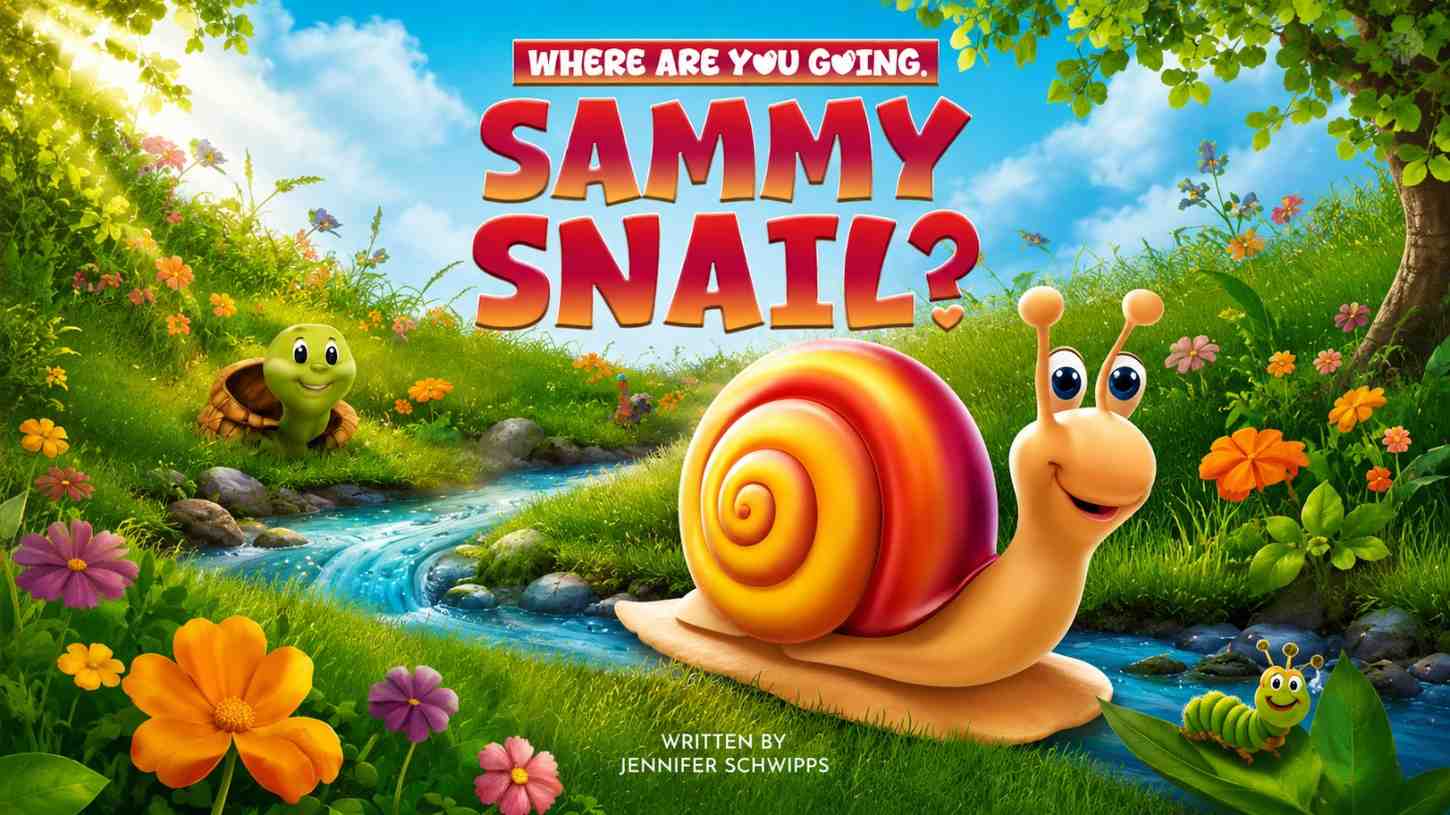
Have you ever felt like the world is moving too fast for you? Like everyone else is speeding ahead while you are stuck trying to catch your breath? If so, you are not alone, and you might just have more in common with a small, gentle creature named Sammy Snail than you think.
In “Sammy Snail book by Jennifer Schwipps, we meet a surprisingly wise snail who does not rush, does not compete, and yet somehow ends up showing us the kind of courage and clarity that we rarely find in our high-speed lives. This is not just a children’s story; it’s a quiet revolution wrapped in a shell.
This article is not your usual book summary or parenting guide. We are digging deeper into the metaphors, the psychology, and the hidden brilliance of a book that uses one of the slowest animals on Earth to deliver one of the fastest paths to emotional growth. Ready to slow down and tune in?
The Story Behind the Shell: Why Sammy Snail Is No Ordinary Character
Understanding the Core Message of the Book
At first glance, Sammy Snail might look like just another picture book character designed to entertain preschoolers. But Jennifer Schwipps does something quietly radical: she transforms the snail, an often overlooked creature, into a lens for how children and adults perceive time value and self-worth.
Where most stories push characters to “do more” or “be better,” Sammy’s story teaches us to just be. He moves slowly, observes deeply, and navigates the world with a heart full of curiosity rather than urgency.
How This Differs From Traditional Children’s Books
While many children’s books glorify action heroes running, flying, defeating monsters, Sammy Snail takes a different route. It celebrates slowness as a virtue. It challenges the norm of hyper productivity and asks: What if the real power is in being present?
That shift in storytelling away from conflict-driven drama and toward internal wisdom is what makes this book a rare gem.
Why Children Desperately Need a Character Like Sammy Snail Today
The Hidden Impact of Our Fast-Paced World on Kids
We live in an age of instant gratification. From lightning-fast internet to short-form video content, kids are being raised to expect everything now. But their brains and hearts do not develop on that kind of timeline.
This is where Sammy Snail quietly steps in as a counterbalance. The story tells children without preaching that it’s okay to take your time. That you do not have to rush to be valuable. Noticing the details, feeling deeply, and walking slowly can be a kind of superpower.
Real World Example: Slowness as a Survival Tool
Think of how a snail protects itself not by running away but by drawing inward. The shell is not just a shield; it’s a home. Similarly, when children learn to retreat mindfully instead of react impulsively, they develop emotional resilience.
In therapy circles, this is often taught as self-regulation. In Sammy Snail, it’s taught through story. That’s the brilliance, kids do not even know they are learning emotional intelligence. But they are.
The Science of Slow: How the Book Aligns With Child Psychology
Slowness is not Laziness. It’s Processing Power
Neuroscience has shown that some children process sensory input more slowly than others. These are not slow learners; they are deep processors. They notice more, feel more, and often get overwhelmed in chaotic environments.
Sammy Snail gives these children a character who reflects their inner experience. He’s not falling behind; he’s absorbing everything. He’s not lost; he’s learning differently.
Surprising Fact:
In a study published by the Journal of Child Psychology and Psychiatry, slower information processors often scored higher in long-term problem solving once they were given time to complete tasks at their own pace.
A Metaphor Worth Remembering:
Think of a slow cooker versus a microwave. Both heat food, but the slow cooker brings out depth and richness that fast cooking can’t. Children like Sammy, slow, thoughtful observant, bring depth to their surroundings in the same way.
Rethinking What “Success” Looks Like for Children
Why the Fastest Is not Always the Brightest
In classrooms, fast answers are often rewarded more than thoughtful ones. But that system fails to capture the beauty of children who think deeply and move gently through their learning.
Sammy’s journey is not about winning a race. It’s about noticing the dew on the grass, listening to the wind, and making small choices that lead to big growth. That’s a radically different version of success than the one our society usually promotes.
Actionable Tip for Parents & Educators:
Encourage “observation breaks” during reading time. Ask kids what they see or feel when Sammy moves through the story. This helps validate their slower-paced thought process and builds narrative empathy.
Emotional Depth in a Soft Shell: Teaching Empathy and Self Awareness
Sammy as a Mirror for Emotional Intelligence
One of the most powerful lessons in the Sammy Snail book by Jennifer Schwipps is how it handles emotions. Sammy does not hide his fear, confusion, or wonder. He moves through his feelings instead of denying them.
This kind of emotional transparency is gold for children. It teaches them that feelings are not problems; they are signposts. Sammy does not need to fix everything; he just needs to feel and move forward at his own pace.
Real World Analogy: The Emotional Weather System
Imagine emotions as weather. Some kids are taught to pretend it’s sunny even when it’s raining inside. But Sammy? He notices the clouds take cover if needed and waits for them to pass. That’s emotional literacy in action.
The Hidden Power of Nature-Based Storytelling
Why Children Need More Outdoor Characters
We’ve underestimated the power of natural metaphors. Sammy lives in a garden. His world is made of soil, leaves, raindrops, and quiet paths. That connection to the Earth subtly teaches mindfulness and eco awareness without saying a word.
A Little-Known Insight:
According to researchers from the University of Washington, children who regularly engage with nature-based stories show improved attention spans and greater compassion toward living things.
Sammy is not just a snail; he’s a tour guide into a world that’s slow, soulful, and symbiotic.
How the Book Supports Neurodiverse Learners
Gentle Pacing for Gentle Minds
Children on the autism spectrum or those with sensory sensitivities often find overstimulating books overwhelming. The soft pacing, predictable rhythm, and grounded tone of Sammy Snail provide a sanctuary on the page.
Practical Suggestion:
For neurodiverse classrooms, pairing the book with tactile activities like exploring snail shells or gardening deepens the learning without adding complexity.
What Makes Sammy Stand Out:
The book does not try to “fix” the snail’s slowness. That’s the beauty, it celebrates it. For neurodiverse kids often told to “hurry up” or “act normal,” Sammy’s story is a quiet affirmation: You are enough just as you are.
A Rhetorical Pause: What If More Books Were Like This?
What would happen if we had more books like Sammy Snail? Stories that did not ask kids to be heroes or problem solvers but simply encouraged them to be themselves?
Maybe we’d raise a generation of listeners instead of performers. Observers instead of interrupters. Empathizers instead of competitors.
Maybe just maybe we’d move slower and love deeper.
The Author’s Magic: Jennifer Schwipps and Her Storytelling Style
Crafting Meaning Without Moralizing
Jennifer Schwipps has done something rare: she’s written a book that teaches without preaching. Her language is gentle but intentional, her illustrations, if included, are immersive without being overwhelming, and her pacing respects the quiet moments.
Unlike many children’s books that race toward a moral, Schwipps lets meaning unfold like a leaf in the morning sun. That subtlety is what gives Sammy Snail its lasting emotional impact.
Final Thoughts: Why Slowing Down Might Just Be Growing Up
In a world obsessed with acceleration, Sammy Snail is a revolution in miniature. It reminds us that stillness is not stagnation. That quiet is not weakness. That moving slowly does not mean you are not moving at all.
Whether you are a parent, educator, therapist, or simply someone looking for a story that reconnects you to the simpler parts of being human, Sammy Snail book by Jennifer Schwipps, is a must-read. Not just for your child’s sake but for your own.
Sometimes the smallest characters leave the deepest footprints.


 Dipak Straits
 Acrid Semblance